Tuju
In the São Paulo city of Brazil, there are three prestigious rated restaurants with 2 Michelin Stars: Evvai, DOM, and Tuju. Since this is my second time visiting this city, we decided to knock out the third one this time around. In the Michelin Guide, they classify the flavors of this restaurant as creative, so the expectations are high that it will use plenty of Brazilian ingredients to bring a very local upscale finesse to the food. Tuju is led by chef Ivan Ralson, who steers this restaurant’s 10-course menu based on the seasons, trying to use the freshest ingredients available.
Ambiance & Service
The ambiance of this restaurant is quite interesting. When you enter the restaurant, it has a lot of modern aesthetics with sharp wood colors and upscale emotions. When you check in with the host toward the front, they bring you to a patio-like environment, where they offer you some drinks (for extra $) to start as well as some initial appetizers. The appetizers are just a preview of what’s to come.
After you finish the appetizers, you’re led to the second floor, which is the main dining hall. Keep in mind when they take you up to the second floor, they have an elevator, so that you don’t need to go up the stairs. The noise level on the second floor when it was just a few tables was fine and quiet. But once the tables were filled with more diners, the noise level was quite loud such that it was difficult to hear the staff’s comments about what they are serving. Regardless, the seats and overall atmosphere vibe was comfortable and very welcoming.
When you finish the main dinner, low and behold, they lead you up via elevator to the third floor. The third floor has a covered, open air seating with couches and dim lights. This is where you can order night caps such as coffee or whiskey, and also where they offer you some sweets to finish off the night. There’s a long counter where there are some house-made jams, coffee beans, and books that you can purchase for an additional cost. We decided to buy some of the coffee beans (100 grams for R$90) to give it a try.
After you finish here, the bill comes, you pay, and then you can take the elevator back down to the first floor to exit the restaurant.
The service overall was impeccable. Despite the language barrier, they made an effort to speak English to me, and they were still very welcoming despite the city having less than 5% of English speakers.
Food
The tasting menu costs R$1,500 per person. The non-alcoholic pairing was R$550, and the discovery alcohol pairing was R$950. They also have a classic alcohol pairing which probably would’ve given you really good classic vintage wines, but I wanted to stick with more experimental wineries.
- Starter Non-Alcoholic Cocktails
- Appetizers
- 1st Wine - Macharnudo Alto Single Cask Vintage
- 1st Non-Alcoholic - Green Apple and Coriander
- 1st Course - Oyster
- 2nd Wine - Autóctones Blanc Des Blancs Extra Brut
- 2nd Non-Alcoholic - Watermelon and Lime
- 2nd Course - Atlantic Bigeye
- 3rd Wine - Vini Artigianali La Torre Bianco
- 3rd Non-Alcoholic - Kiwi and Basil
- 3rd Course - Sea Urchin
- Bread - Croissant
- 4th Wine - Cartology Bush Vines
- 4th Non-Alcoholic - Coconut, Tamarind, and Cacao Nibs
- 4th Course - Squid
- 5th Wine - Granitico - Clarete
- 5th Non-Alcoholic - Barbados Berry and Mint
- 5th Course - Tomato
- Bread - Sourdough
- 6th Wine - Blanco De Viura
- 6th Non-Alcoholic - Oolong Tea and Orange Blossom Water
- 6th Course - Carabinero
- 7th Wine - Old Vines From Patagonia Semillion
- 7th Non-Alcoholic - Pineapple and Celery
- 7th Course - Grouper
- Preview - Lamb Saddle
- 8th Wine - Cabernet Franc
- 8th Course - Lamb
- 9th Wine - Late Harvest
- 9th Non-Alcoholic - Banana, Lemongrass, and Elderflower
- 9th Course - Mango
- 10th Wine - Arbois Vin De Paille
- 10th Non-Alcoholic - Cupuaçu, Banana, and Honey
- 10th Course - Cocoa
- Celebration - Coconut Cake
- Third Floor Nightcap
- Sweets
- Take Home Tea
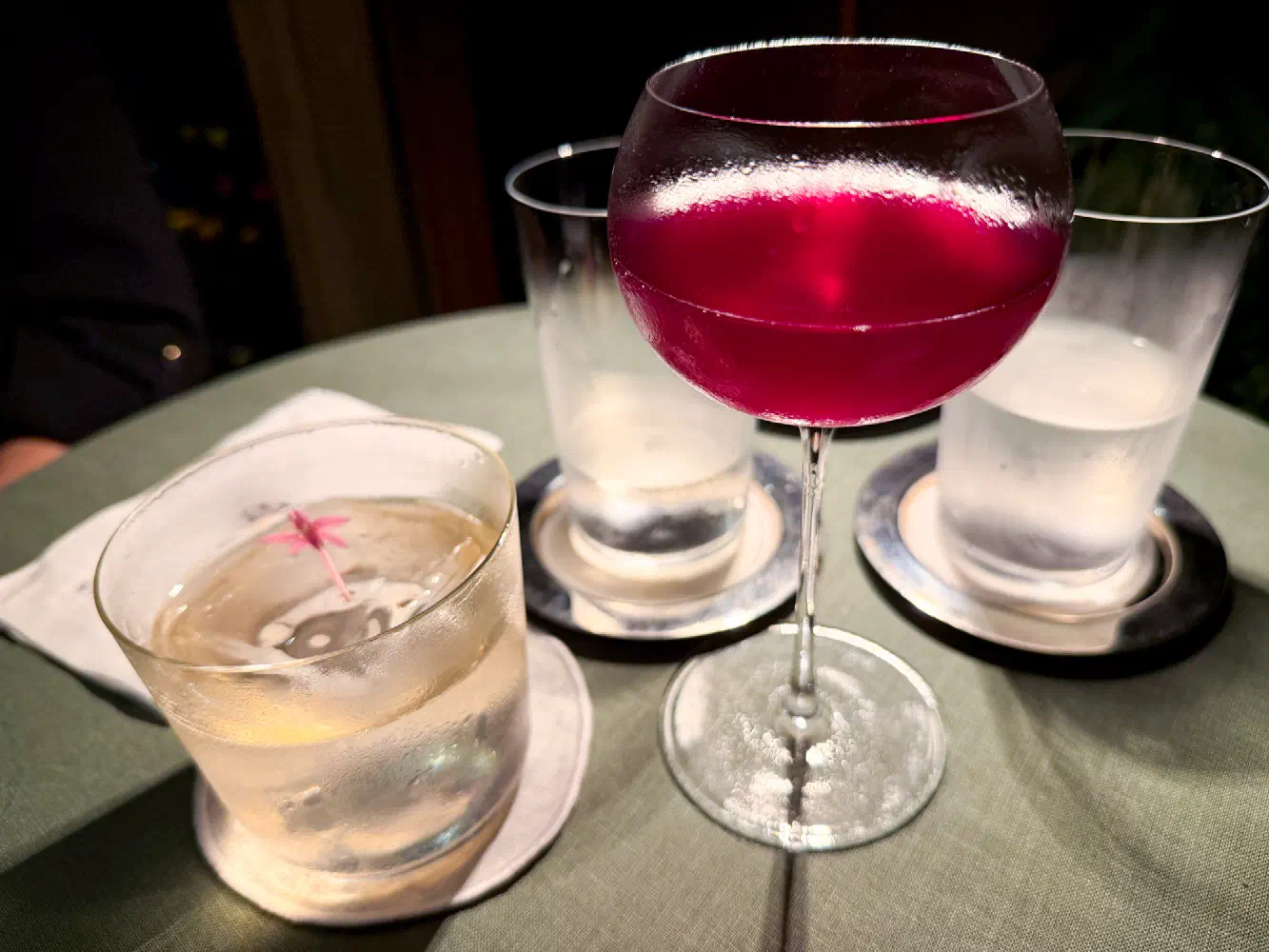
The Maracutaia (R$45 - right) was considered fruity and silky and included passion fruit, pitaya, and coconut.
The Refresco (R$41 - left) was considered refreshing and included cupuaçu, green apple, and lemongrass.
Both of these drinks were delicious for non-alcoholic. The green apple mixed with cupuacu was delectable.
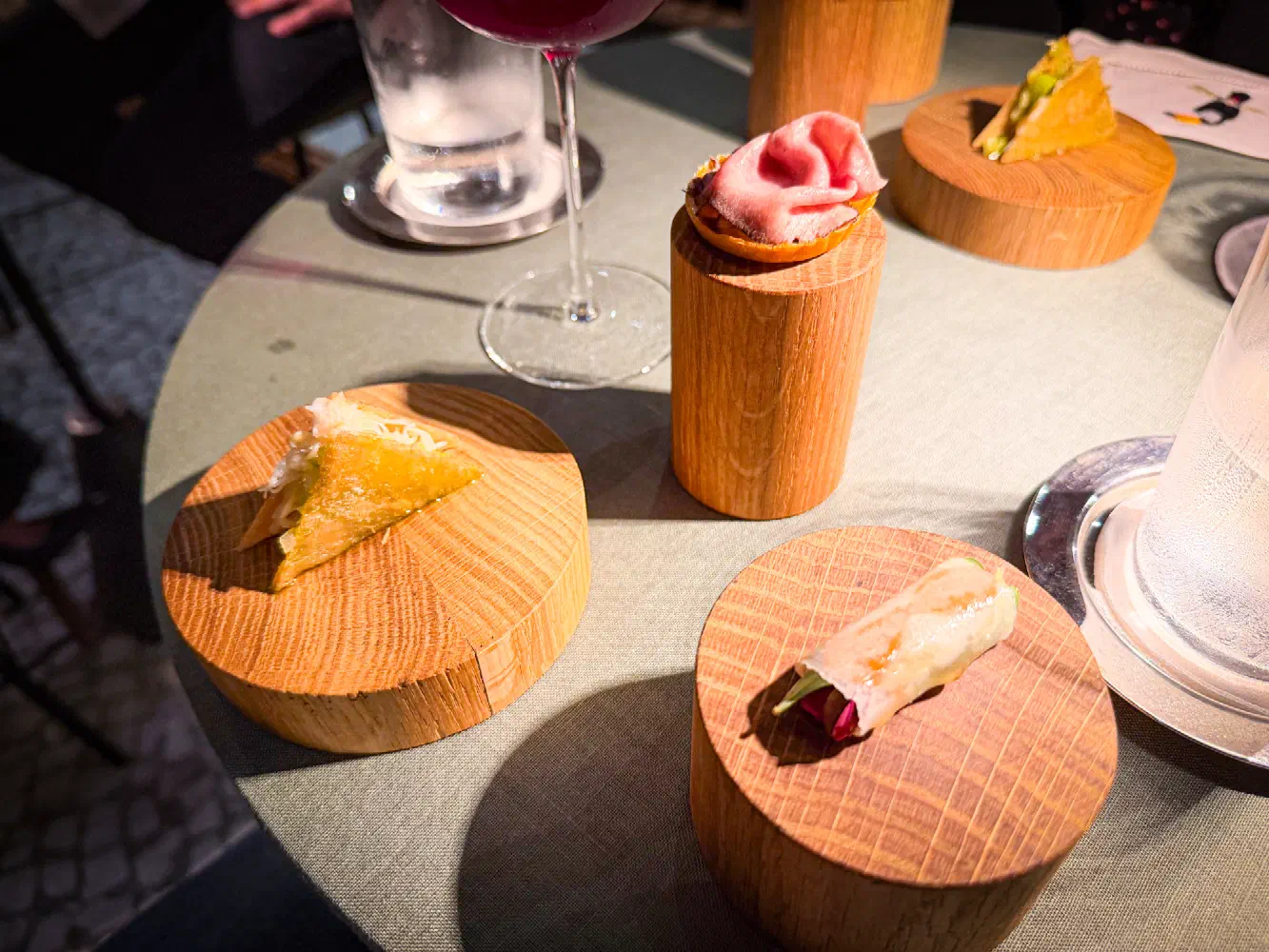
The Appetizers include:
- crab, hen, pimenta-de-cheiro. This was crab wrapped in chicken skin and a Brazilian pepper. It was pretty good.
- corn, tongue, sorrel. This was basically a sweet, savory little canape.
- turnip, peanuts, garden leaves. This was basically a vegetable cigar that had some nuttiness flavors to it.
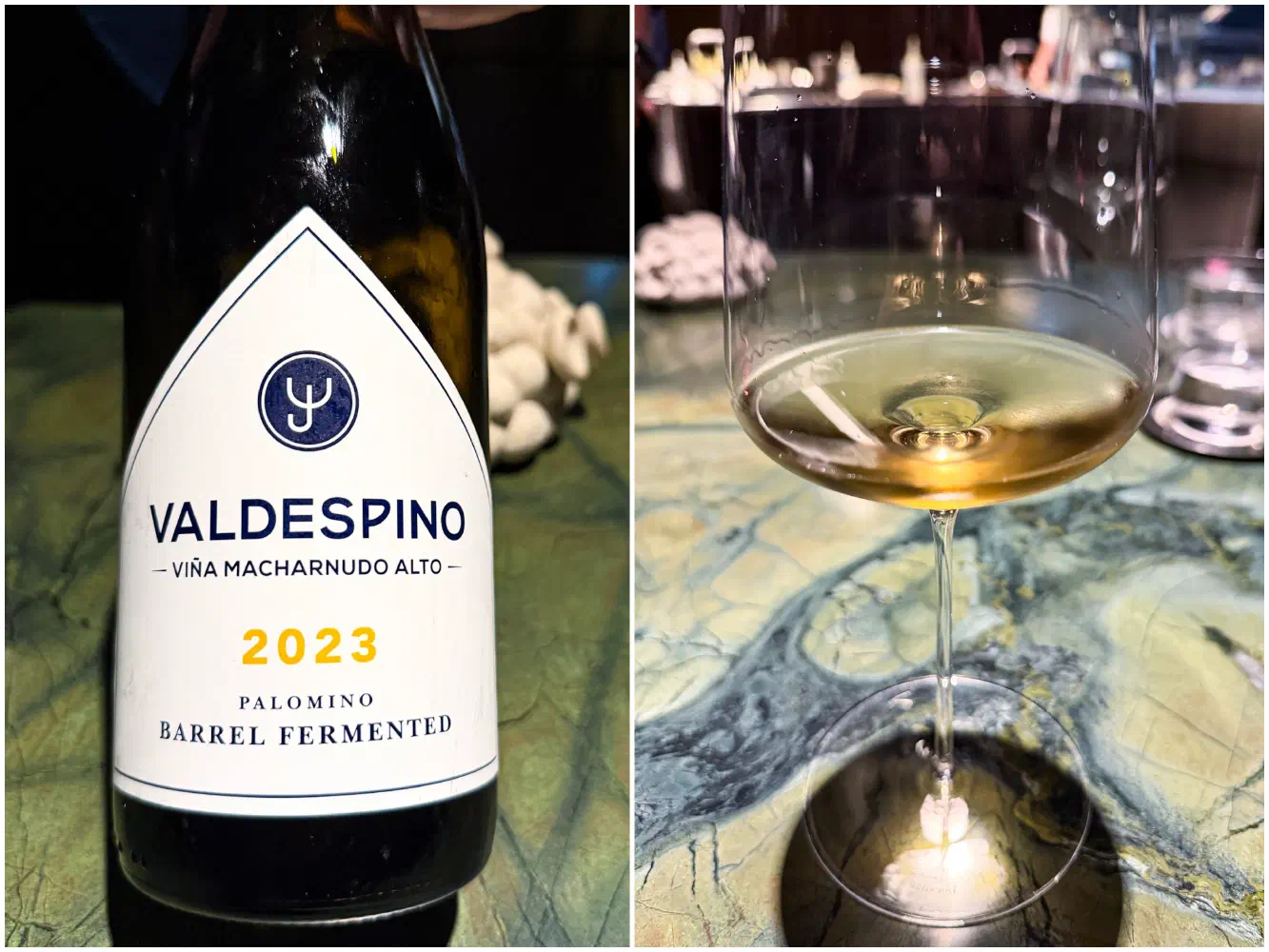
The Macharnudo Alto Single Cask Vintage was a chardonnay from A.R. Valdespino, Andaluzia, Spain, 2021. This orange-like wine has a dry and intense note with some nutty flavors and paired well with the oyster.
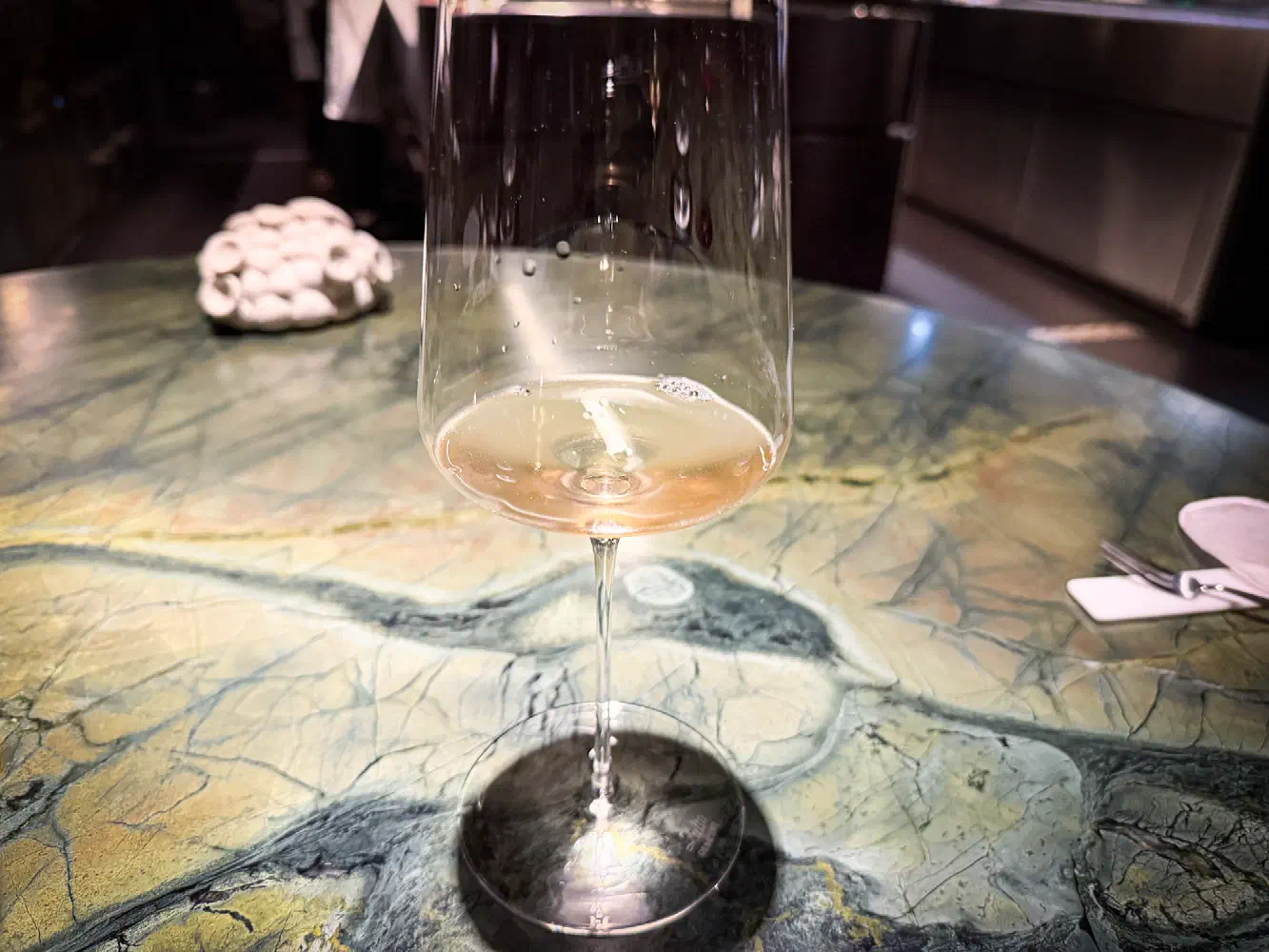
The Maça e Coentro was green apple and coriander. The drinks are made in-house, and this was very delicious with very refreshing green apple flavors.
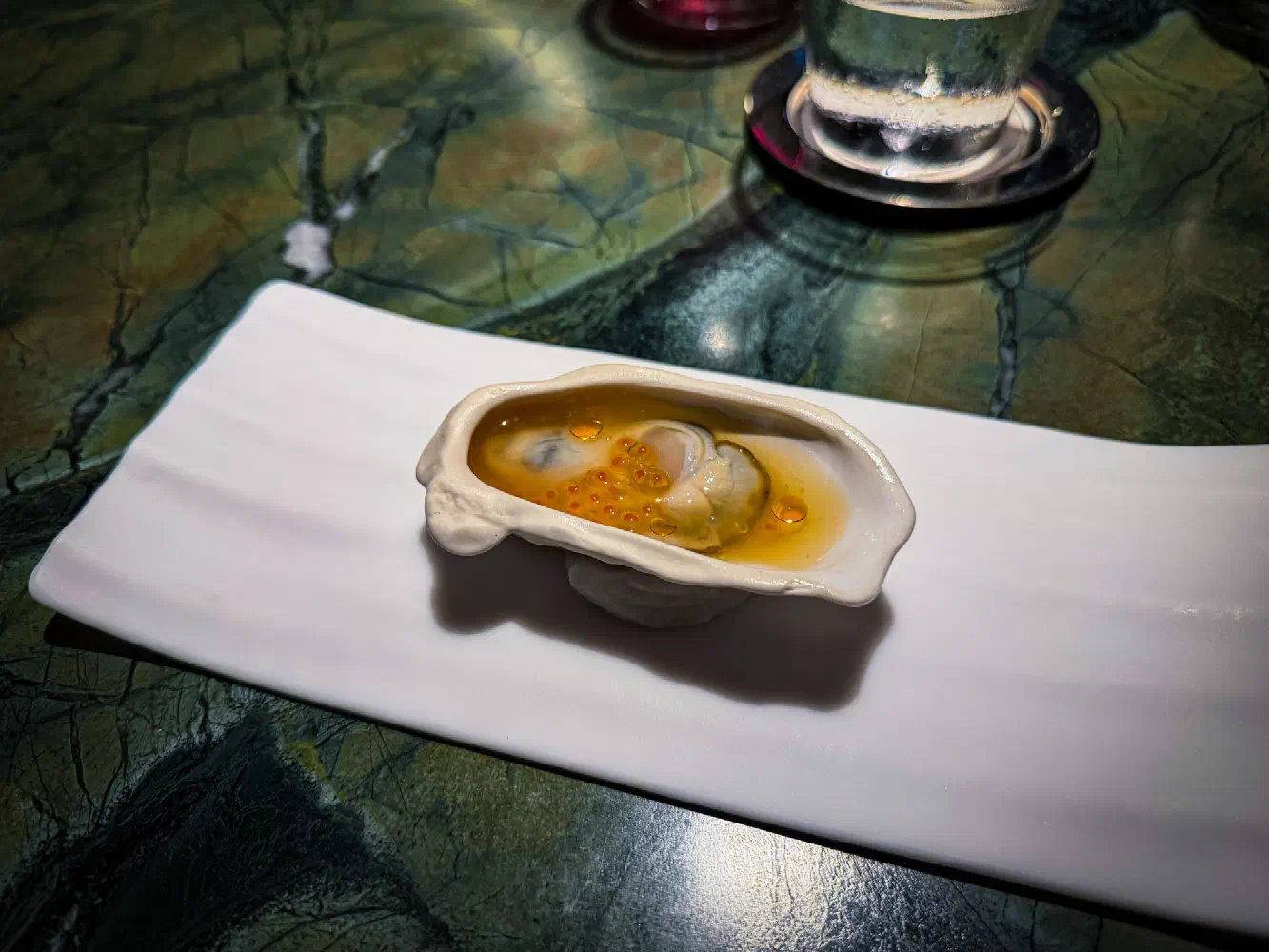
The Oyster includes eggplant and trout roe. The oyster comes from Santa Catarina (southern Brazil). This oyster was interesting because it was similar to west coast oysters where you taste a bit of cucumber, but it’s not as bold. Also, there is not a lot of saltiness.
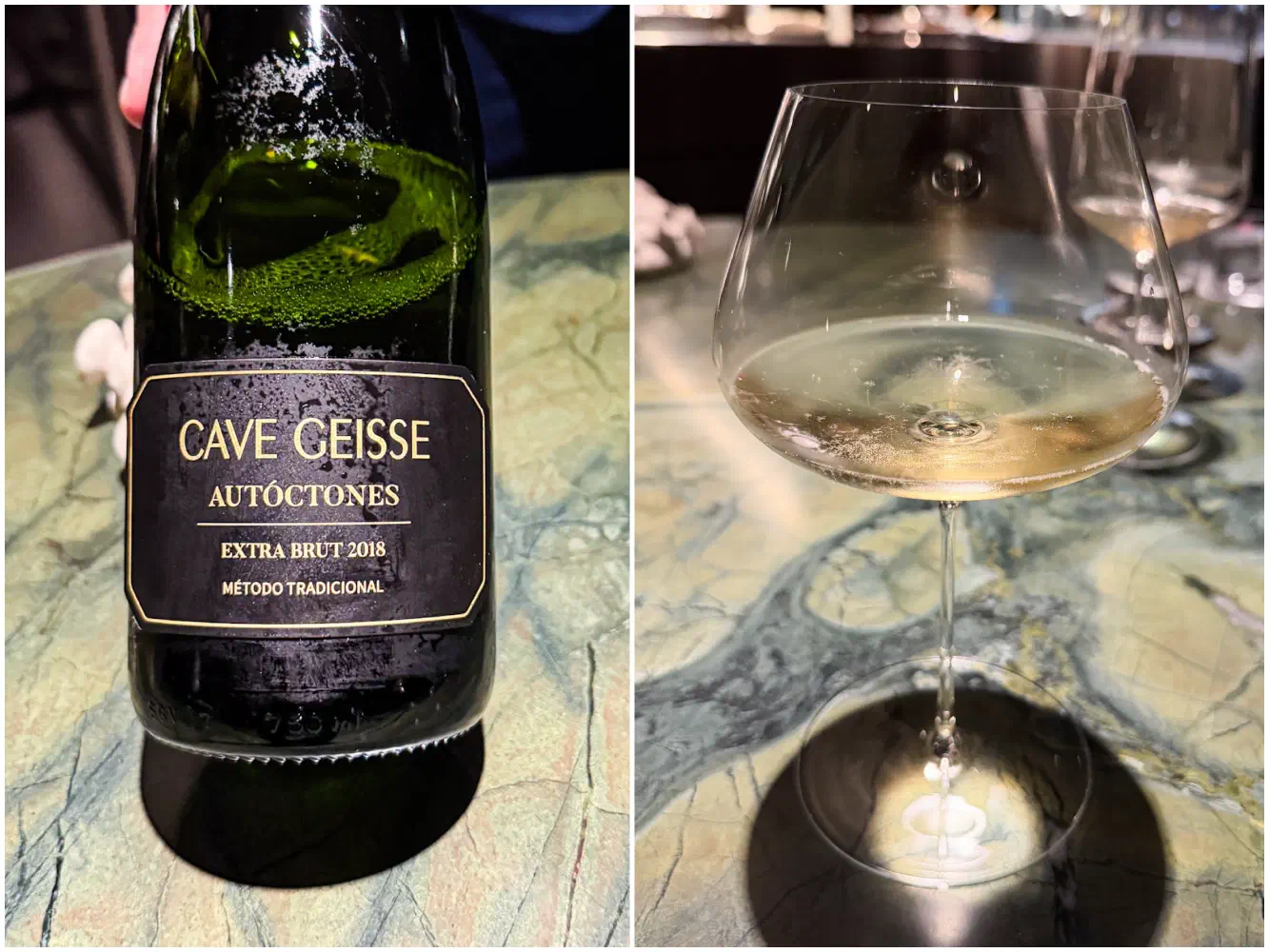
The Autóctones Blanc des Blancs Extra Brut was a chardonnay from Cave Geisse, Rio Grande Do Sul, Brazil, 2018. The Cave Geisse was a fantastic sparkling wine from Brazil. It was not super sweet, but it gives all the right bubbles to pair up with raw seafood.
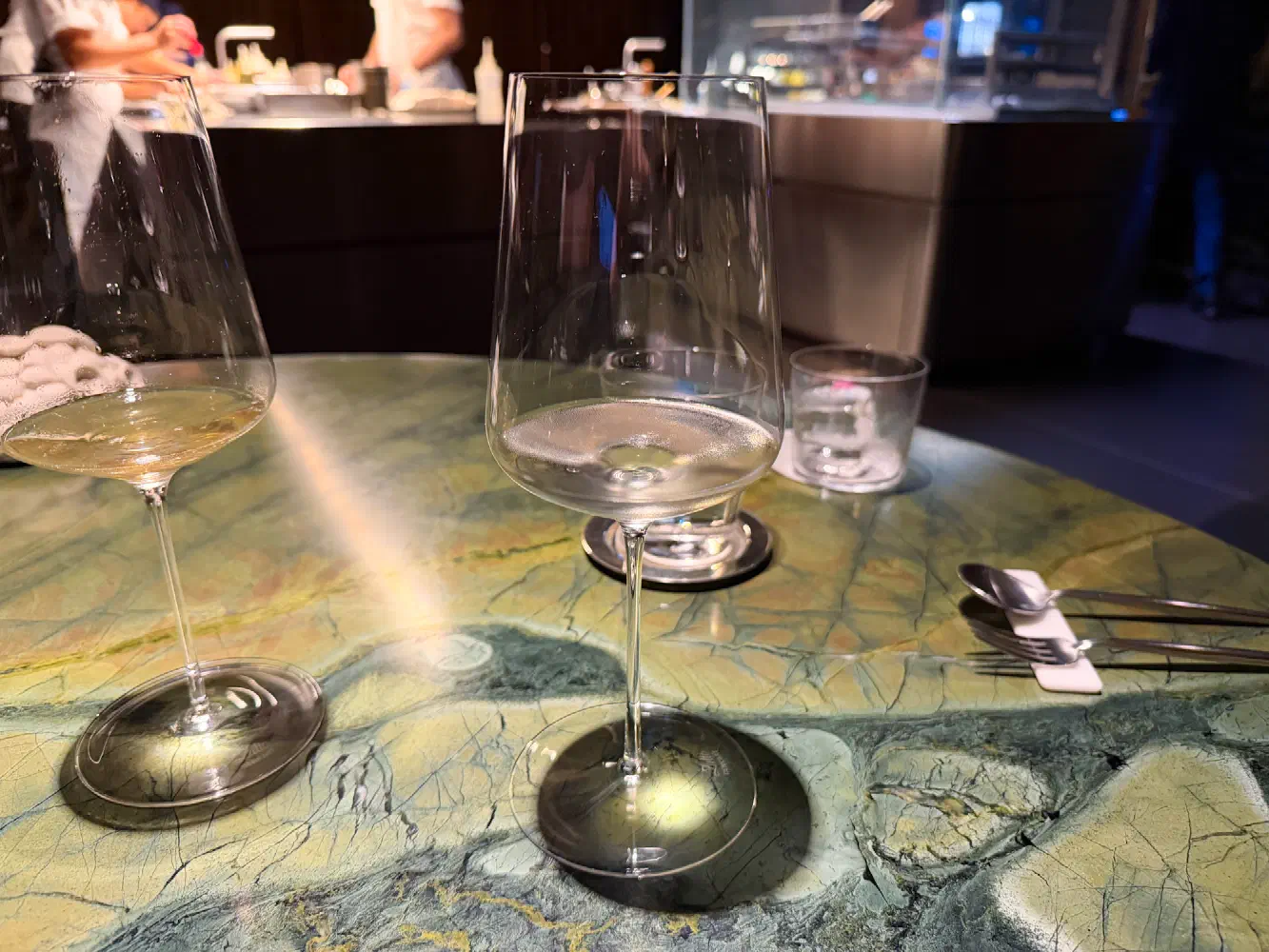
The Melancia e Limão was watermelon and lime, and it tasted exactly what it says. It’s super refreshing as a summer drink.
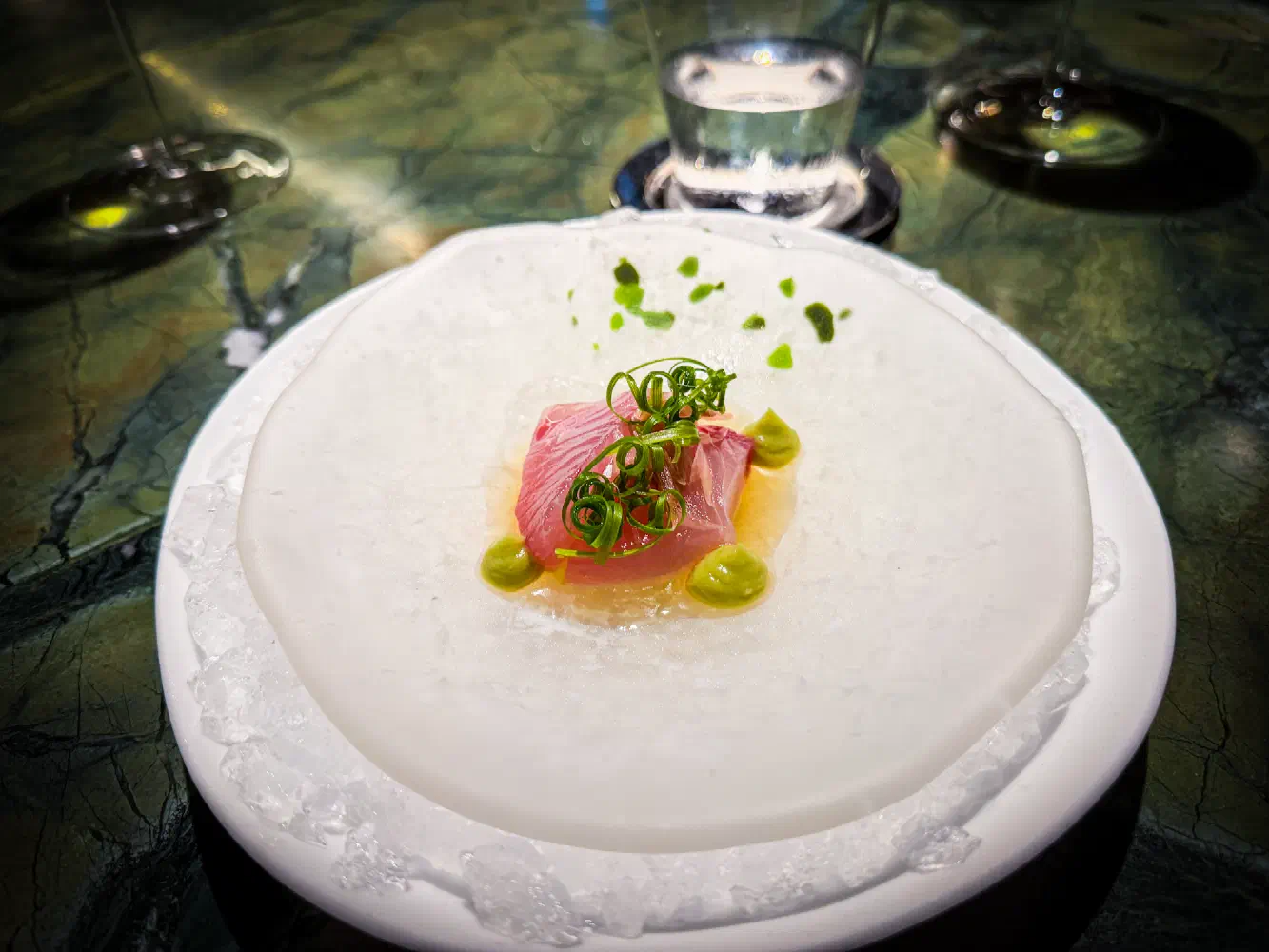
The Atlantic Bigeye includes cambuci and myoga. The cambuci sauce was slightly sweet but acidic like a lemon. Myoga is similar to Japanese ginger. They dollop some avocado cream on the side. Everything was super fresh.
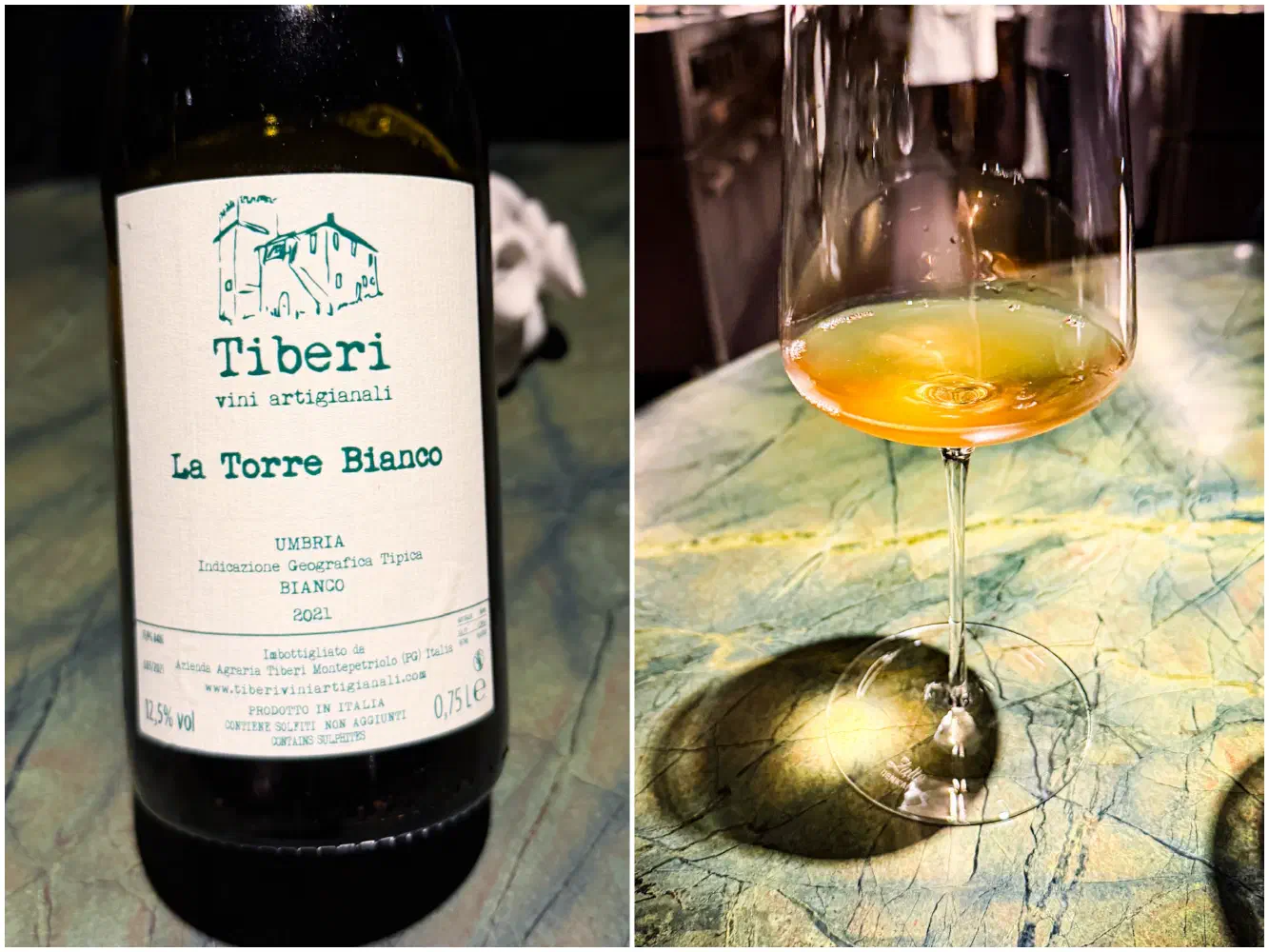
The Vini Artigianali La Torre Bianco was a blend of Trebbiano, Malvasia, Grechetto from Tiberi, Umbria, Italy, 2021. This skin contact wine has high acidity and many notes of tropical fruits. It was pretty good.
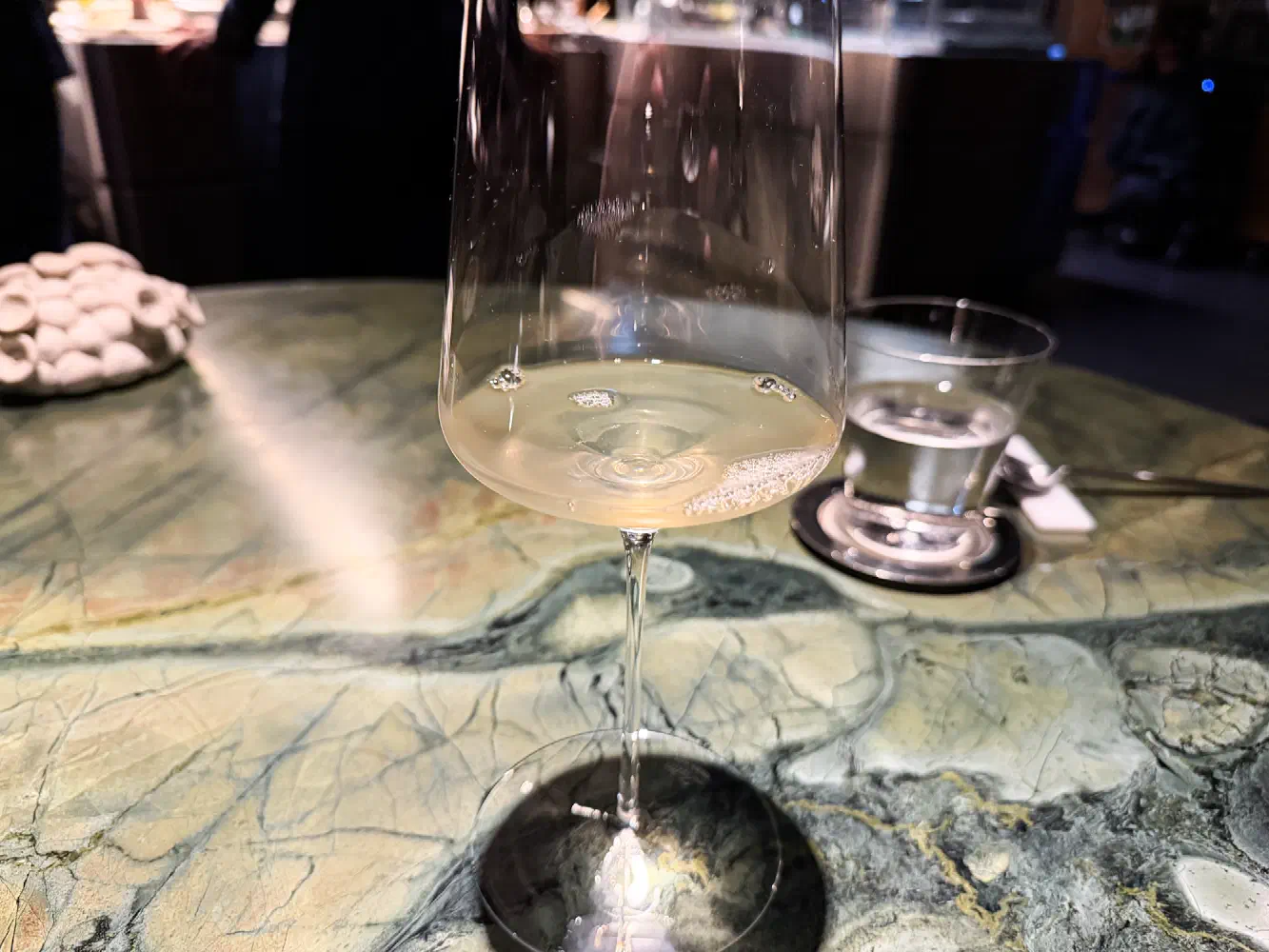
The Kiwi e Manjericão was kiwi and basil. It looks pretty basic but was a delicious combination.
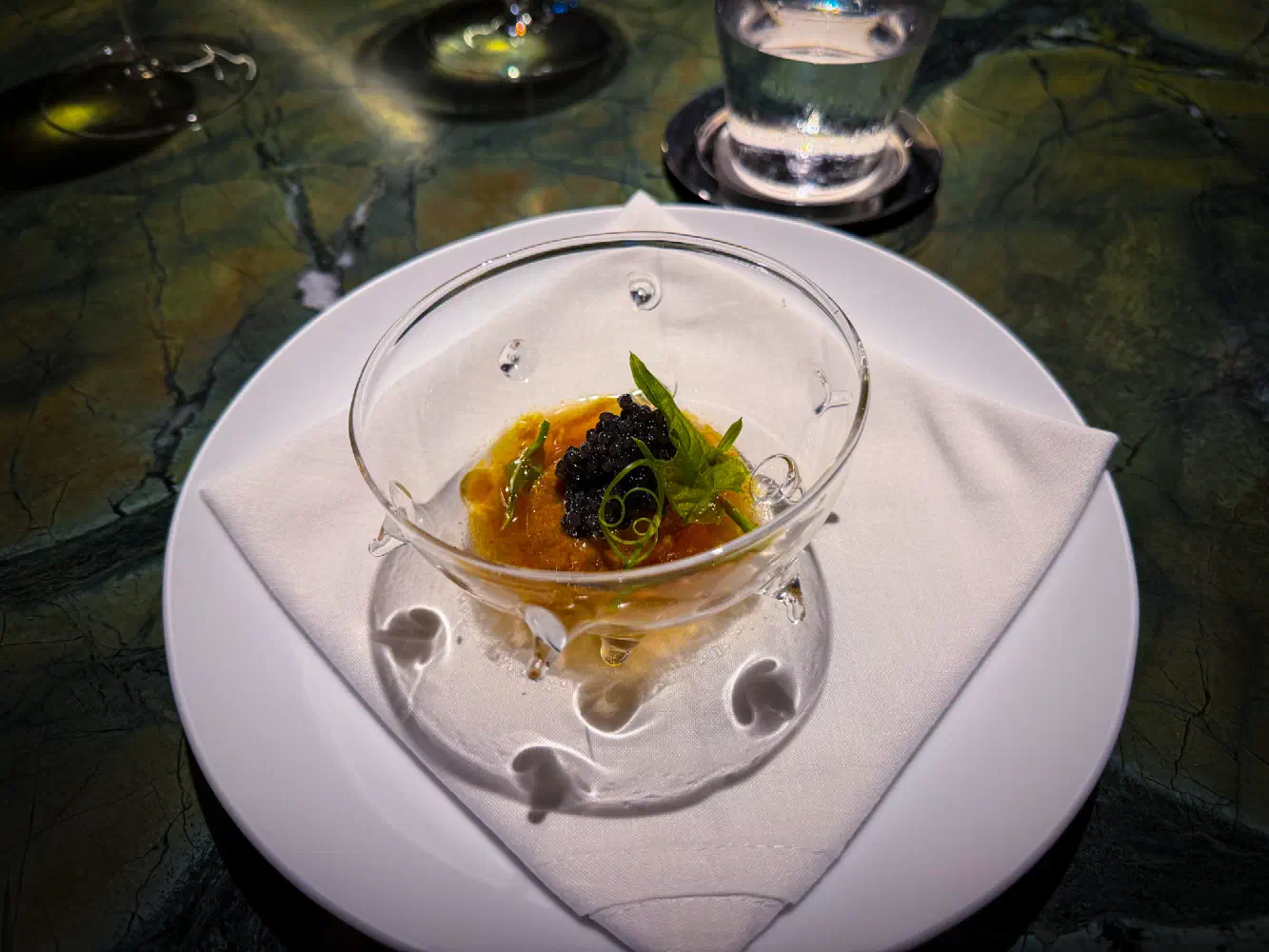
The Sea Urchin includes pumpkin and Beluga Caviar Cru. This was interesting because the sea urchin came from Santa Catarina as well. Unlike sea urchin from the United States or Japan, this had an interesting crunch to it. It wasn’t creamy like Hokkaido uni, and it wasn’t delicately sweet like Santa Barbara oysters. It was definitely more solid and did not melt in the mouth.
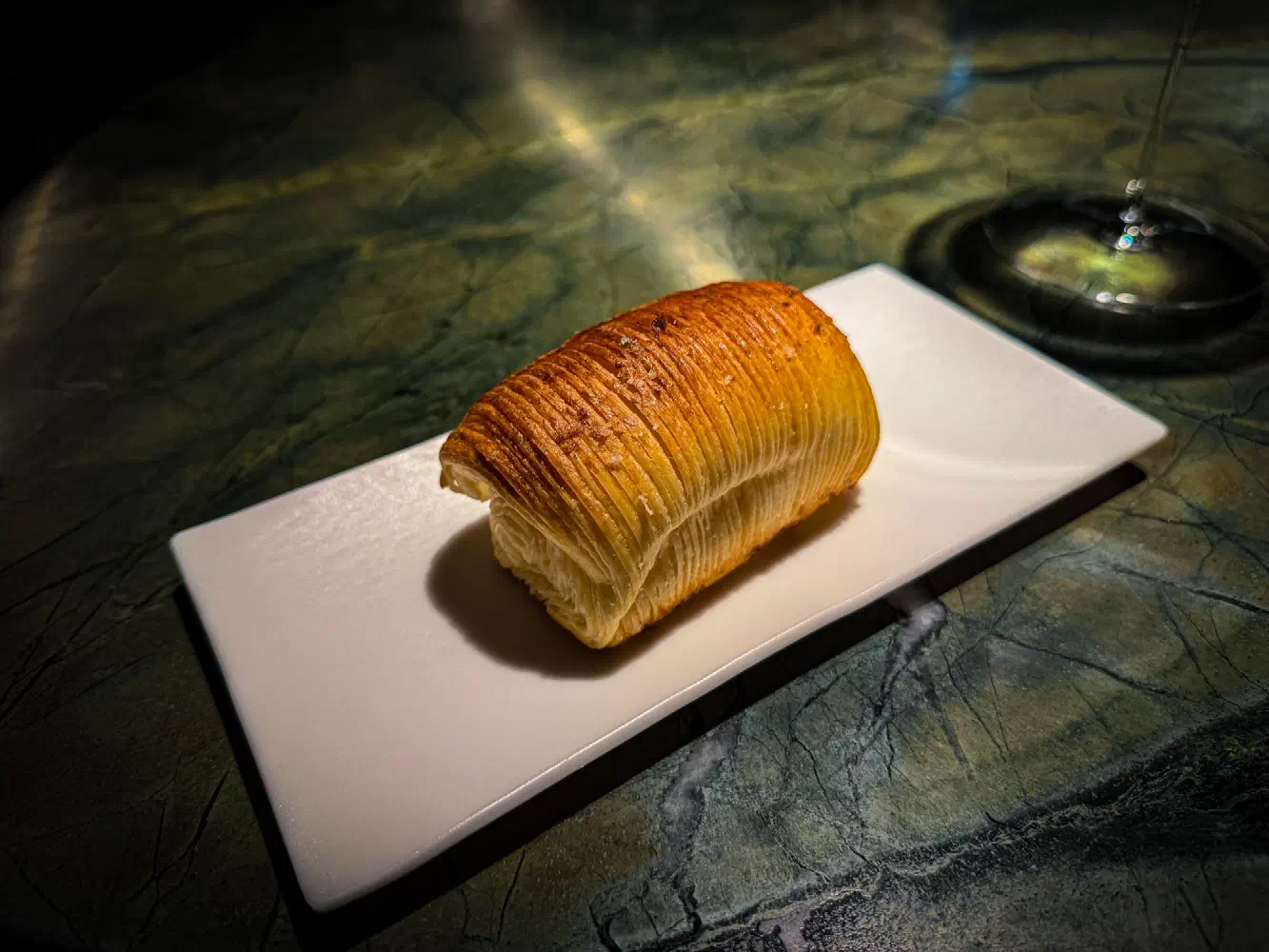
The Bread was similar to a croissant, and it was recommended for a little snack and the next 3 courses for the sauces.
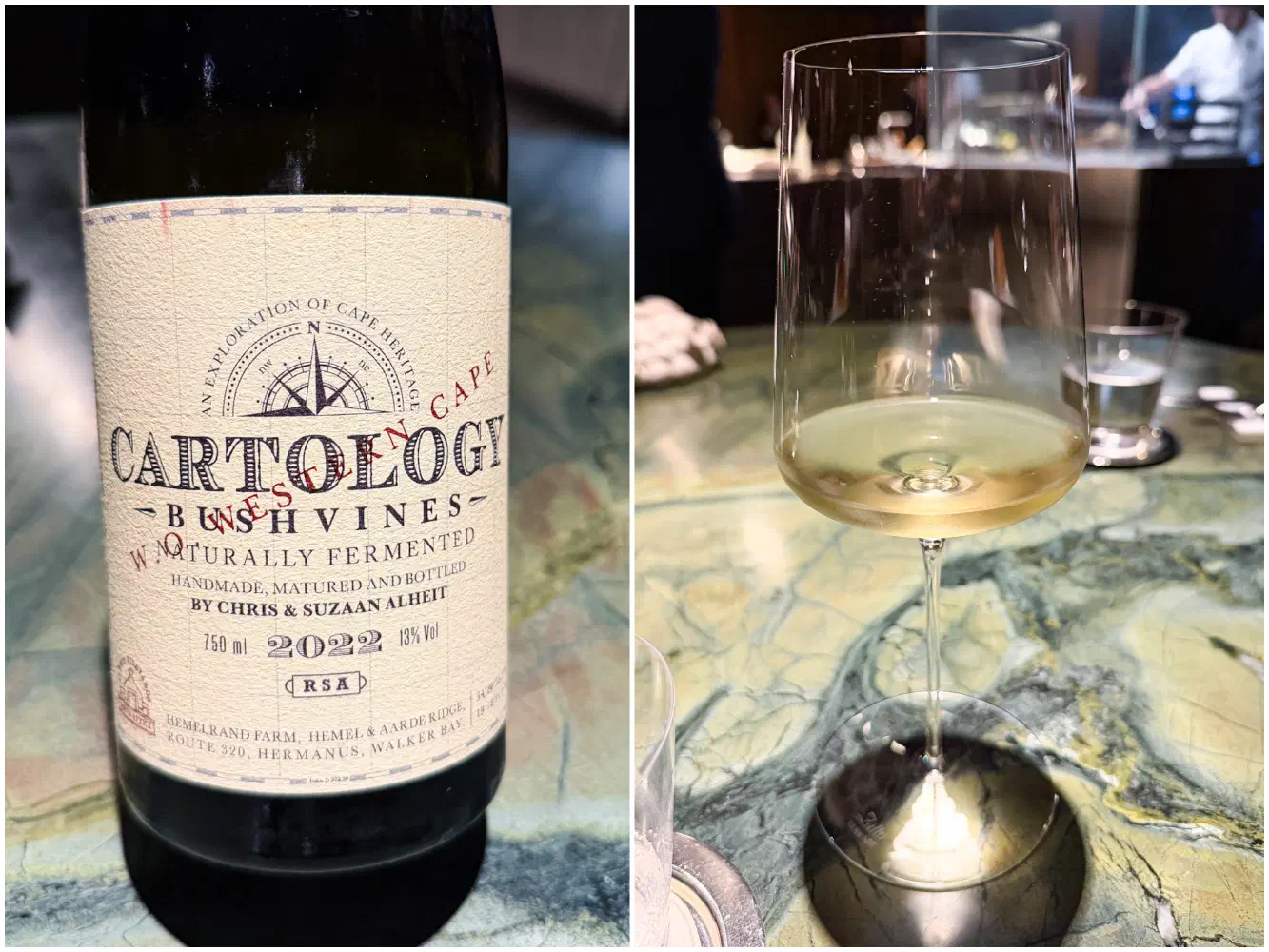
The Cartology Bush Vines was a blend of Chenin Blanc and Semillion from Alheit Vineyards, South Africa, 2022. I’m a fan of South African chenin blanc and semillion wines, so this was very delicious with ripe pear, citrus, and herbal notes.
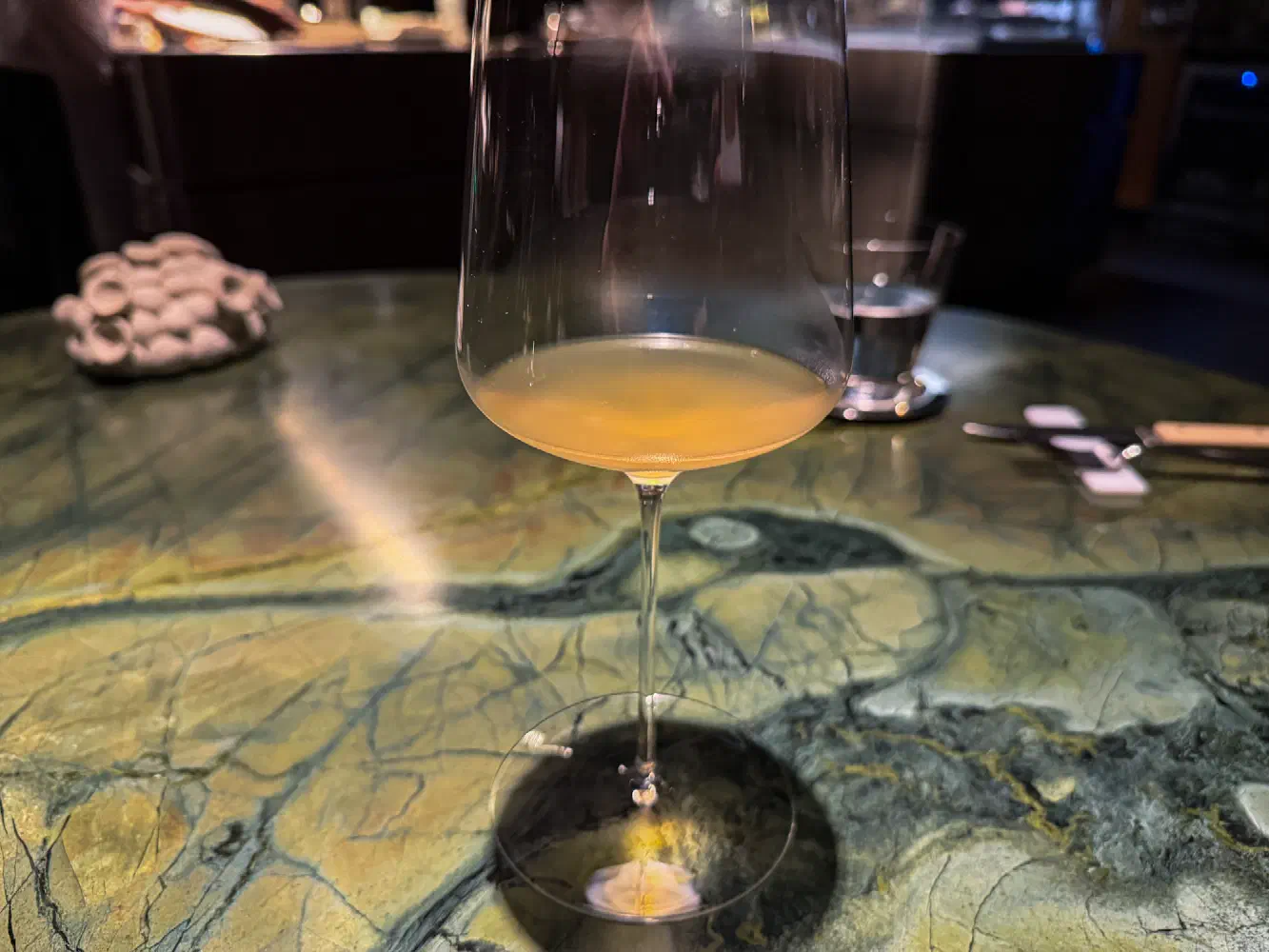
The Coco Tamarindo e Cacao was tamarind coconut water and cacao nibs. This had an interesting color, and the tamarind flavors were prominent.
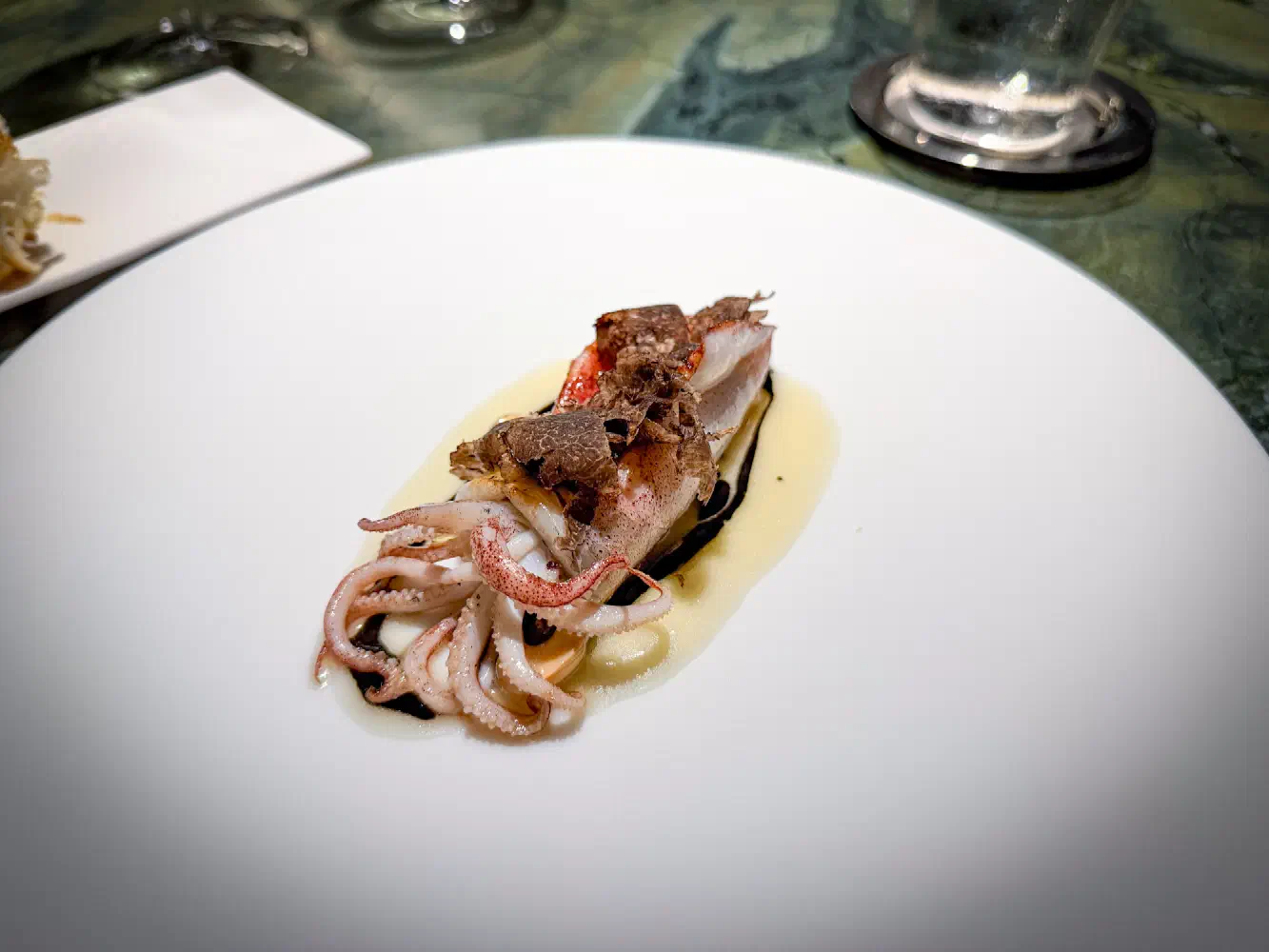
The Squid includes shells and huitlacoche (corn truffle). The squid was stuffed with mushroom flavors, but surprisingly, it was very mild and was savory. They shaved some black truffles on top, which did absolutely nothing for me. I don’t understand why people like black truffles when it’s nearly flavorless. The squid was deliciously tender and crisp. With the sauce, everything was very good.
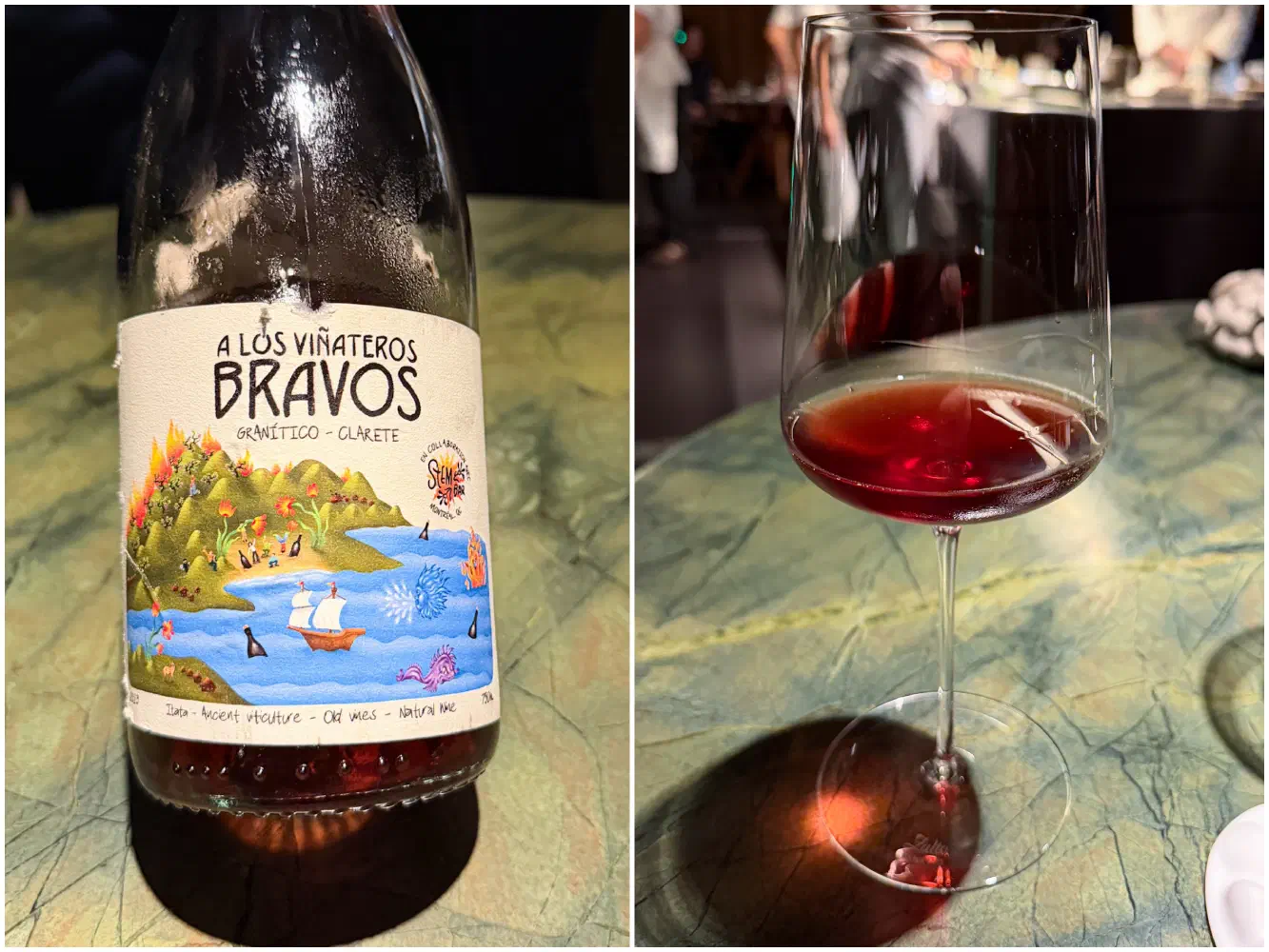
The Granitico - Clarete was a blend of País and Moscatel from A Los Viñateros Bravos, Itata, Chile, 2023. This one was very exciting. The color makes it look like it’s going to be bolt, but it actually was quite lovely. It was a light, floral, and aromatic red wine.
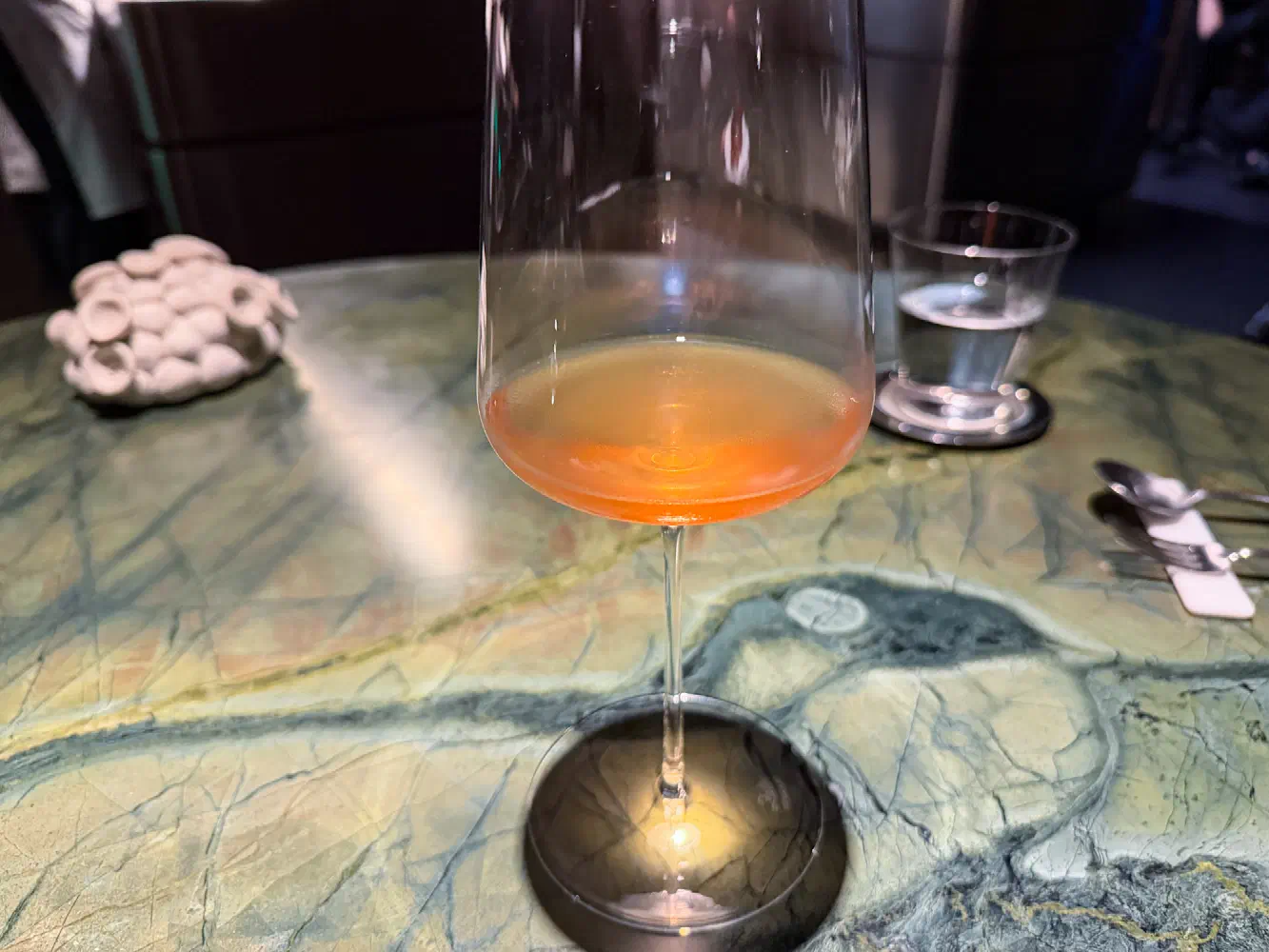
The Acerola e Menta was Barbados cherry and mint. This was an interesting color because the cherry juice itself was more of an orange color that red.
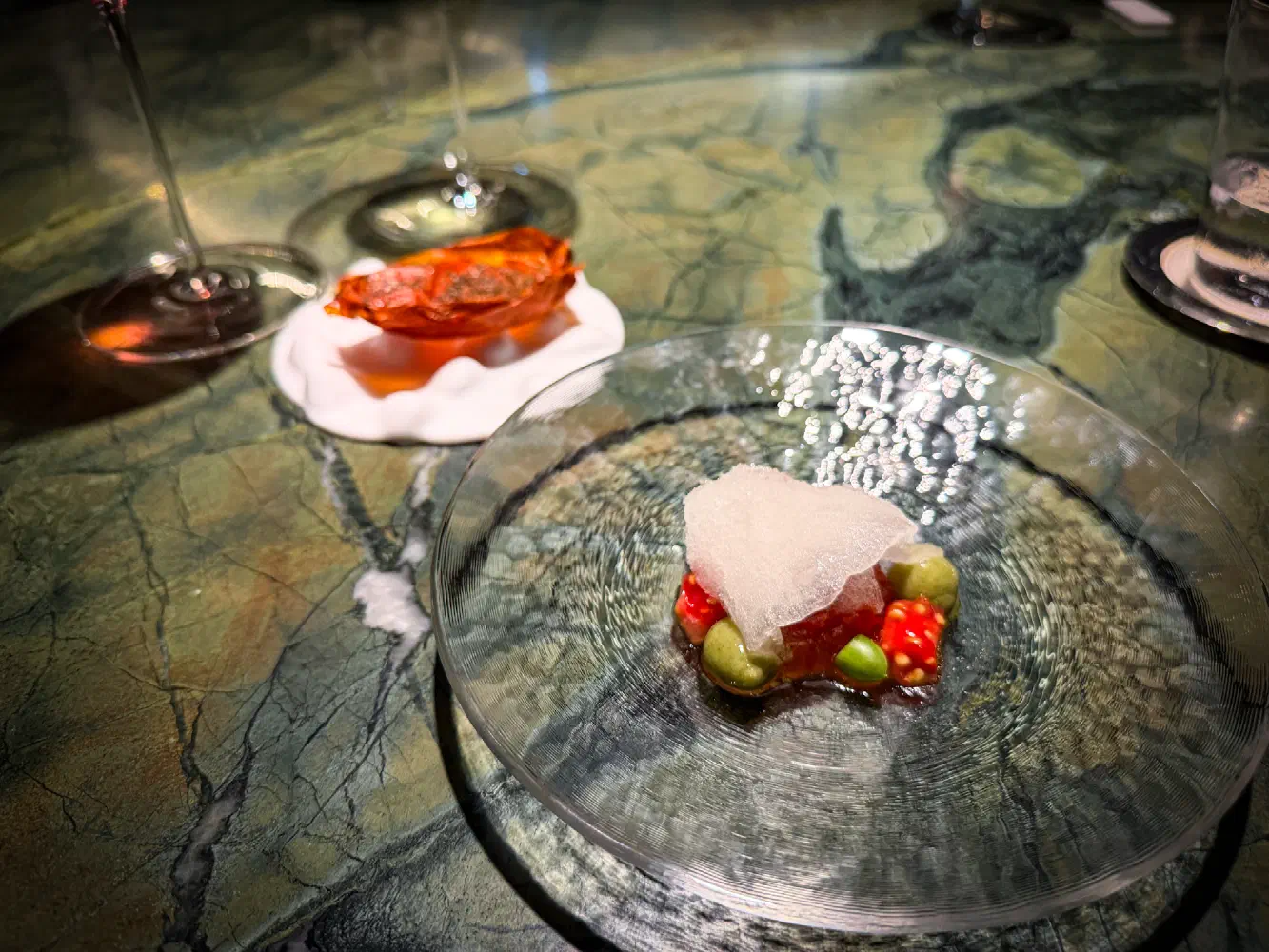
The Tomato includes algae and watermelon. They use the skin, the pulp, and the seed of the tomato in this course. They take the skin and make it into a crispy chip. The watermelon granita was very flavor and complementary to the tomato.
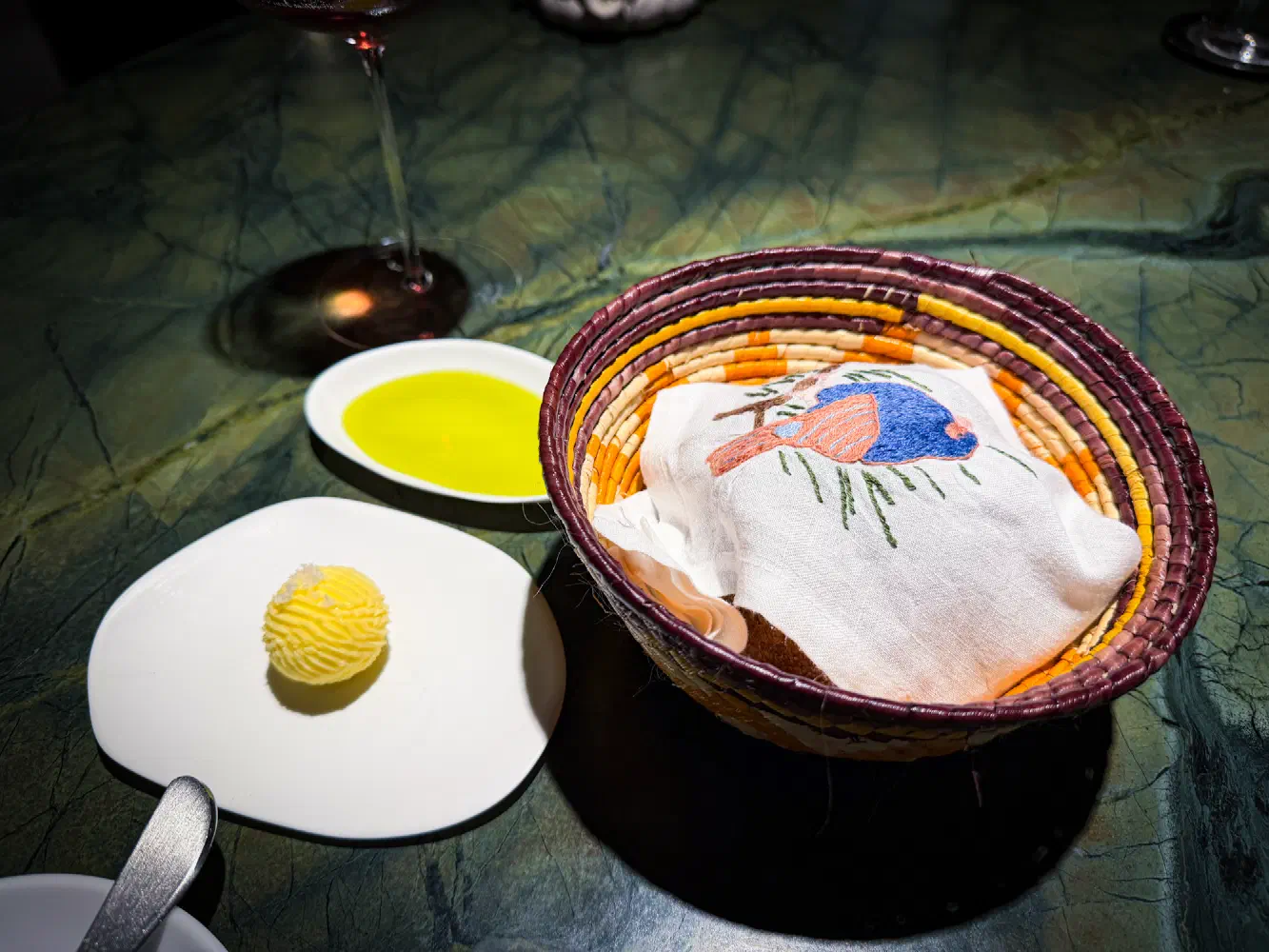
This is the second bread of the night was sourdough, which uses flour from Parana and is fresh with flavor and texture. The butter comes from Jersey cow milk from the southern country side of Sao Paulo, which is very creamy. The olive oil comes from Sao Paulo, which is quite surprising. It’s a medium body olive oil with a bit of spiciness to it. I like how all the ingredients come from Brazil, but they offer familiar bread appearances. The olive oil was definitely not our favorite because the flavor of it was quite bold and clashes even with the butter. The butter though was very good.
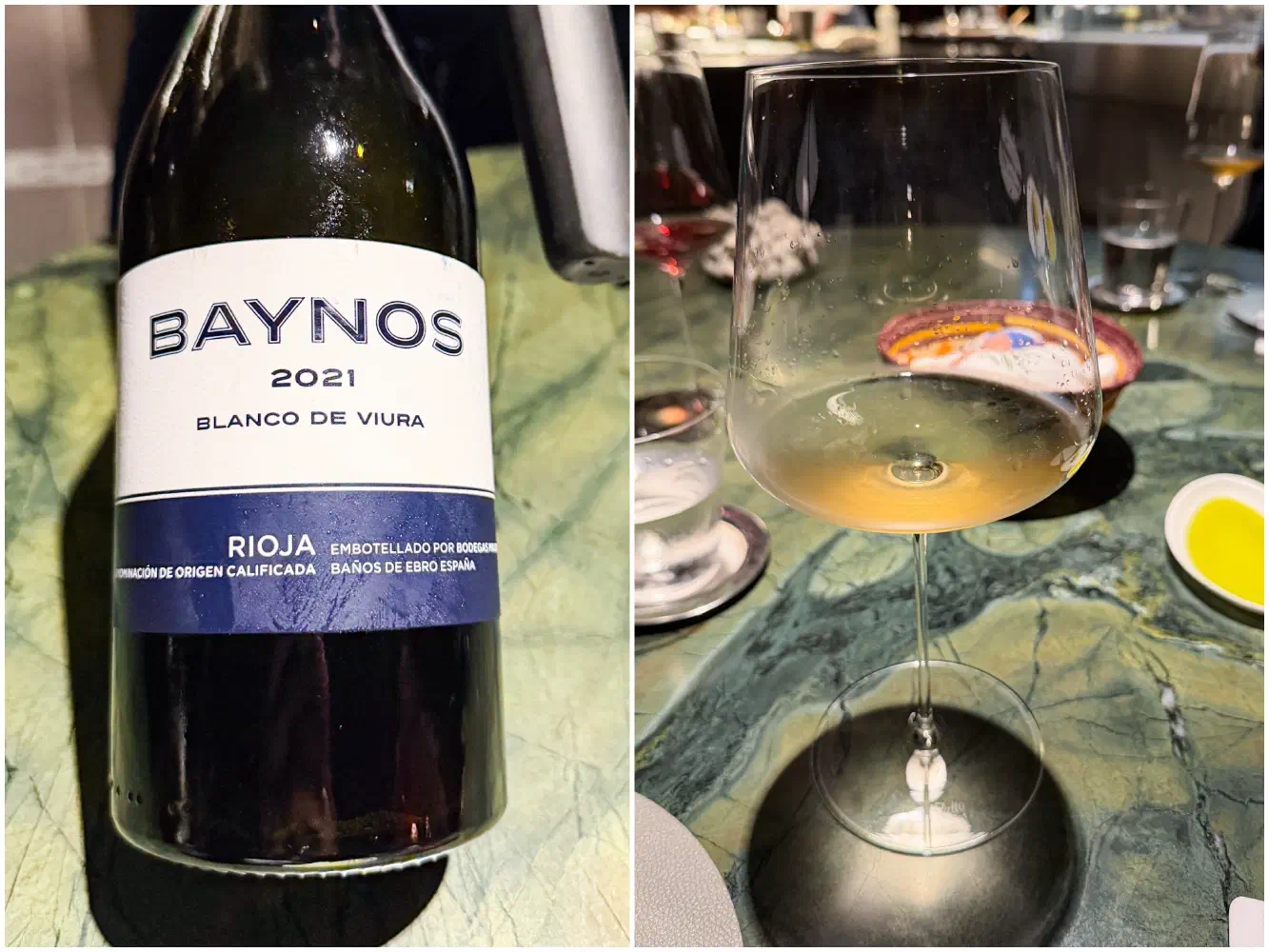
The Blanco de Viura was from Bodegas Mauro, Rioja, Spain, 2021. This was a dry, medium-light body white wine with high acidity and not much tannins.
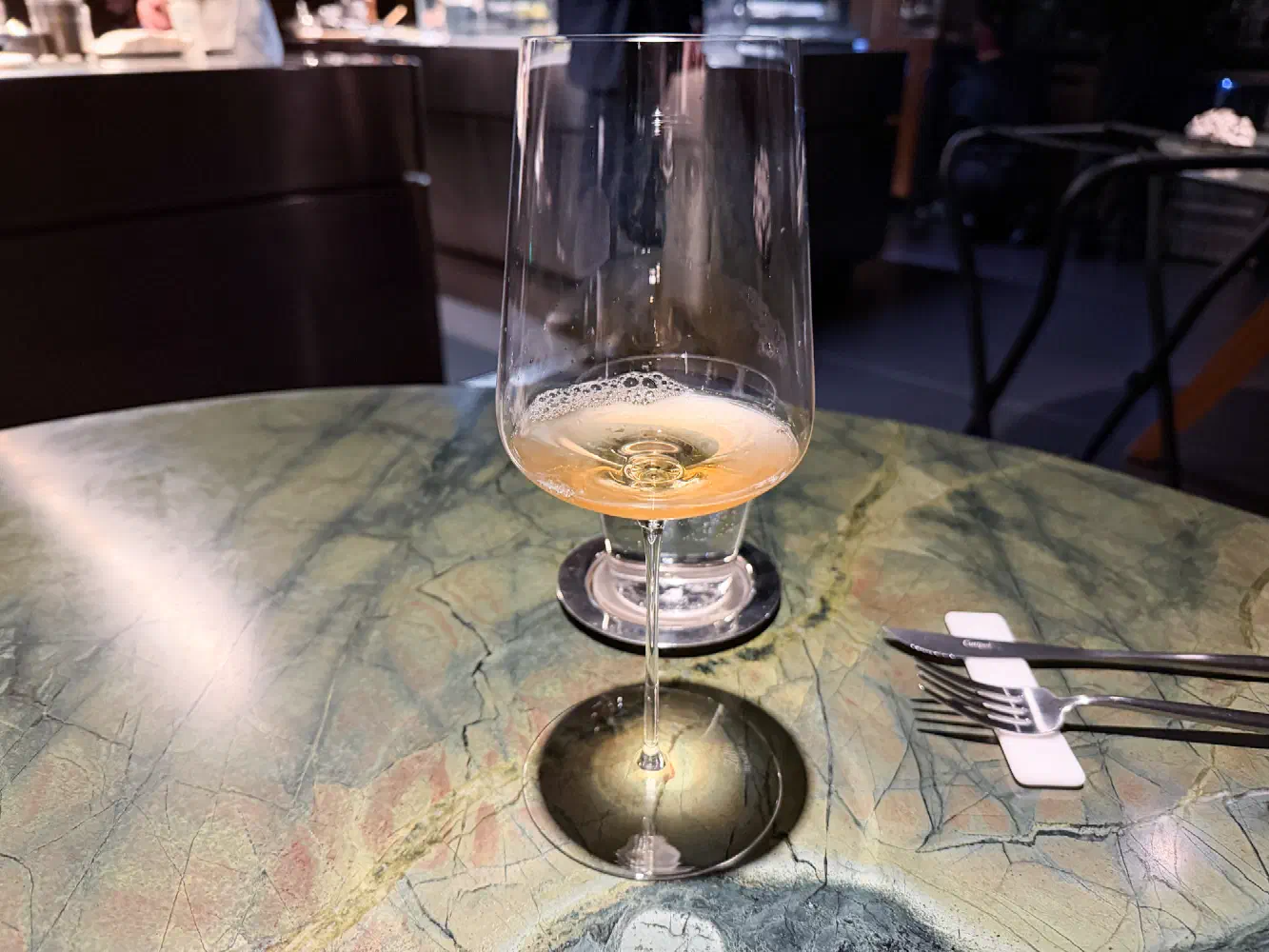
The Chá Oolong Frio e Flor de Laranjeira was oolong tea with orange blossom water. This offered that earthy tea sensation with a bit of sweetness and brightness.
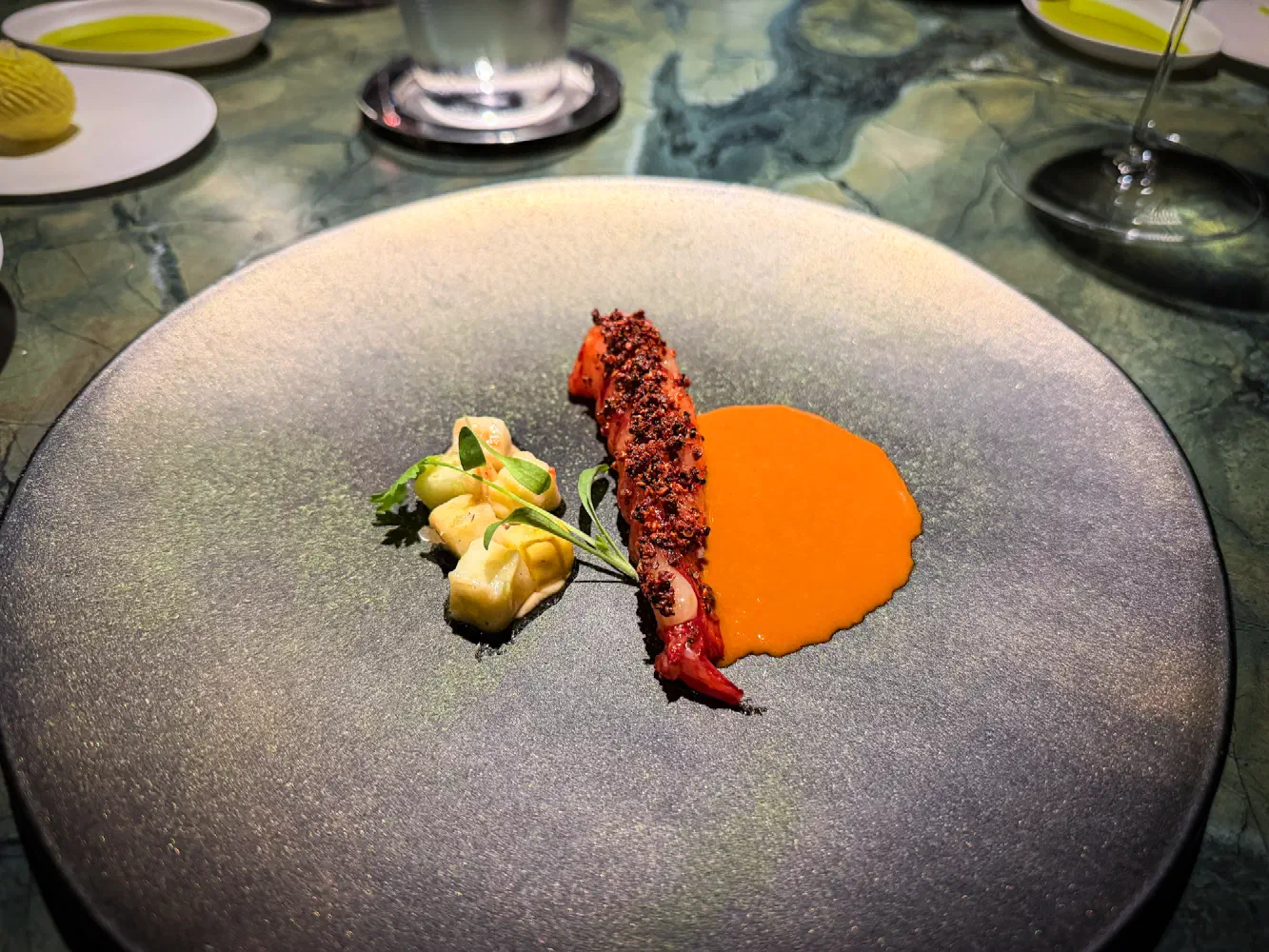
The Carabinero includes cashew and coriander. This is a deep water shrimp (also known as Scarlet prawns) with shrimp head sauce and cashew vinaigrette. The shrimp was super succulent and sweet full of flavors, and the sauce was delicious. I took the bread and finished up the sauce. This was one of my favorite dishes of the night.
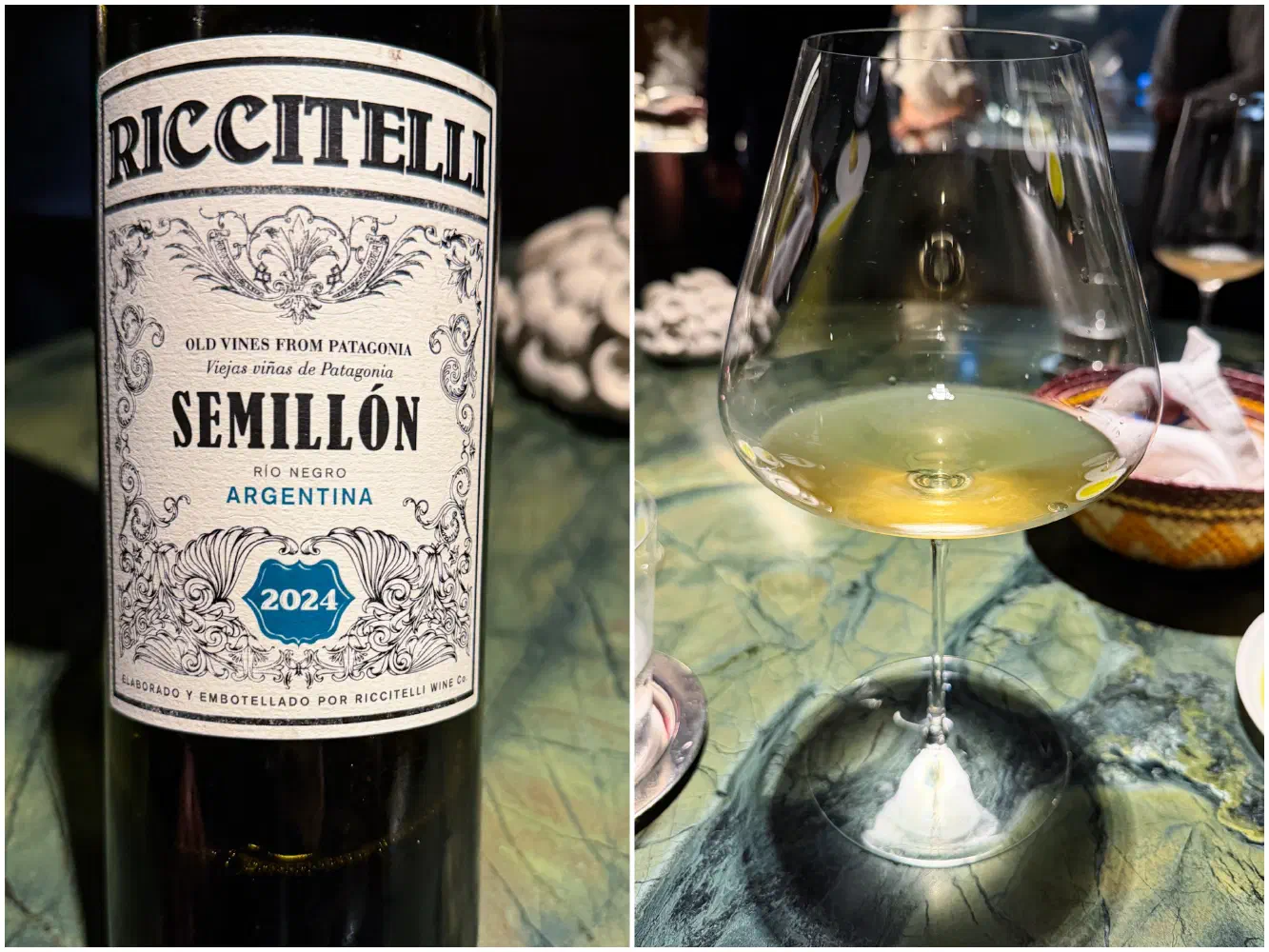
The Old Vines from Patagonia Semillion was from Riccitelli, Patagonia, Argentina, 2024. This white wine from Argentina has waxy lemons, white flowers, and wet stone flavors. It was great with the upcoming grouper fish.
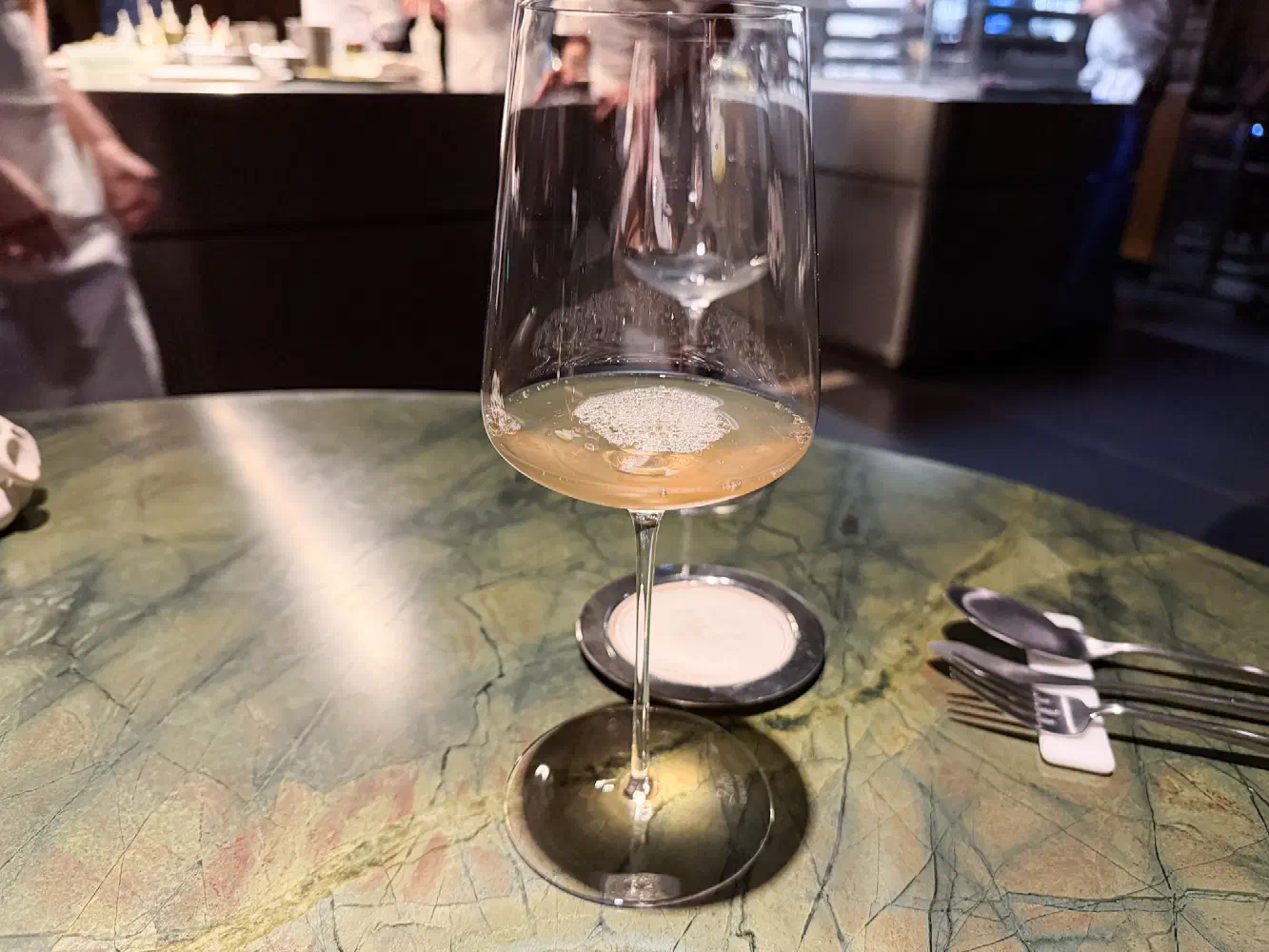
For the next course, they brought Abacaxi e Salsão, which was pineapple and celery. They felt celery would go well with the fish dish.
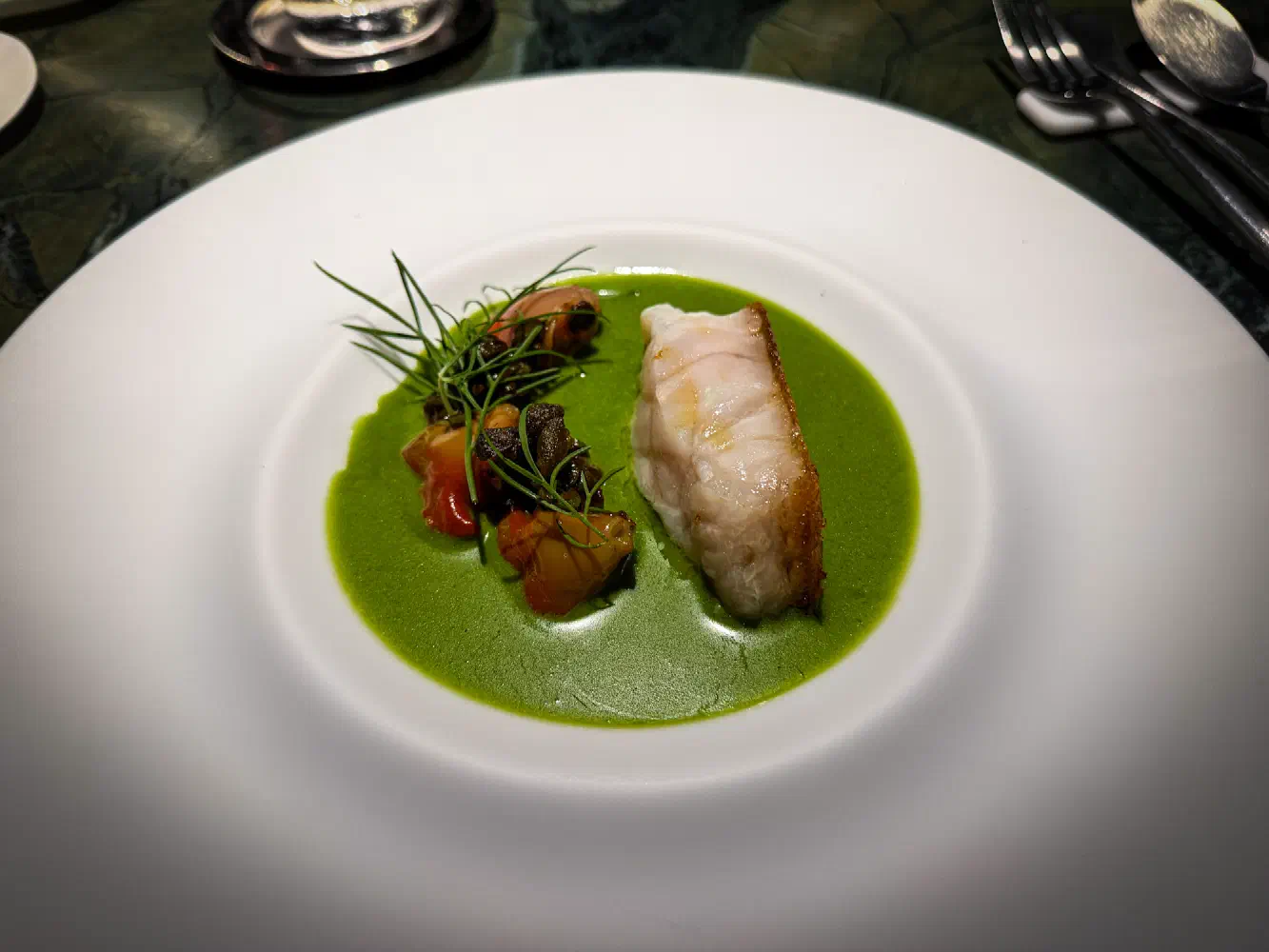
The Grouper includes clam and asparagus bean. This comes with a mix of clams, fish, and a green sauce. All these ingredients come from Brazil but should be familiar if you have tried these textures before.
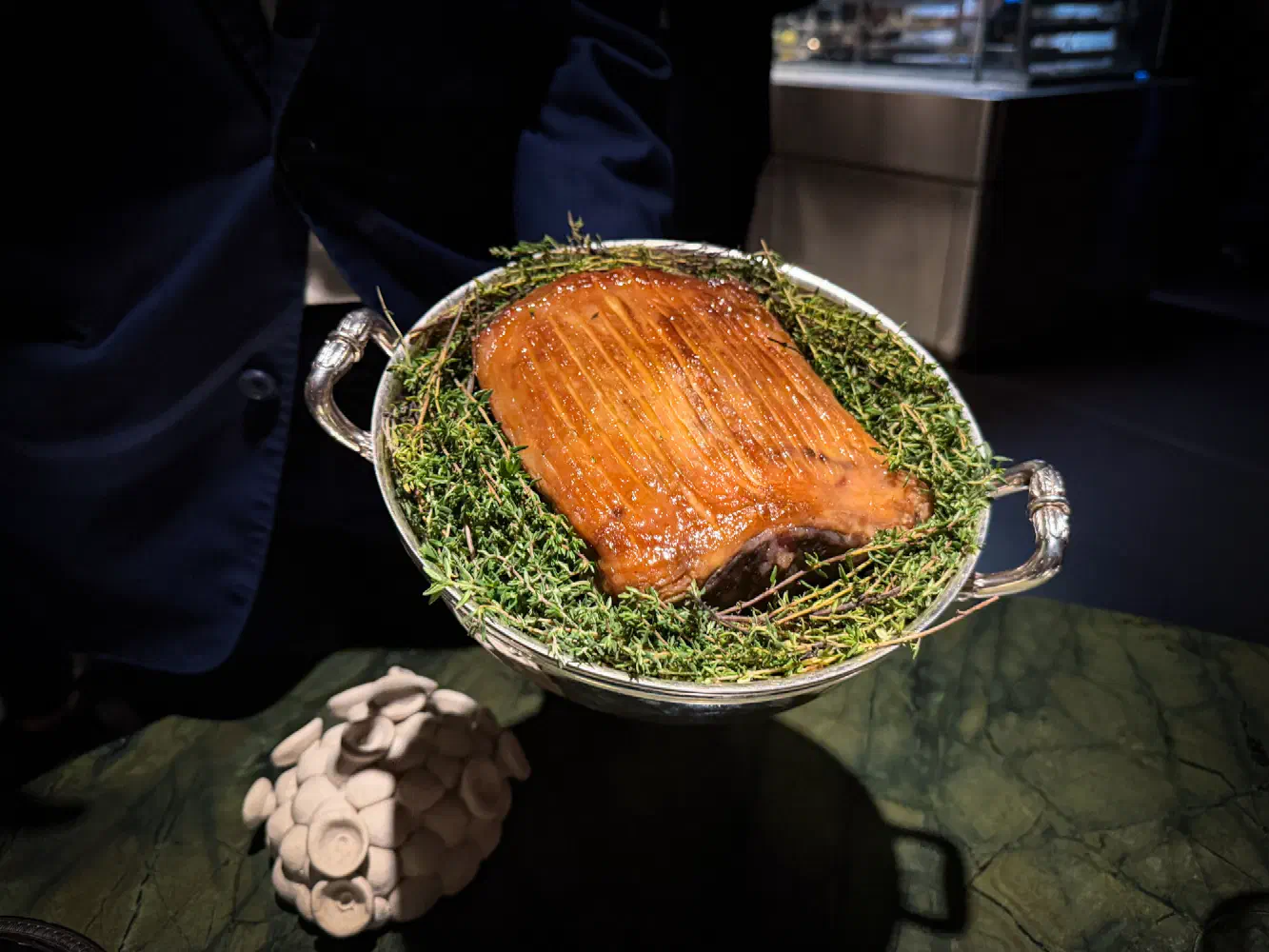
For the next and main savory course, they wanted to demonstrate where the lamb meat comes from. This is the lamb saddle, and our loin is cut from this saddle.
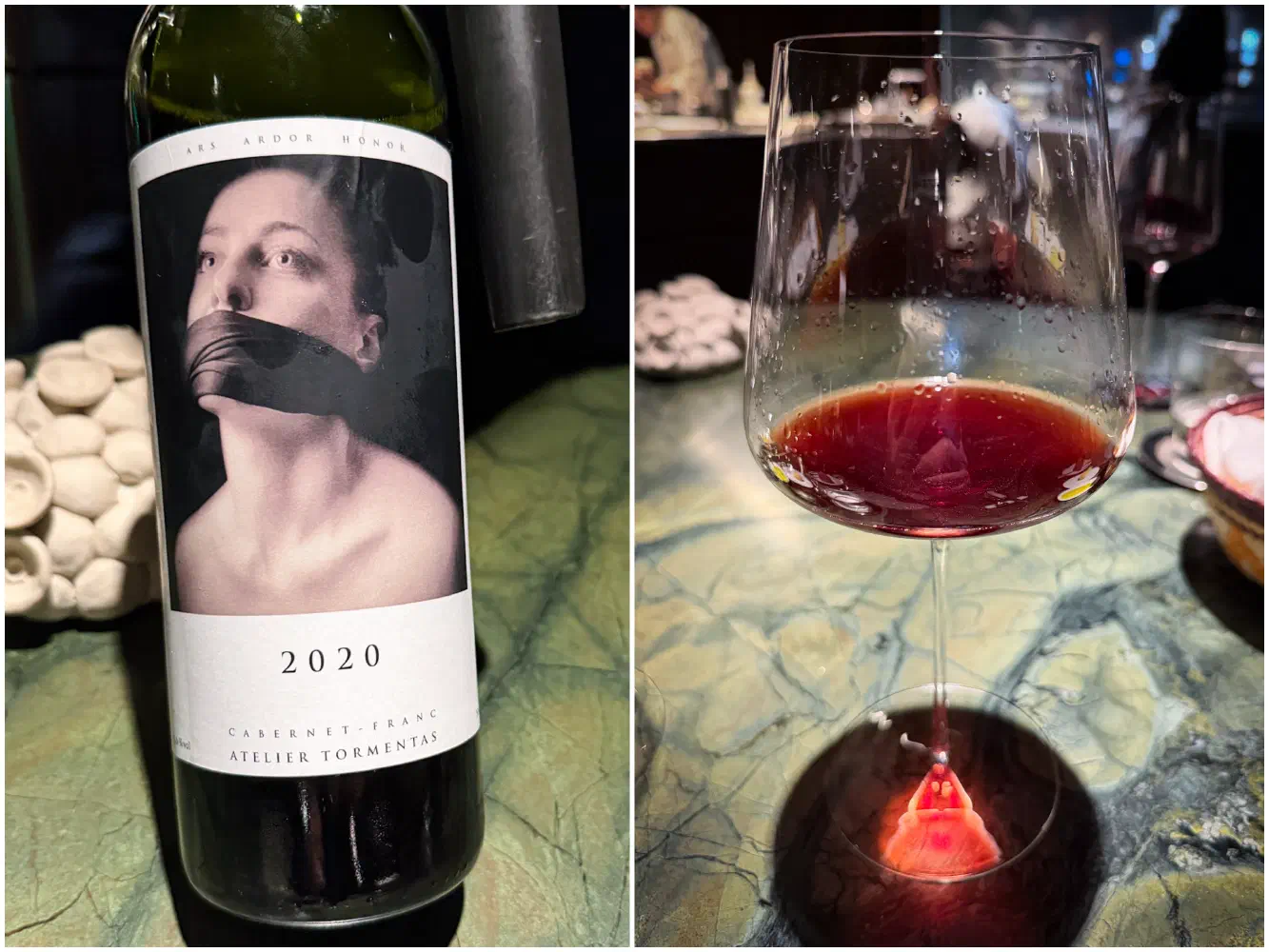
The Cabernet Franc came from Atelier Tormentas, Rio Grande do Sul, Brazil, 2020. Believe it or not, I actually was not too much of a fan of this one. This natural wine has high acidity and has some pretty distinct and bold flavors. It’s not much of a sipping wine for me, and it was the only one I didn’t finish.
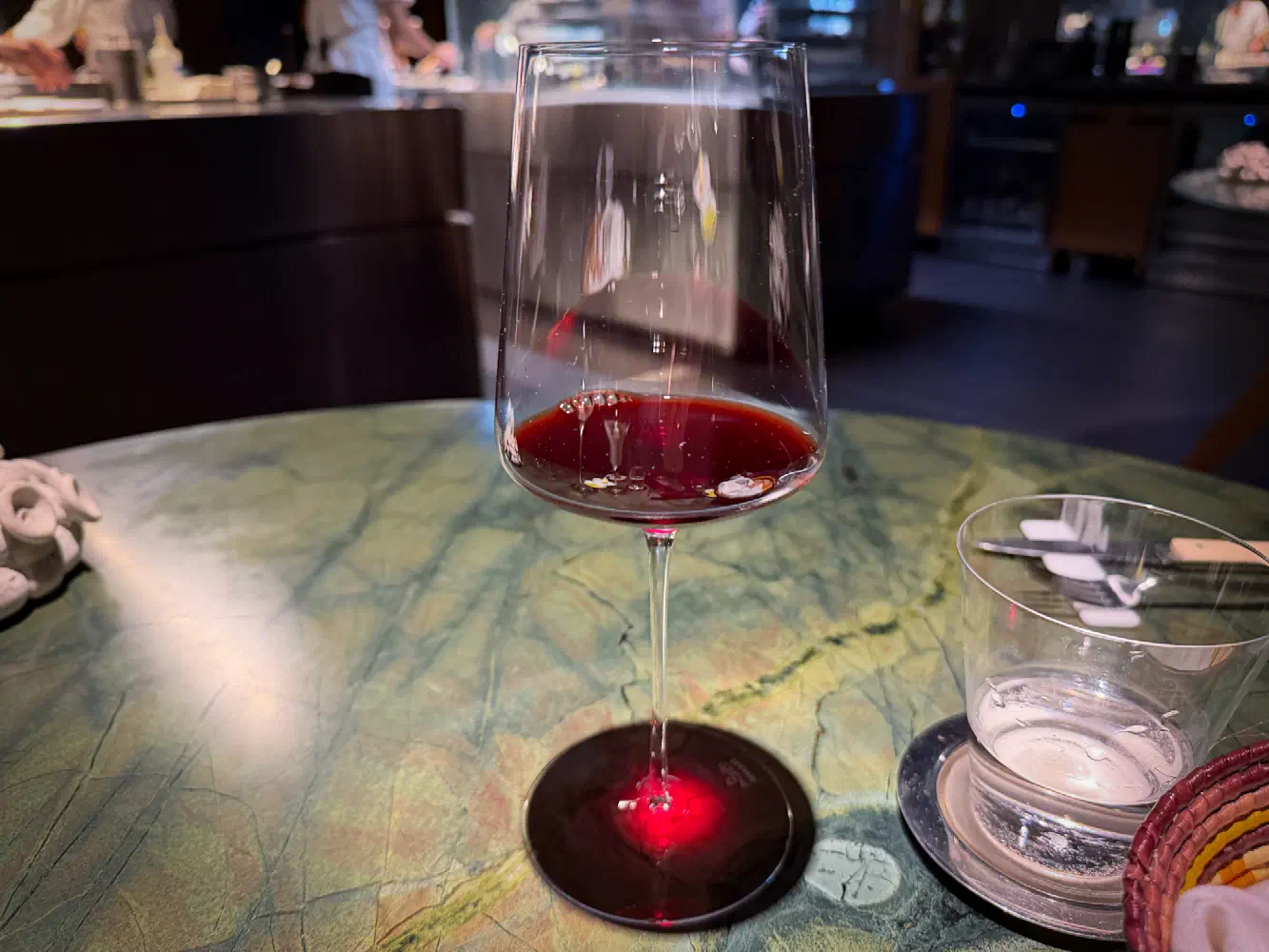
For the upcoming meat course, they served Amora e Hibisco, which was blackberry and hibiscus. They wanted to match the dark red of the red wine, so they thought this combination would visually look similar. It was very luscious and delicious.
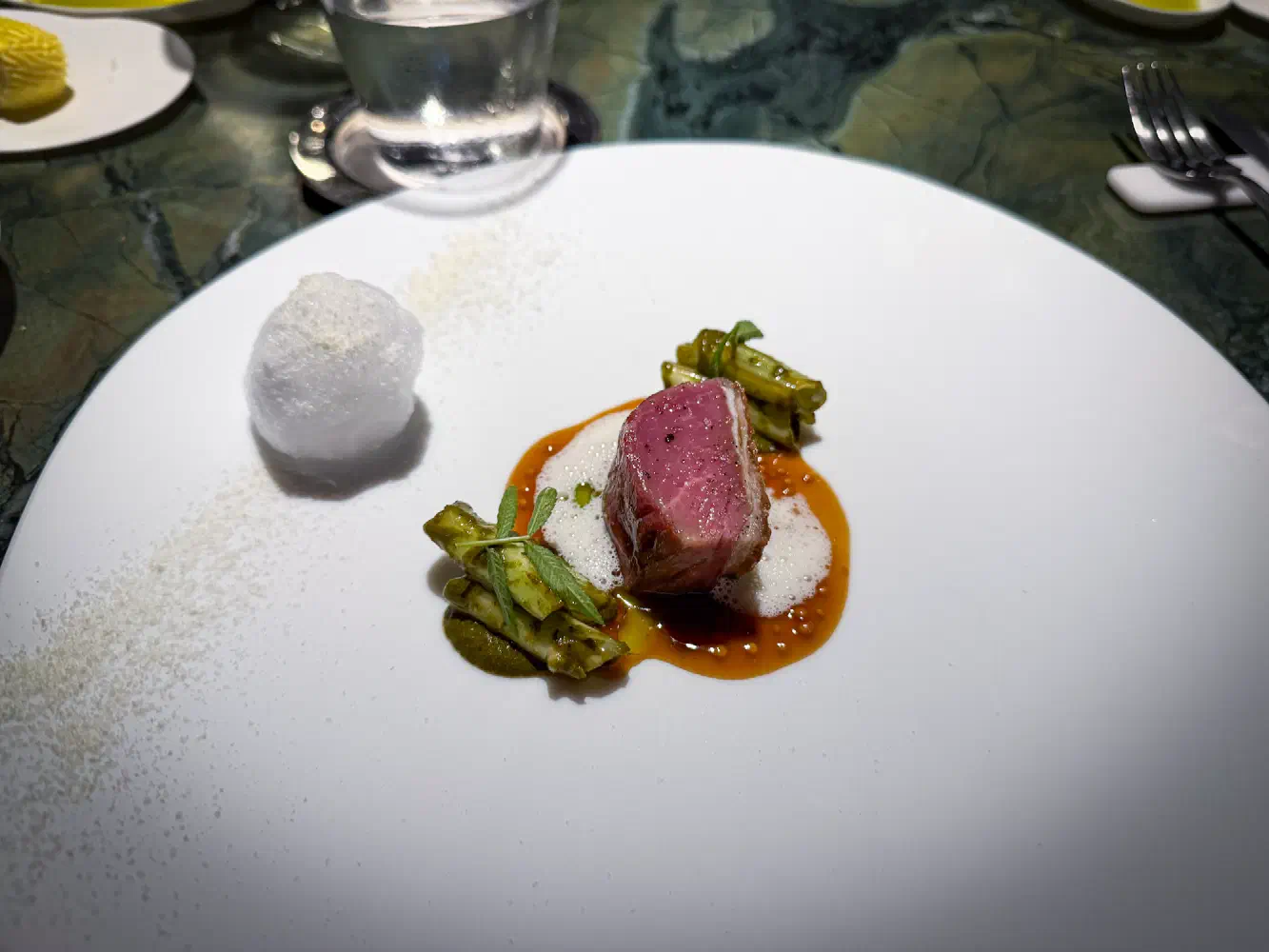
The Lamb includes taro and sheep yogurt. This uses a lot of ingredients from Brazil, and it was a bit noisy so I couldn’t hear clearly what the ingredients were. The lamb was pretty good and luckily not as gamey. The garnish was very complementary to the meat as well. The fried ball didn’t have much flavor, and I think it was meant to be a starch to complement the lamb loin.
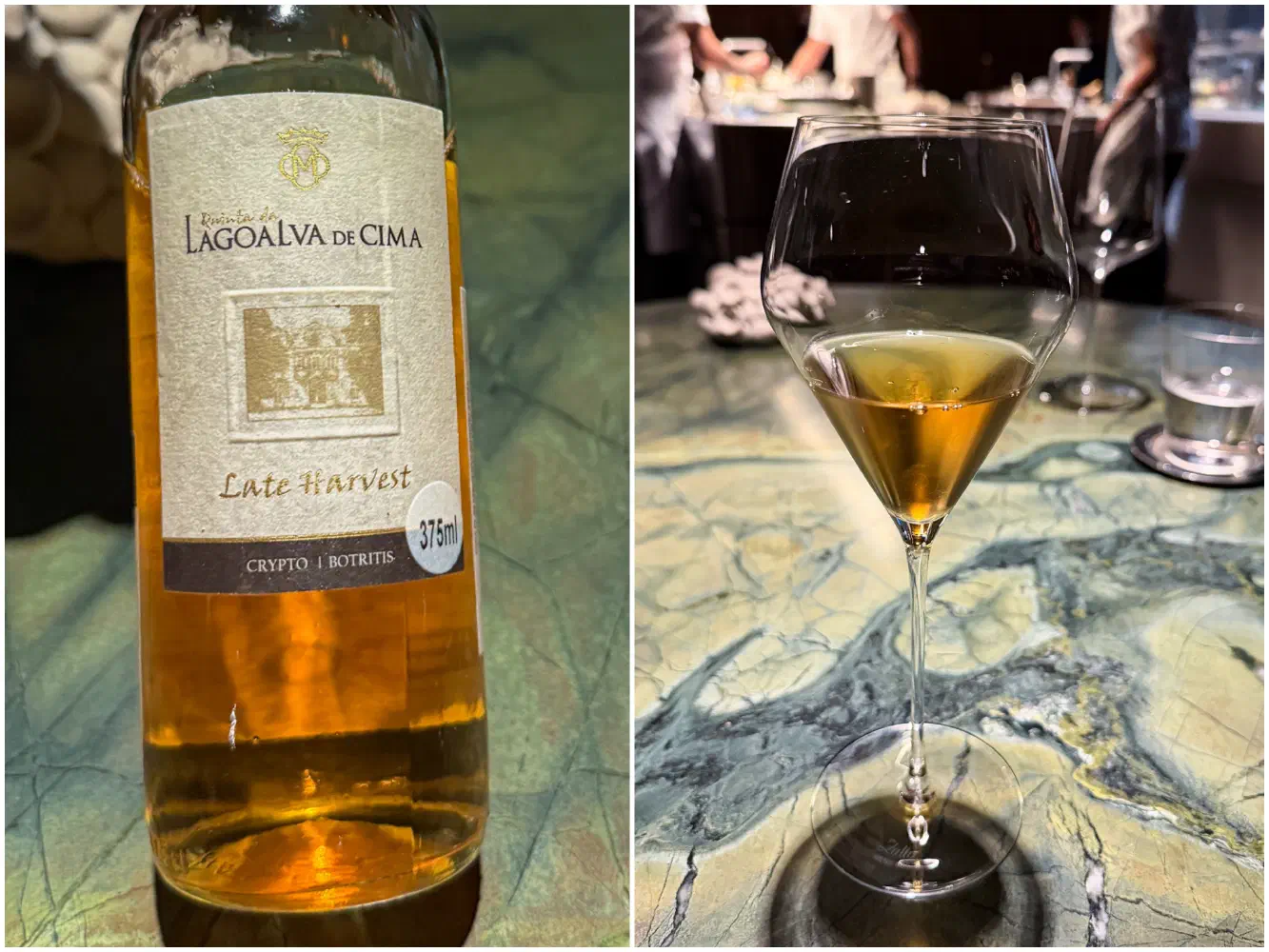
The Late Harvest was a blend of Gewürztraminer and Riesling from Quinta da Lagoalva, Tejo, Portugal, 2014. This dessert wine was not my favorite as it had some alcohol residue that I didn’t enjoy as much. Nevertheless, we finished this.
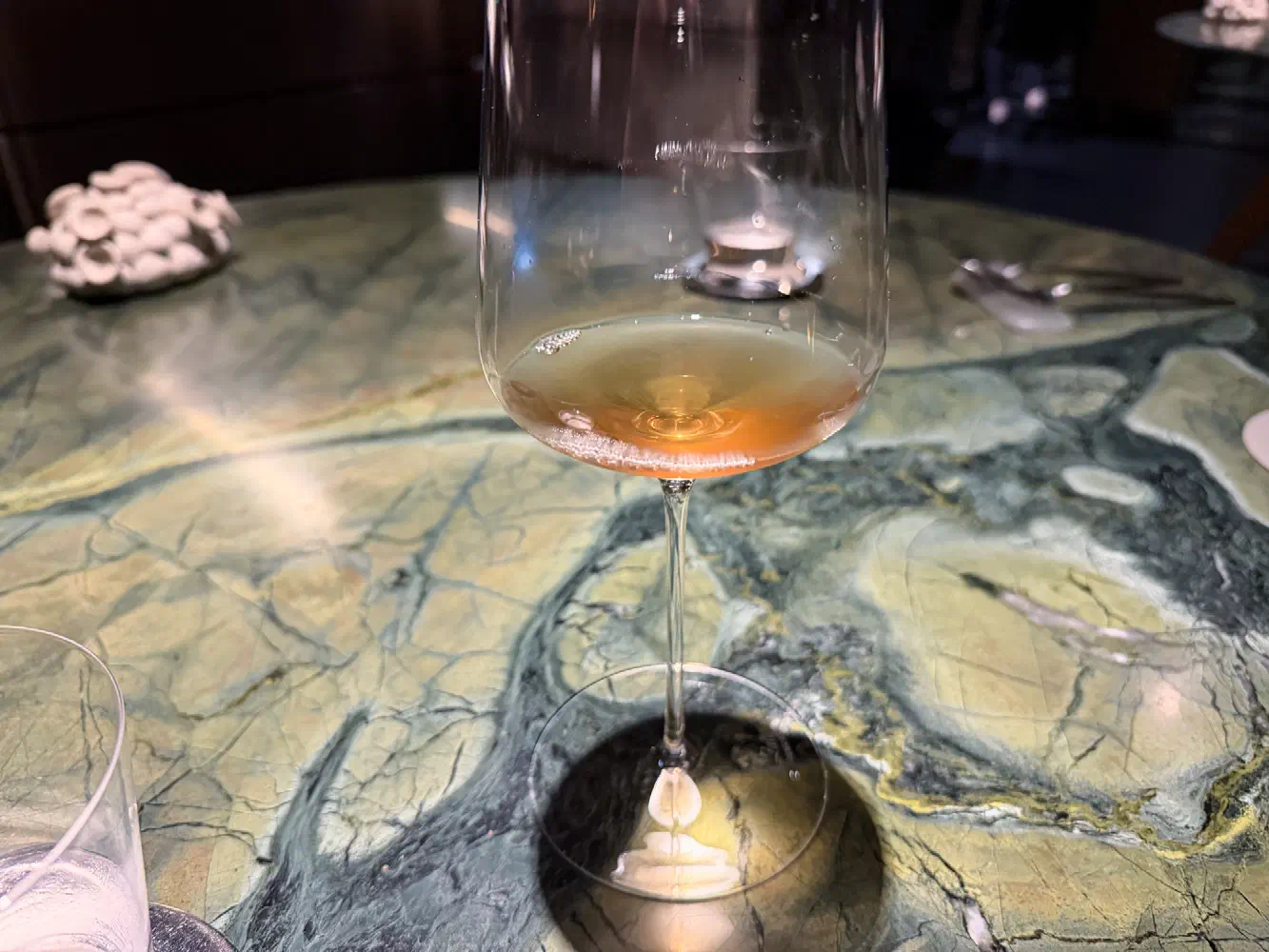
The Banana Capim Santo e Flor de Sabugueiro was banana with lemongrass and elderflower, and it was very good. These are such interesting compositions that it made this very interesting to drink.
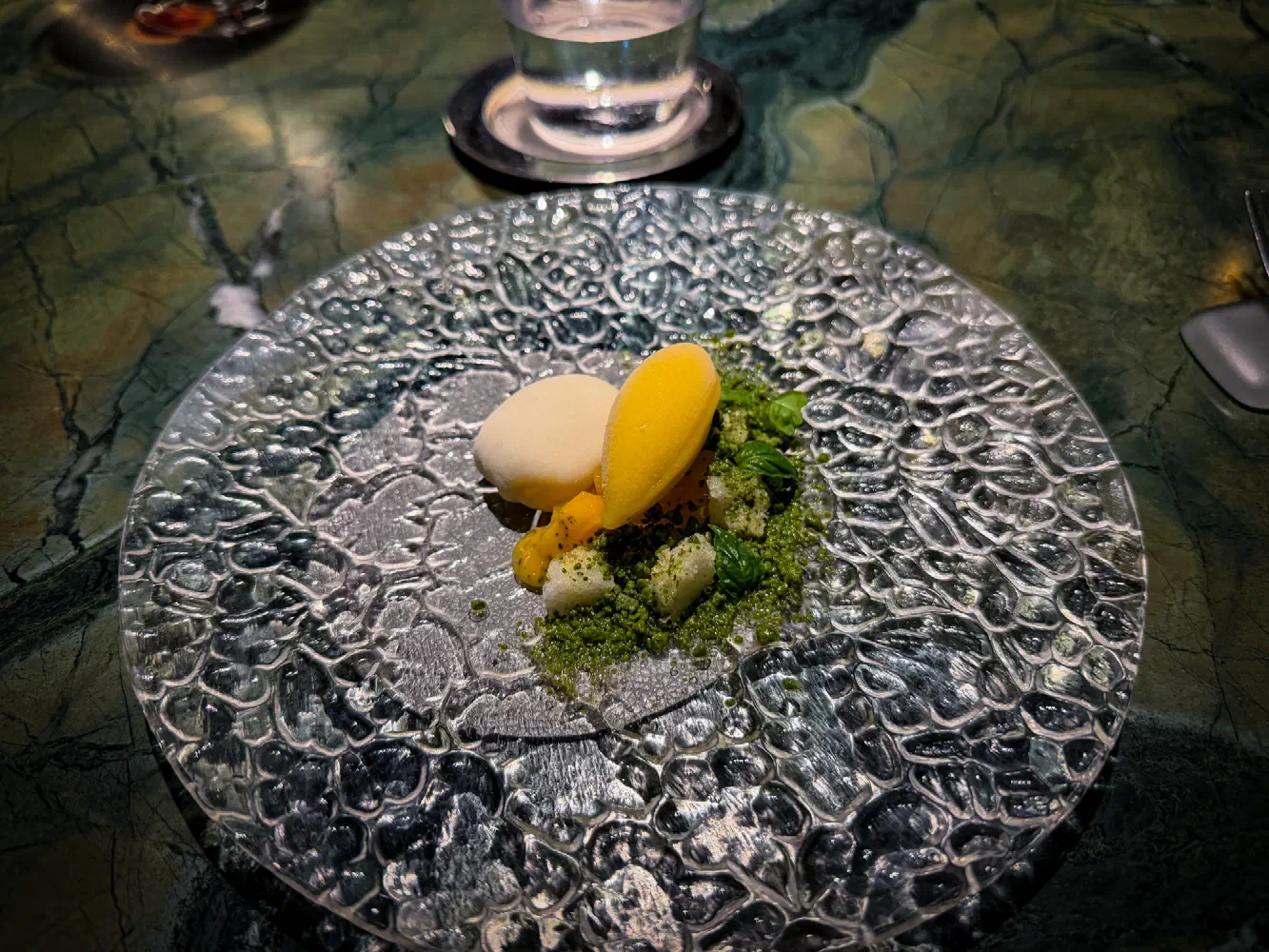
The Mango includes rice and basil. The larger white nugget has a mochi type texture and has some jasmine and rice fillings in it too. It was all pretty good.
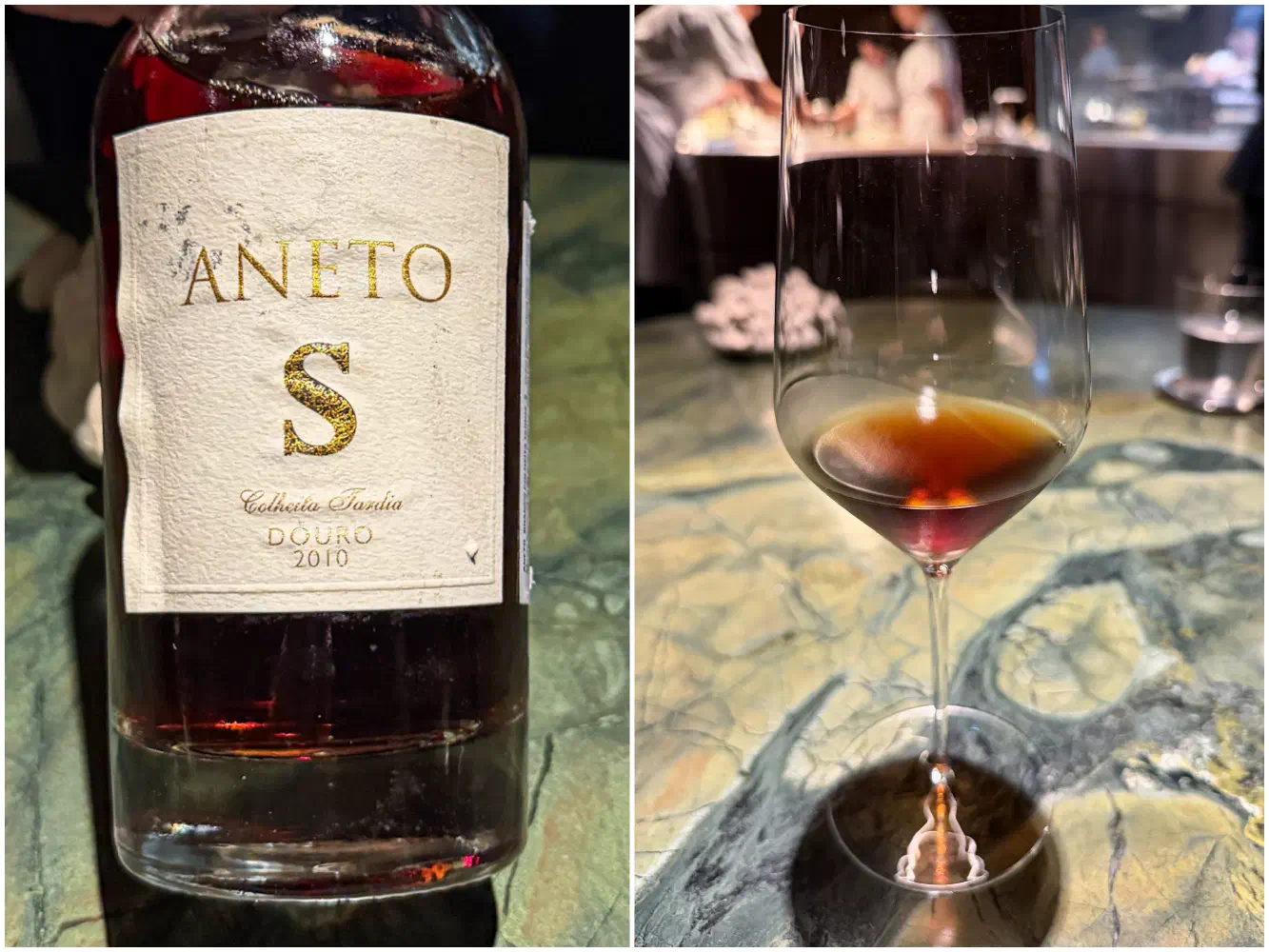
The Arbois Vin de Paille was a savagnin from Domaine de La Pinte, Jura, France, 2011. This one was actually pretty decent with intense candied fruits, honey, caramel, and apricot flavors.
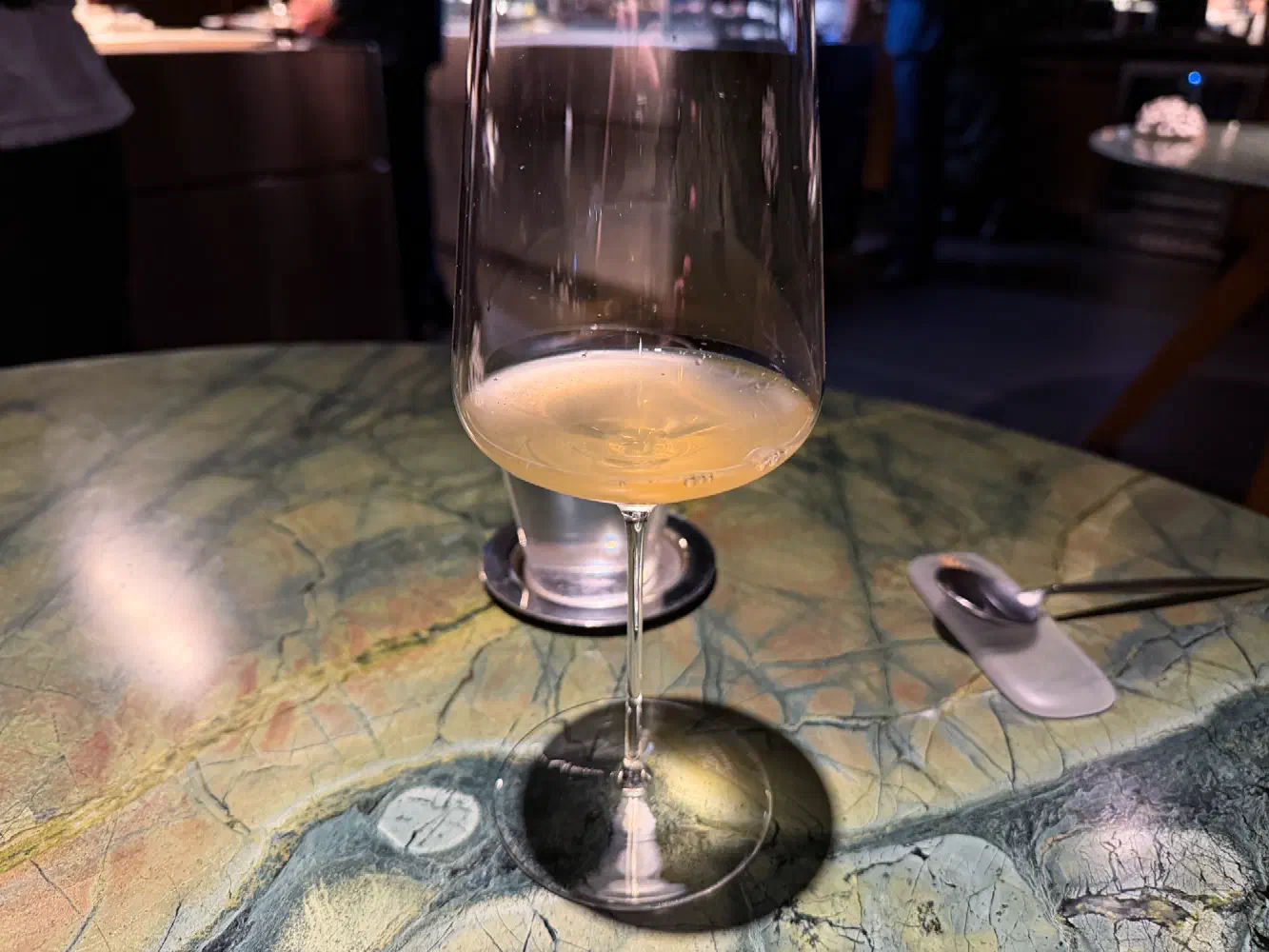
The Cupuaçu Baunilha e Mel was cupuaçu, banana, and honey. I swear that cupuaçu matches so much with different fruits. I’m very surprised that this fruit is not popular in Brazil in its entirety and hasn’t made it to the states. If you like passion fruit, you will also adore cupuaçu.
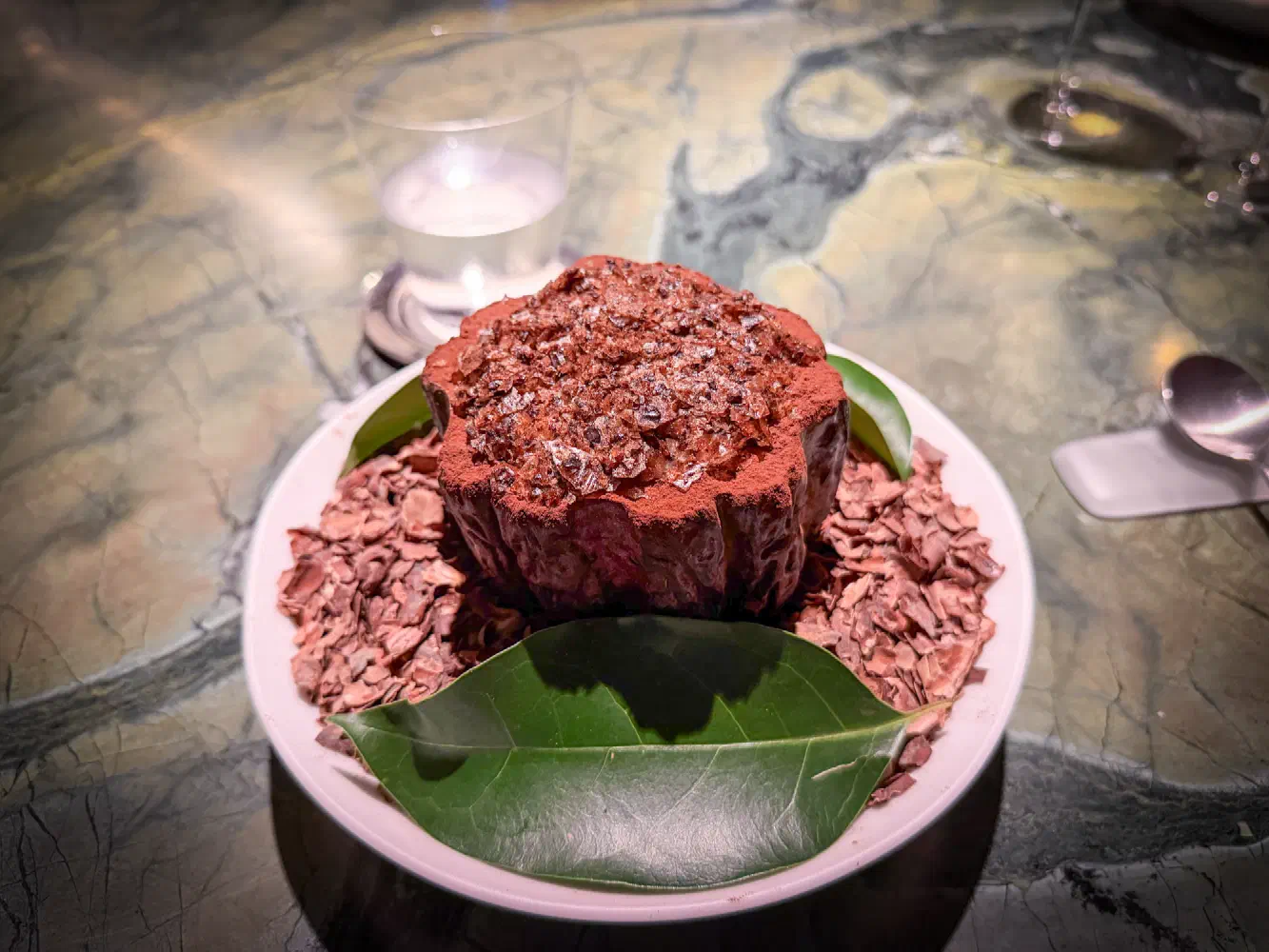
The Cocoa includes cardamom and baru. There are textures of cacao made from chestnut, Chocolate ice cream, and cardamom. The cardamom flavors were pretty strong, but the bottom had delicious chocolate ice cream.
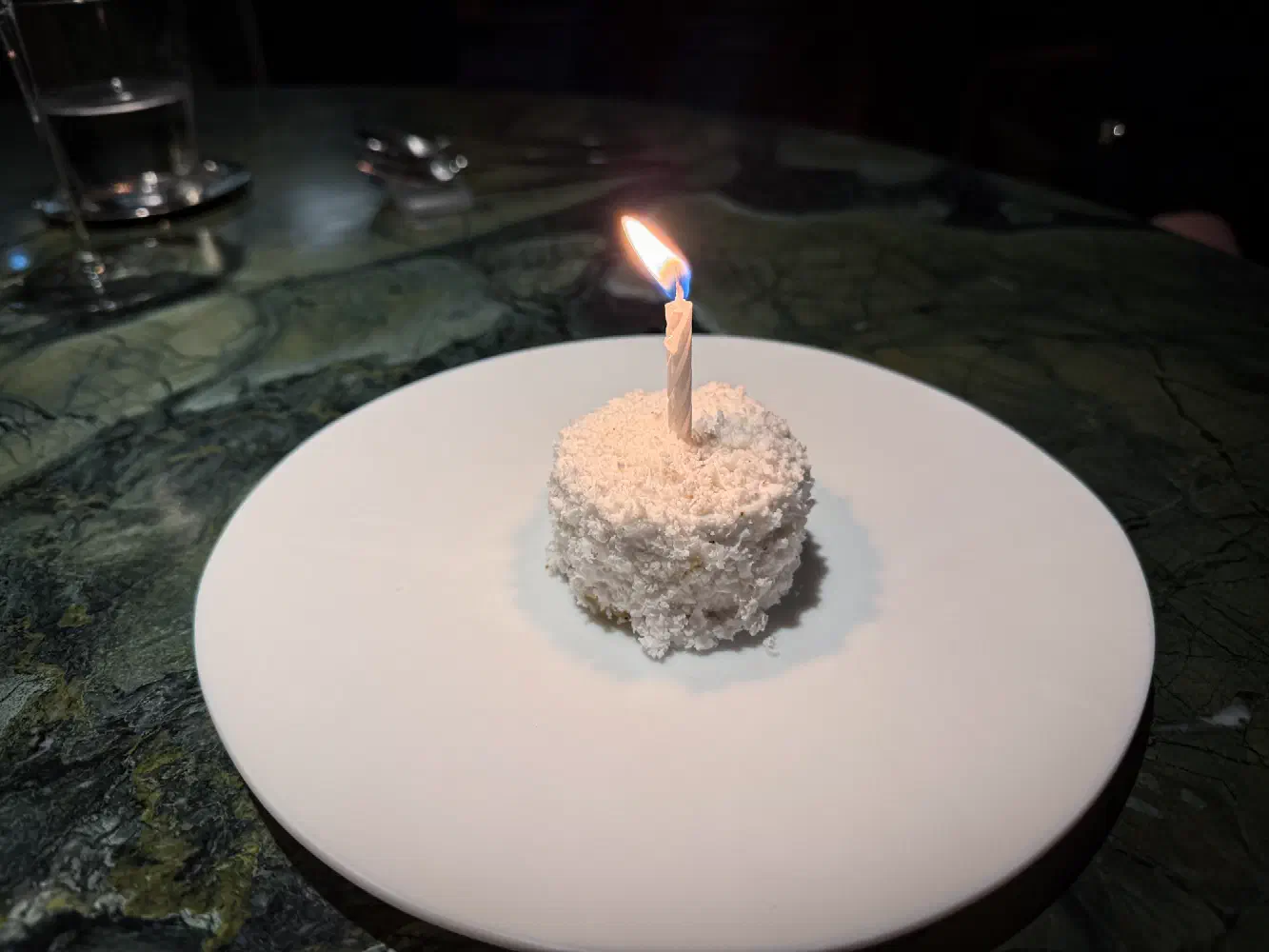
This was a very soft and delicious Coconut Cake. It was very coconut forward heavy dessert, so my partner enjoyed this a lot.
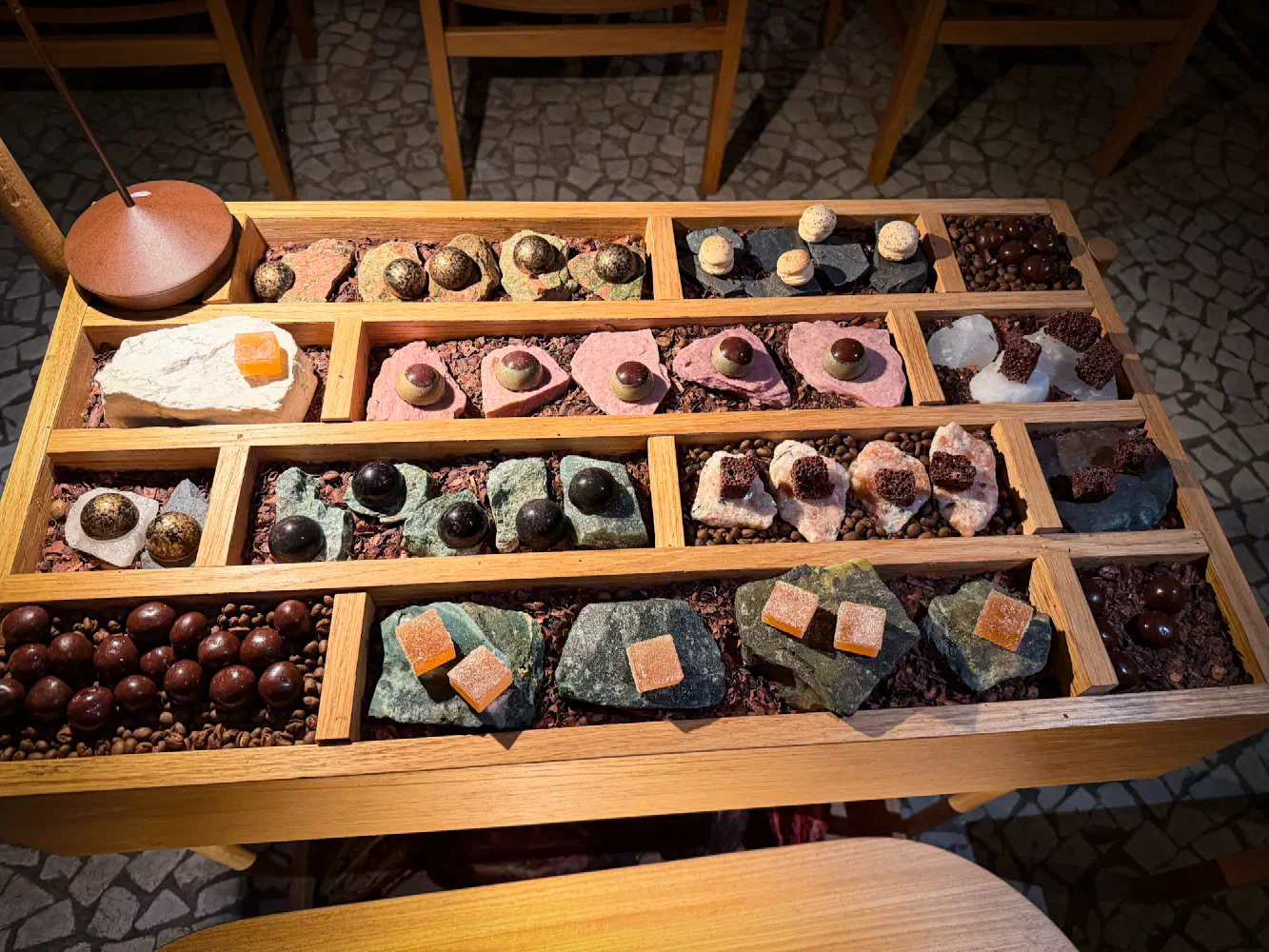
After you finish your dinner, they escort you via elevator to the third floor. The third floor has an open setup, where the seats get a fresh breeze coming in while you’re sitting in a dimly lit sofa area. They have attendants come and bring you a dessert box to select your choices.
Unlike Per Se, Tuju was not stingy with the chocolates and dessert selection. We were able to pick each of them, and they happily provided it.
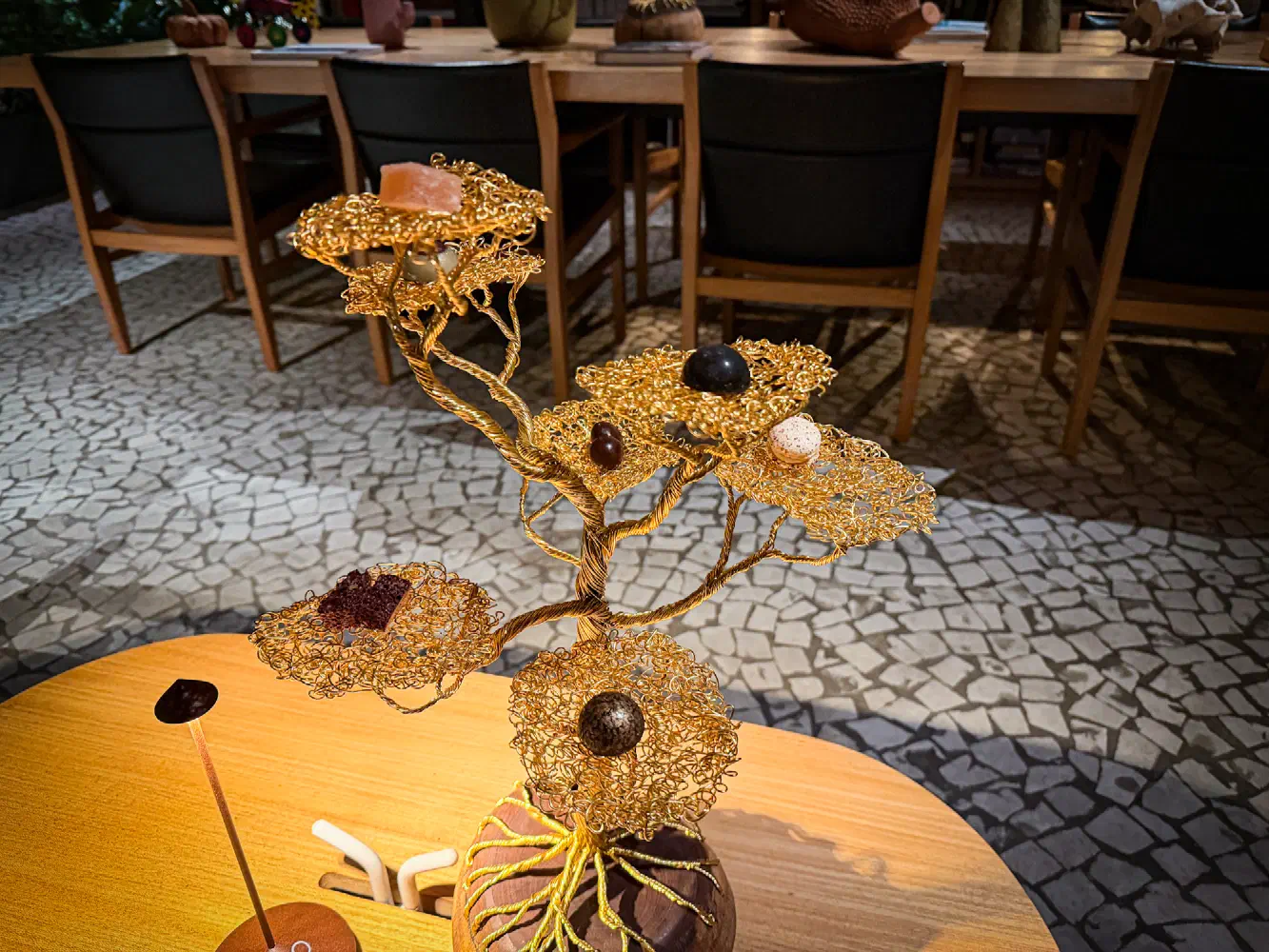
They took each of the dessert options and place them on the leaves. This is not a complete list of all the items, but many of them.
The Sweets include, and not limited to:
- cupuaçu macaron with cacao miso
- macadamia nut chocolate
- cocoa honey candy
- aerated chocolate
- bombons
Without a doubt, our favorite was the cupuaçu macaron with cacao miso. We actually had seconds.
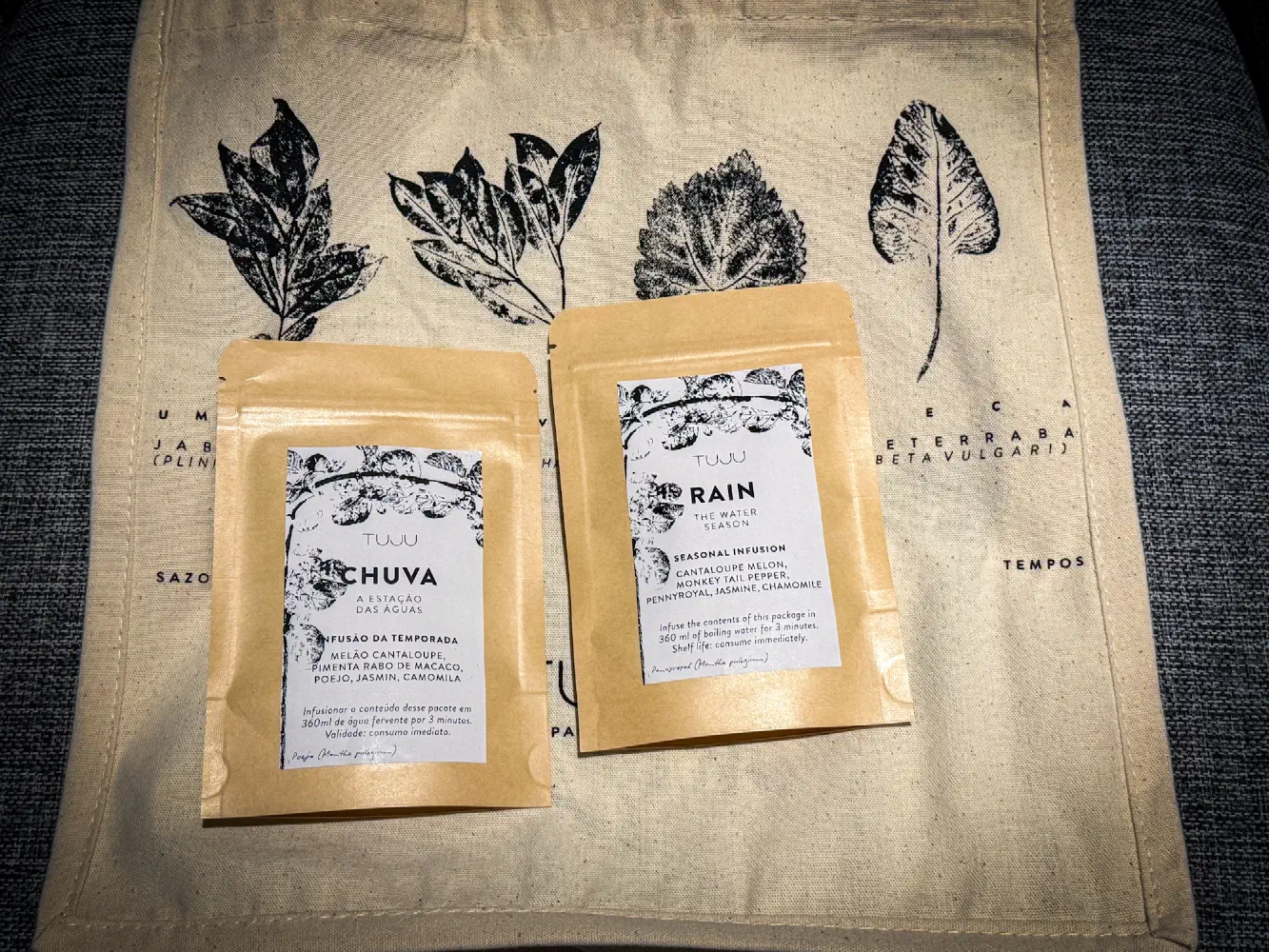
They gave us take home tea bags to reflect the summer season, which we have tried already. It’s lightly floral with strong chamomile flavors.
Overall Impression
I would not be surprised if Tuju one of these days wins the third Michelin Star. We enjoyed almost all the food here, and the flavors were absolutely delicious and somewhat memorable. The way they used Brazilian ingredients was different than DOM and Evvai. These two restaurants have their niches, but overall I find Tuju to just have much better flavors and experiences at the end of the day.
Yelp & Google Jabs
The dishes were nice but nothing was mind-blowing or unforgettable. I simply can’t stack this up against D.O.M. or even some one-star offerings in the city, although the service was excellent.
I think DOM’s food was more complacent than Tuju’s food, but that’s just my opinion. Granted, this Yelper went in 2019, so I am sure a lot has changed since then.
Went there the week they opened and was VERY disappointed. I had the menu degustação and did not enjoy it at all.
I’m glad this Yelper went first to take the bullet, so that the restaurant can improve their offerings later on. Then again if you decide to go for an opening, this is what happens. You are met with food that is still in its experimental phase, so you won’t truly see it for what it is. There are several restaurants in NYC that have opened to a warm greeting, but later on just simply excel in food ideation and quality.
Revisions
- Mar 12, 2026 - Initial revision.