Ogawa
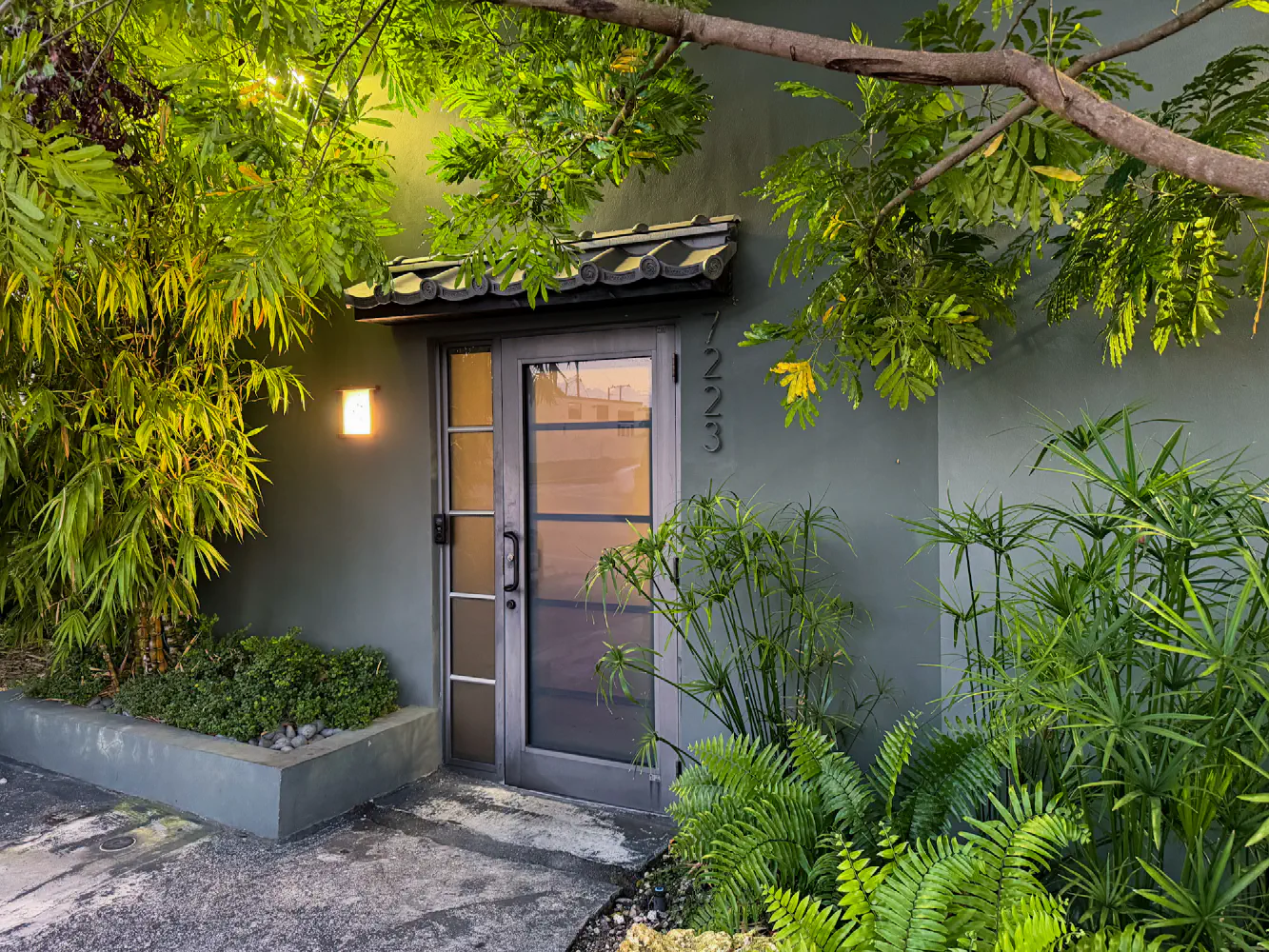
Ogawa, translated into “Little River” is a one Michelin Star sushi restaurant in an area that looked very sketchy and barren. As a visitor to Miami, we took a ride-share to arrive here. From several online reviews of this compared to the other Japanese Michelin starred restaurants, they all spoke highly of this as being more inventive compared to the others. Having been to several NYC Japanese omakase or kaiseki restaurants already, I was hoping for something that was a bit more exquisite considering the rent prices here were probably far less than NYC.
Ambiance & Service
When we arrived, we ranged the door bell in the front, and then we were led to sitting at a long bar that seats about 12 people. There were 2 sushi chefs standing there, including the owner, Masayuki Komatsu.
Throughout the night, the service was very similar to other Japanese restaurants we’ve been to in NYC. They were warm with hospitality, and when I asked them more questions, they were able to explain further.
Food
The cost of the dinner comes out to $395 per person, which can be seen as outrageous for Miami vicinity standards. An automatic service charge was applied for 20%, and they also deducted it from the Tock dues.
- Signage - Hitachi Beef, Ibaraki Prefecture
- Wine - Remoissenet 'Bourgogne Blanc'
- Non-Alcoholic - Yuzu Lemonade
- White Fish With Dry Roe
- Miso Kettle Soup
- Three Small Bites
- Fugu Karaage
- Wagyu Udon
- Palette Cleanser - Asian Pear and Lemon Sorbet
- Sushi - White Fish(?)
- Sushi - Needlefish
- Sushi - Ebi
- Sushi - Ebi (Fried)
- Sushi - Spanish Mackerel
- Sushi - Japanese Amberjack
- Sushi - Hokkaido Uni
- Sushi - Sea Bream
- Uni Bowl
- Prep - Black-Throat Sea Perch
- Sushi - Black-Throat Sea Perch
- Sushi - Cuttlefish
- Special Hand Roll
- Dessert - Tamago
- Tea - Miso Soup
- Dessert - Orange and Ginger Sorbet
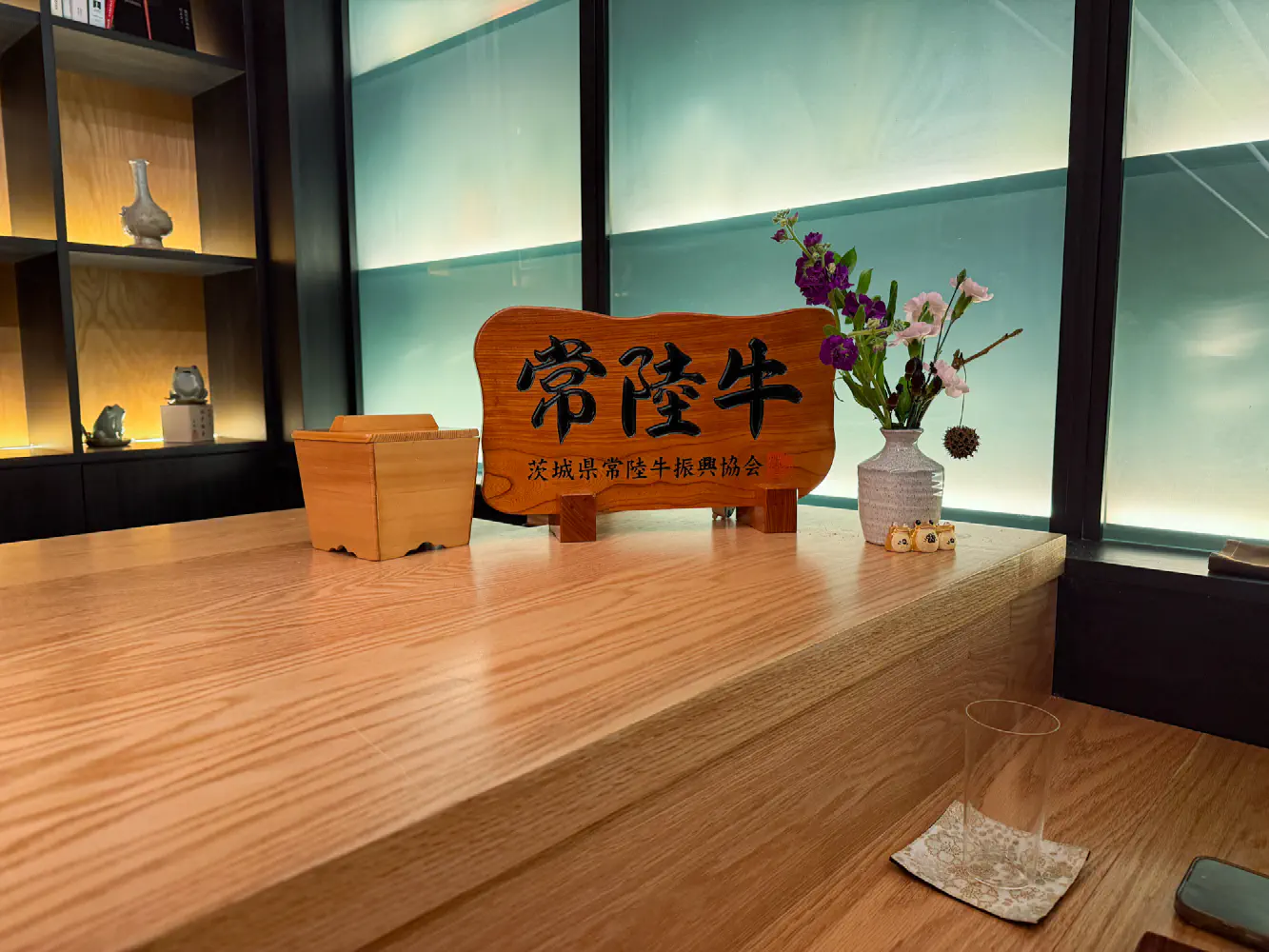
The Signage here says “Hitachi Beef, Ibaraki Prefecture Hitachi Beef Promotion Association”. I’m assuming since they placed this here to show you that they have the proper credentials in what they will be providing tonight.
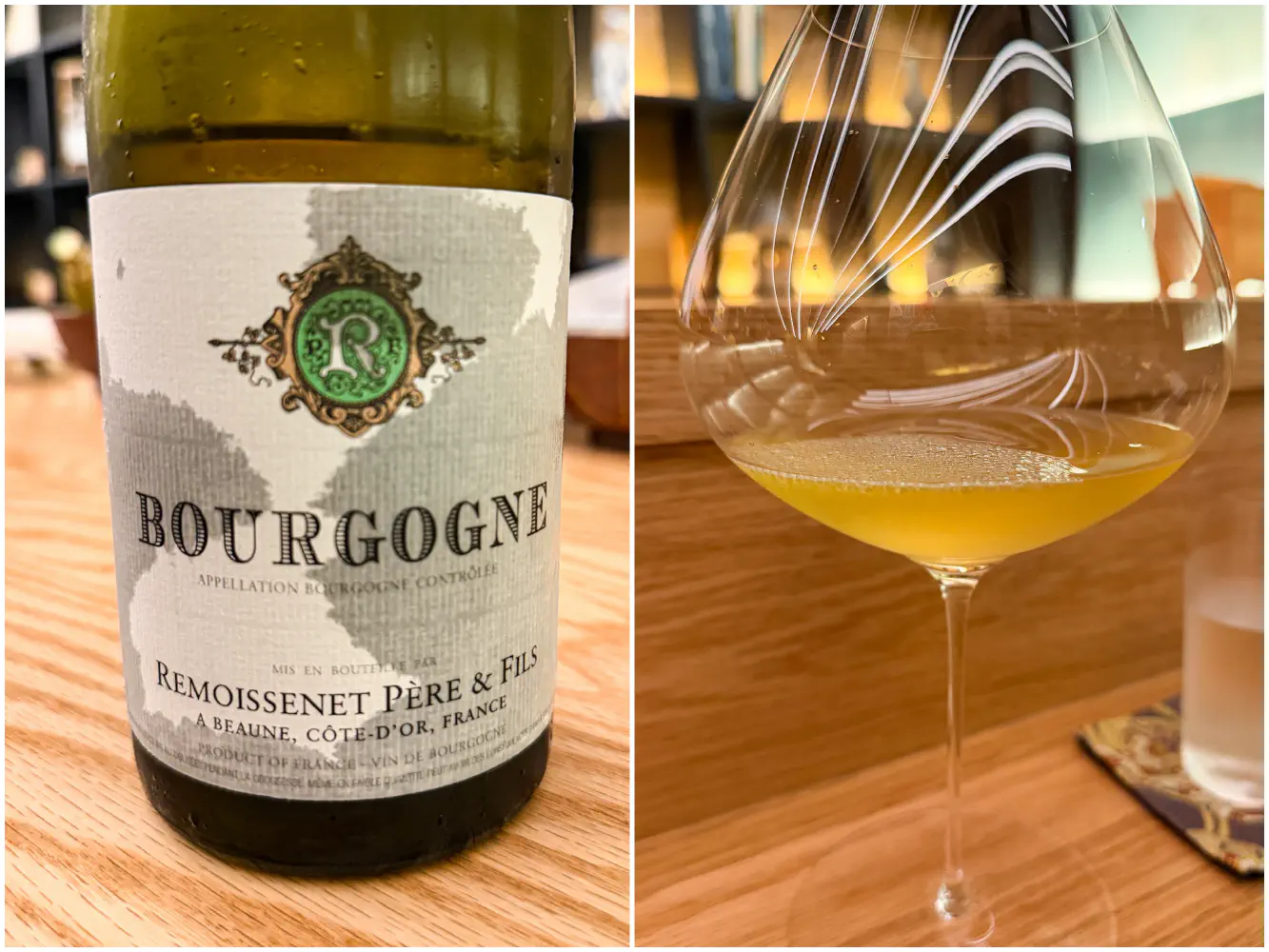
The Remoissenet ‘Bourgogne Blanc’ ($30) came from Burgundy, France 2021. This was a very nice rounded white wine that had plenty of minerality and some apple notes to it. It went good with all the pre-sushi courses.
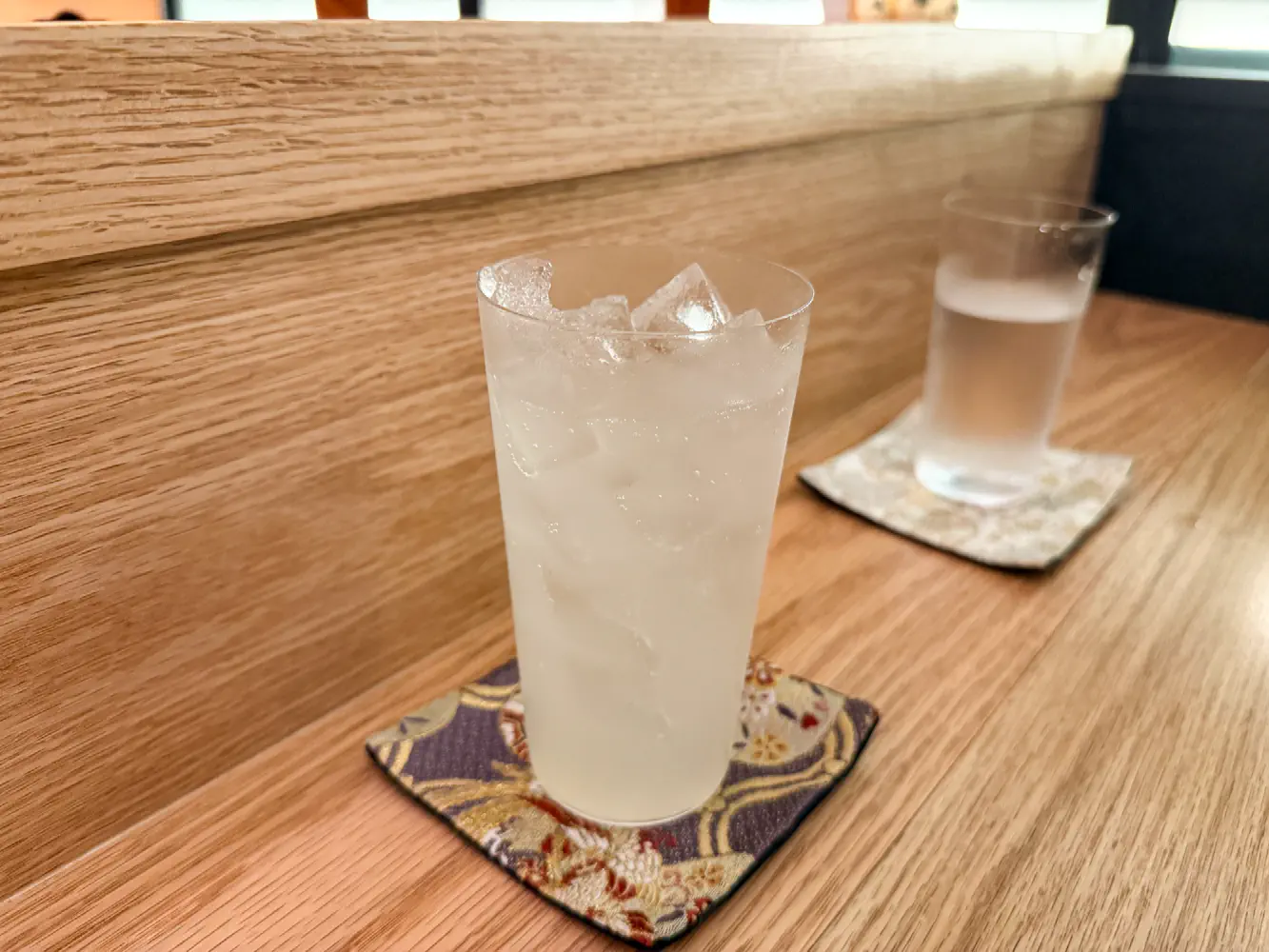
The Yuzu Lemonade ($7) was made with yuzu syrup and carbonated water. This was quite delicious because it didn’t taste like it had added sweetness to it, and you still got the nice citrus aroma of the yuzu.
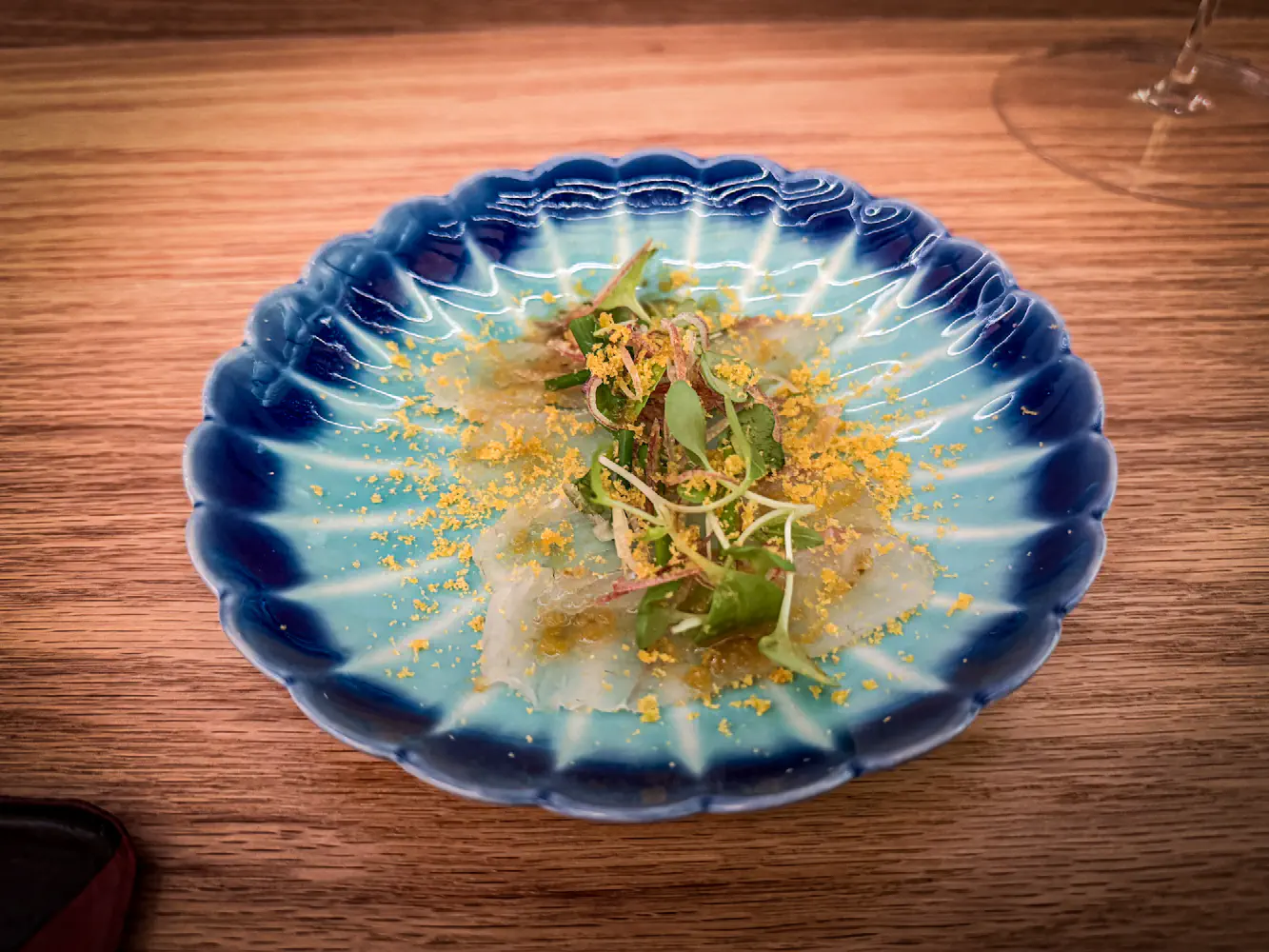
I don’t remember what fish this was, but it had some shaved dry eggs on top of it. The yellow shaved dry eggs had a salty texture, which reminded me a bit of cured fish roe that is sometimes served in Chinese cuisines. The saltiness of the roe complemented the sweetness of the thinly sliced fish here.
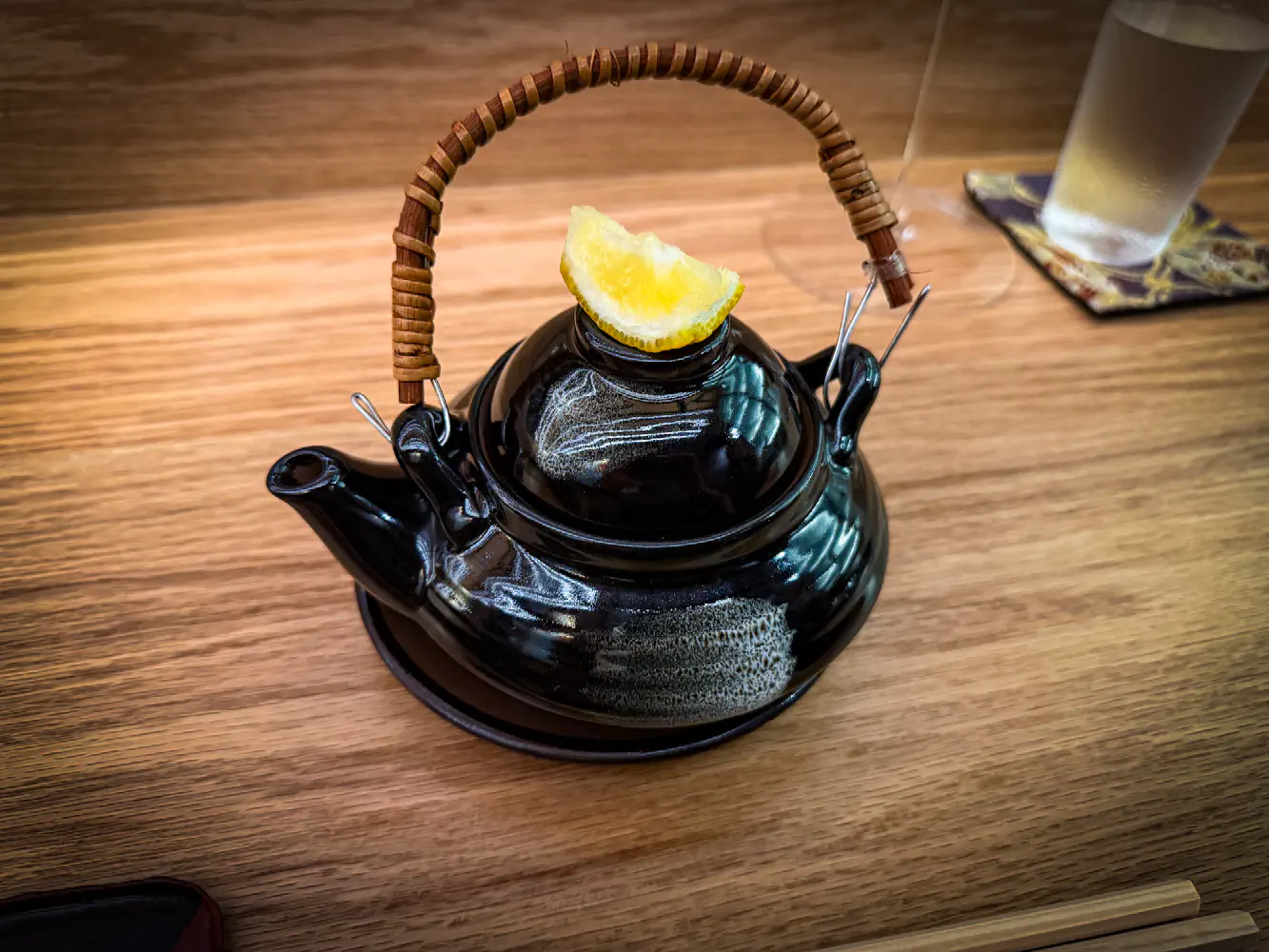
This was a miso soup served like a tea with plenty of aromatics. It had some mushrooms, and it was served with a small sliced wedge of yuzu on top. They ask that you lift the lid, and squeeze the yuzu on top. The lid acts as a tea cup, where you can pour the kettle’s broth into the little cup. This was surprisingly very tasty and very clean. It gave me sensations of how delicate the broth was, yet how wonderfully subtle, yet delectable the flavors of the broth had.
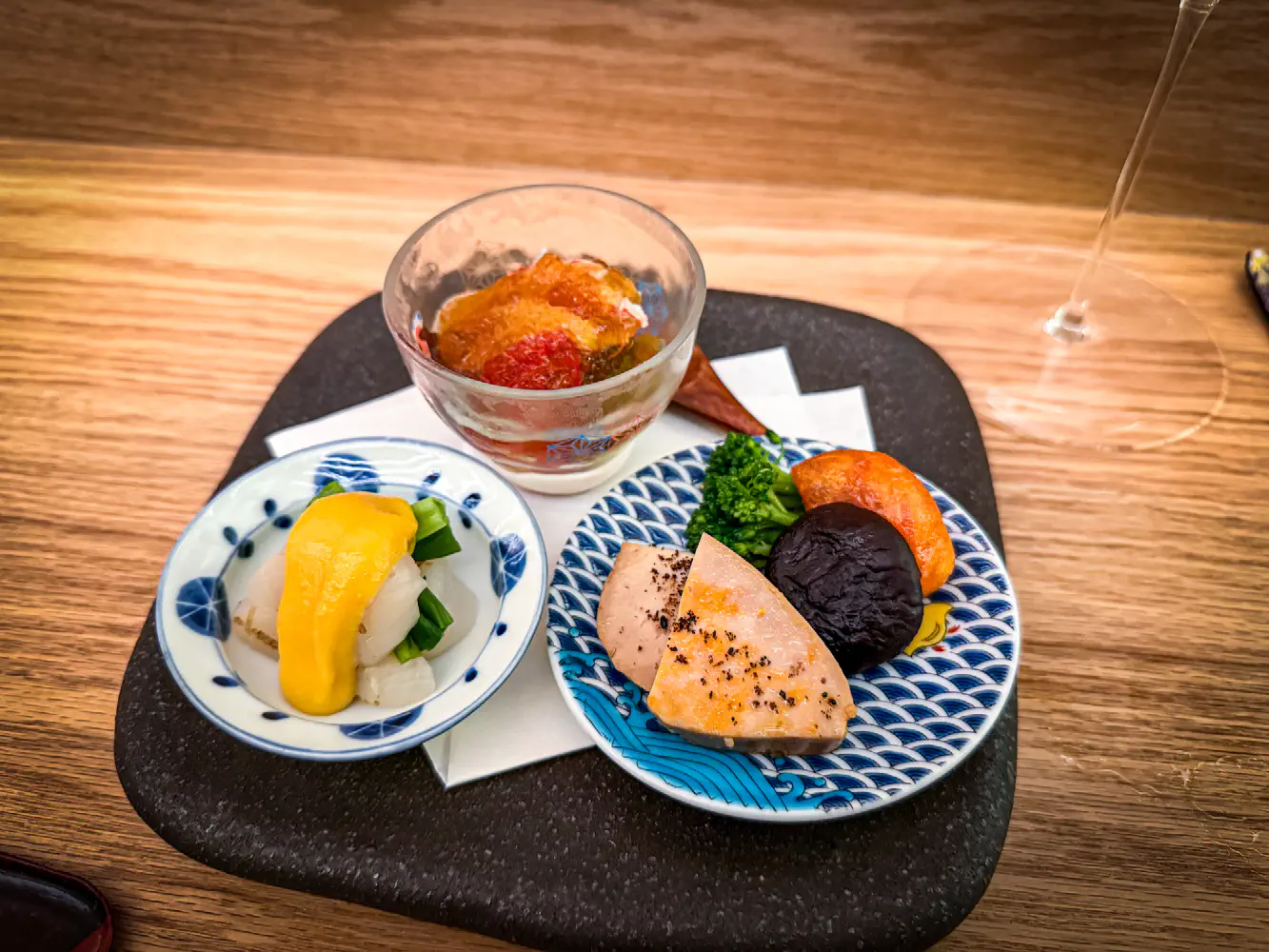
The three small bites included:
- (top) Hairy Crab with ume, ikura, and lemon. They asked you to eat with a spoon. This was very delicious, and they were not shy with the crab portions. The meat was delicate and naturally sweet. The lemon and the ikura added some nice salinity to it all.
- (left) Scallop with yuzu miso sauce. The scallop was carefully scorched on top, and the yuzu miso sauce was divine. You get that nice salty umami flavor from the miso, and the yuzu gave it that citrus kick. I simply adore yuzu, and I was very impressed on how it was used here.
- (right) Japanese Ankimo (monkfish liver) with fresh vegetables. The monkfish liver was very delicious. The Japanese foie gras, in a way also known as the foie gras of the sea, had a nice savory, creamy texture to it, despite it appearing hard in texture visually. It was full of flavors and was decadent on its own. The fresh vegetables included shiitake mushroom cap and broccolini. I don’t remember what was the other thing there.
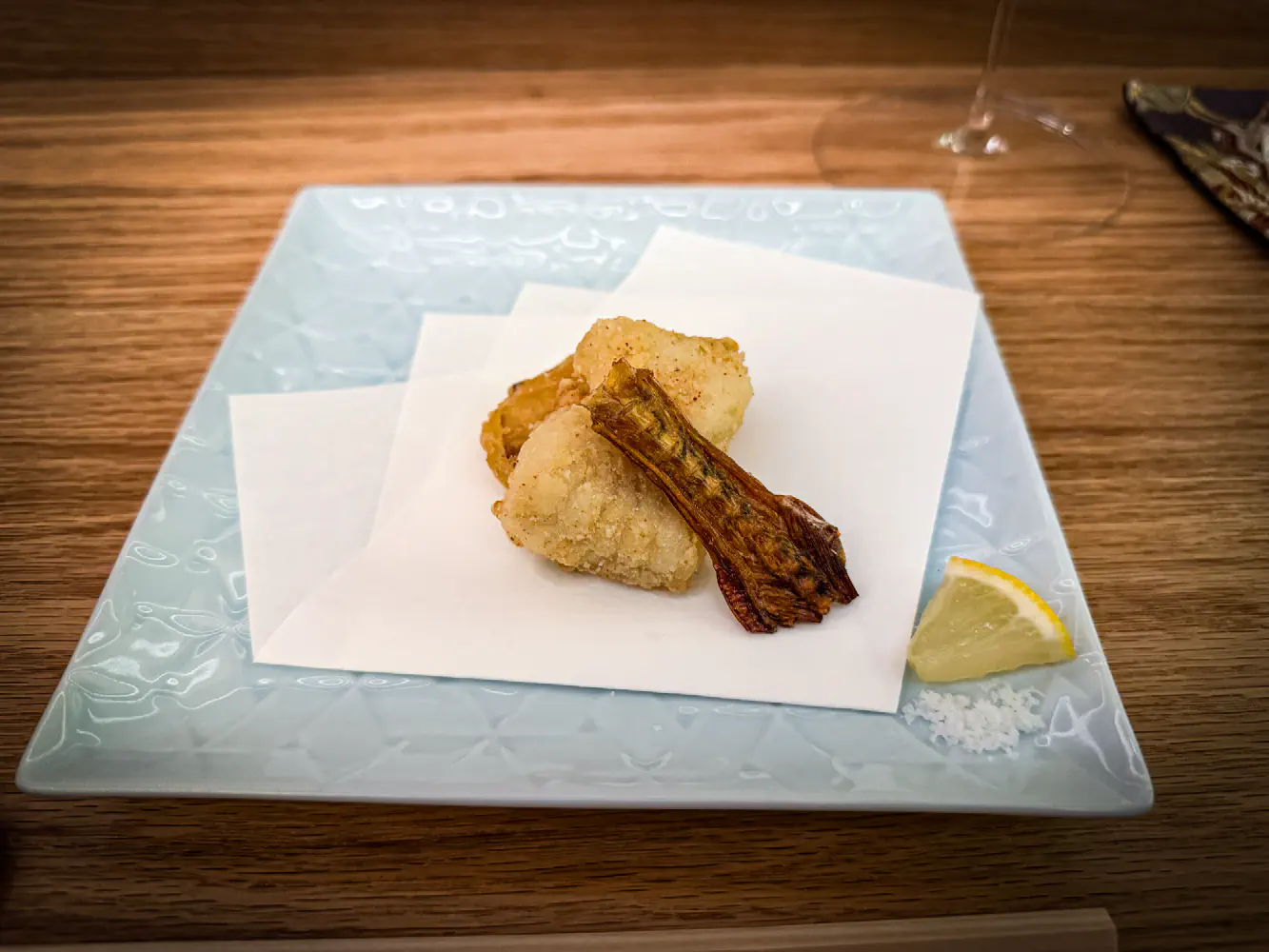
The Fugu (pufferfish) came karaage style, meaning it was deep-fried in a light batter. Fugu is most known to be a very poisonous fish, and if handled improperly, can be deadly. Satoshi, the sushi chef in front of us, was fortunately a certified pufferfish handler, so there were no issues here. The pufferfish meat texture-wise was surprisingly similar to monkfish, where it was dense and flaky. It also was surprisingly very sweet, delicate, and decadent. I can’t describe it enough of how much I’d love to come back to try this again, although I know it was a specialty for this evening. The long bone here was the spine of the pufferfish. They deep fry it, such that it was very crispy and delicious. It’s a fantastic balance to a flaky texture. This is one of the courses that I was very amazed by the not only the preparation but also the flavors.
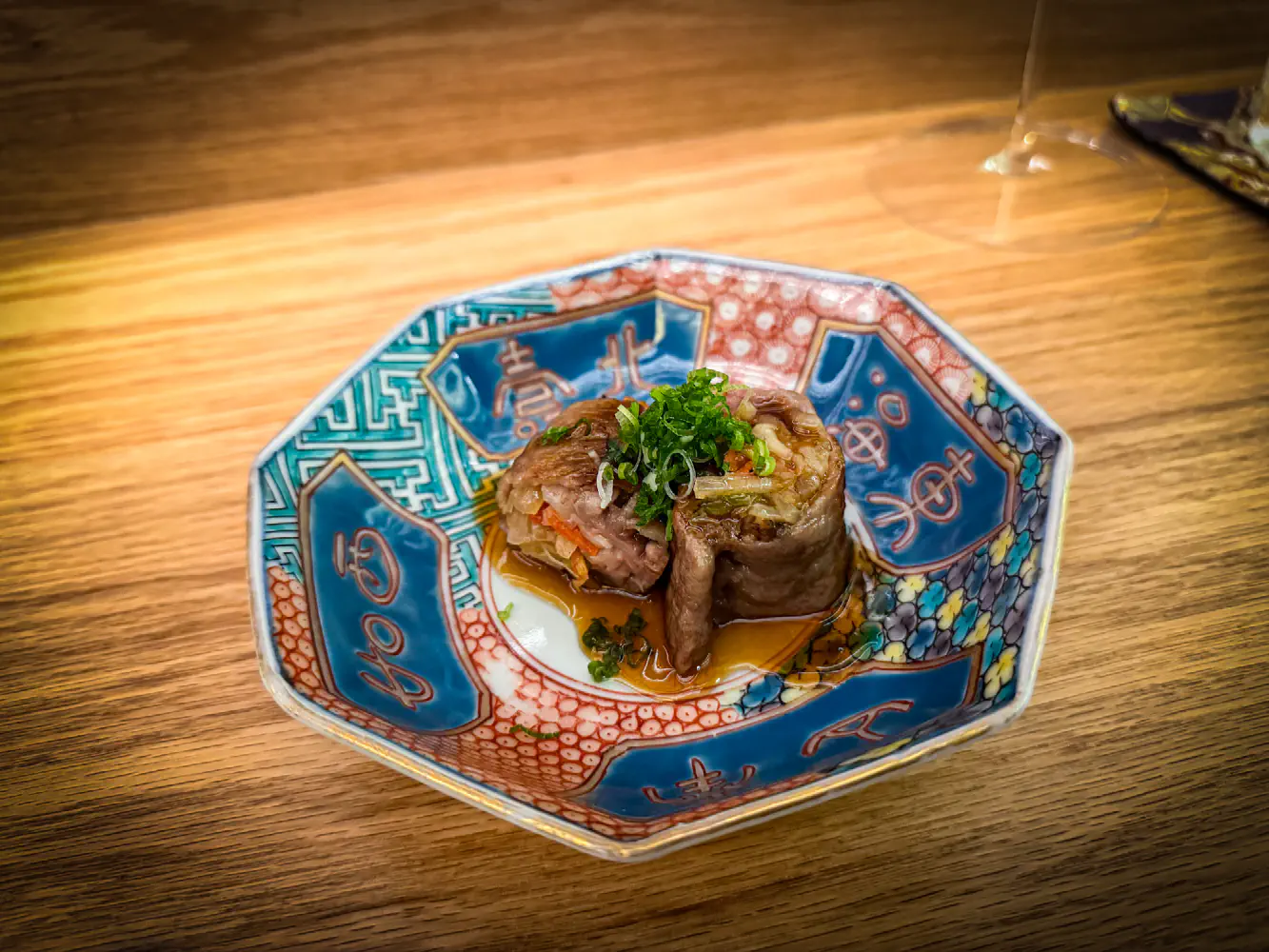
The Wagyu Udon was an A5 ribeye wagyu beef from Ibaraki Prefecture, wrapped around udon noodles, onion, carrots, shiitake, wrapped up similarly to temaki, and dressed with a sweet and sour flavored dashi. This was sublime and potent in flavors. Not only was the wagyu amazingly tender and cooked perfectly, but all the ingredients within the wrap had a perfect explosion of harmonious chemistry. The sweet and sour flavored dashi sauce was very umami.
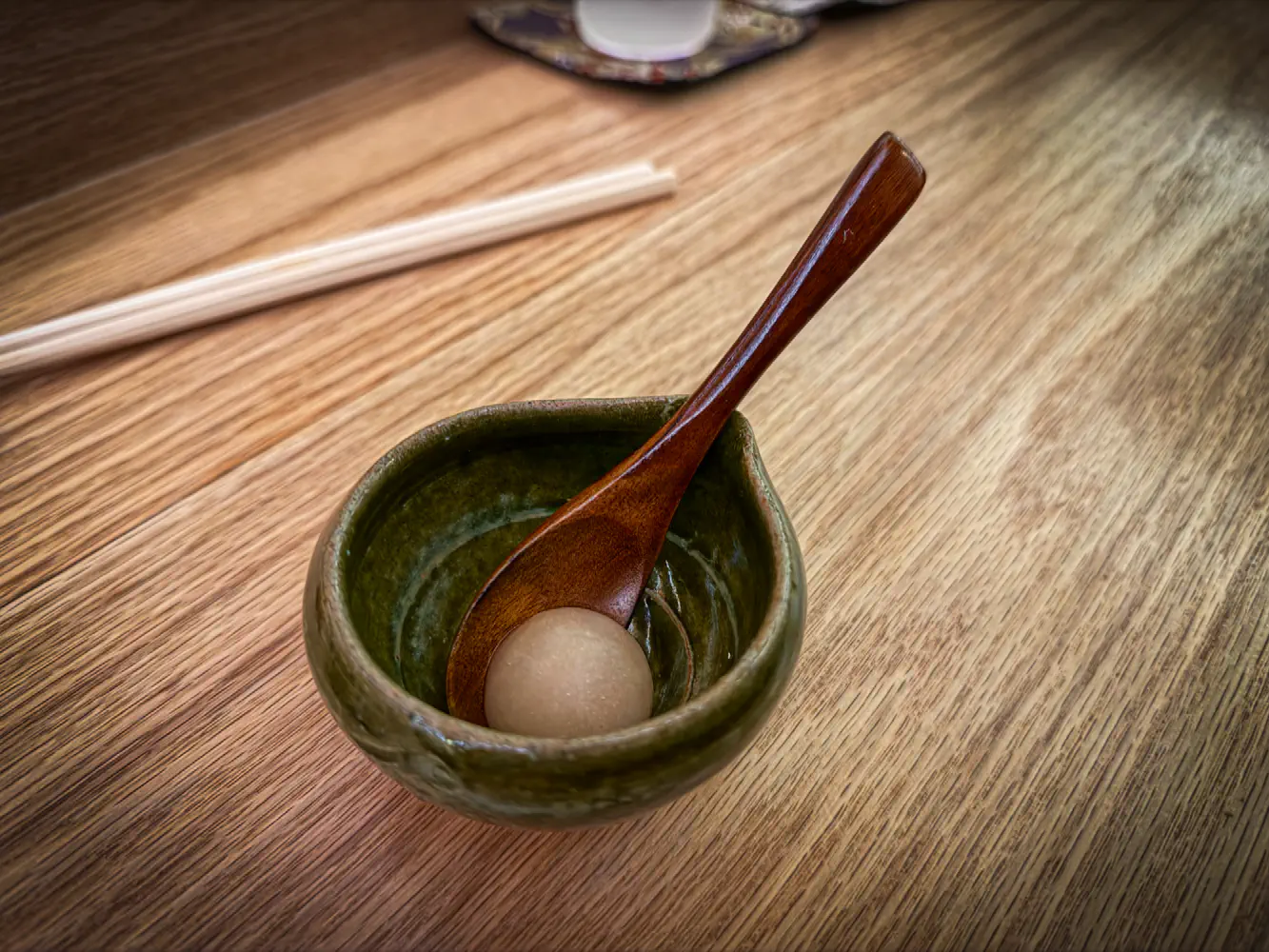
The Palette Cleanser consisted of Asian pear and lemon sorbet. It was a little ball, and you just suck on it to get the nice freshness of tart and sweetness to reset your palette before the sushi courses.
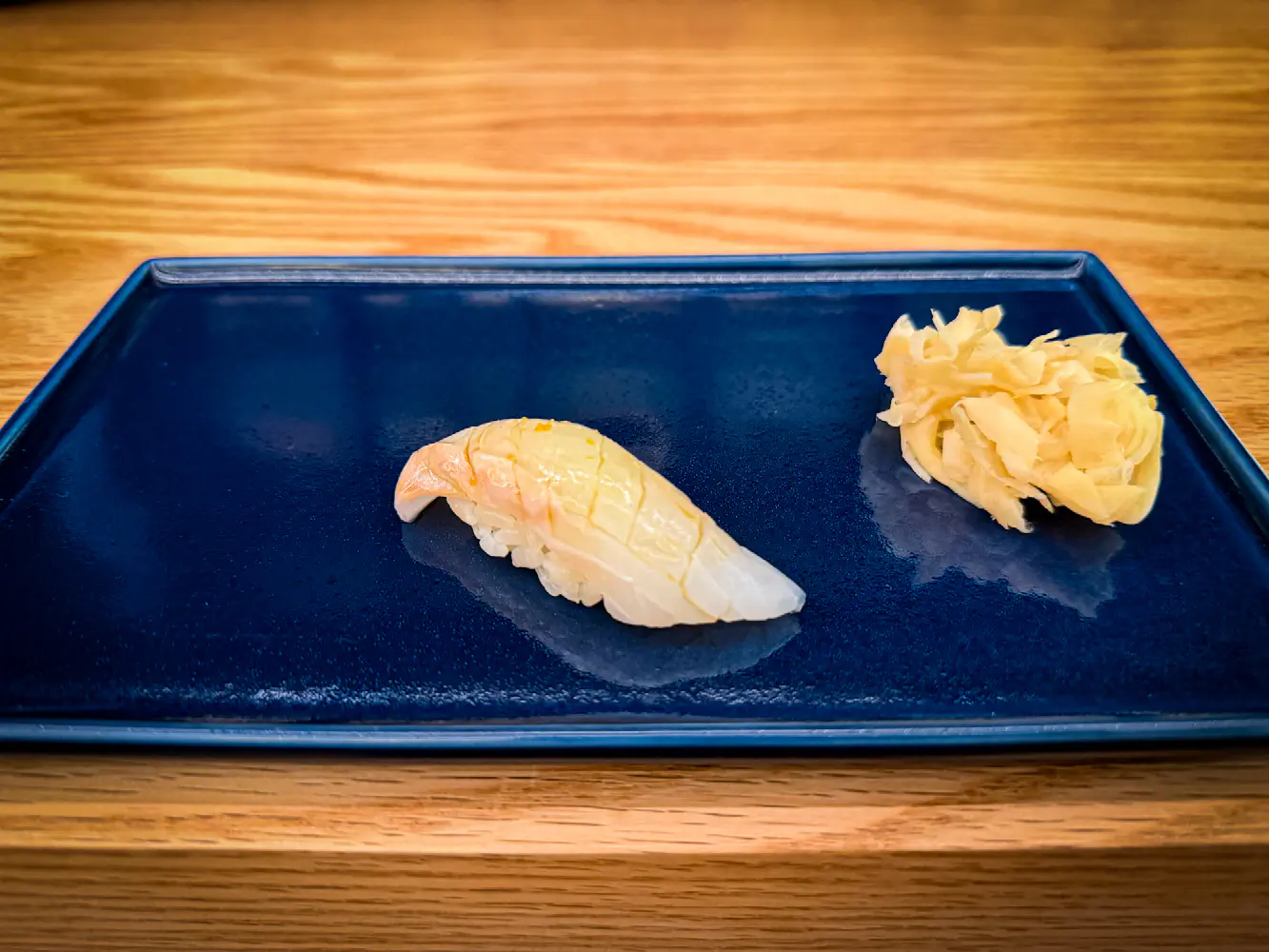
The White Fish (???) with lemon zest was very tender, sweet, albeit very similar to many sushi pieces you’ve probably had at various omakases.
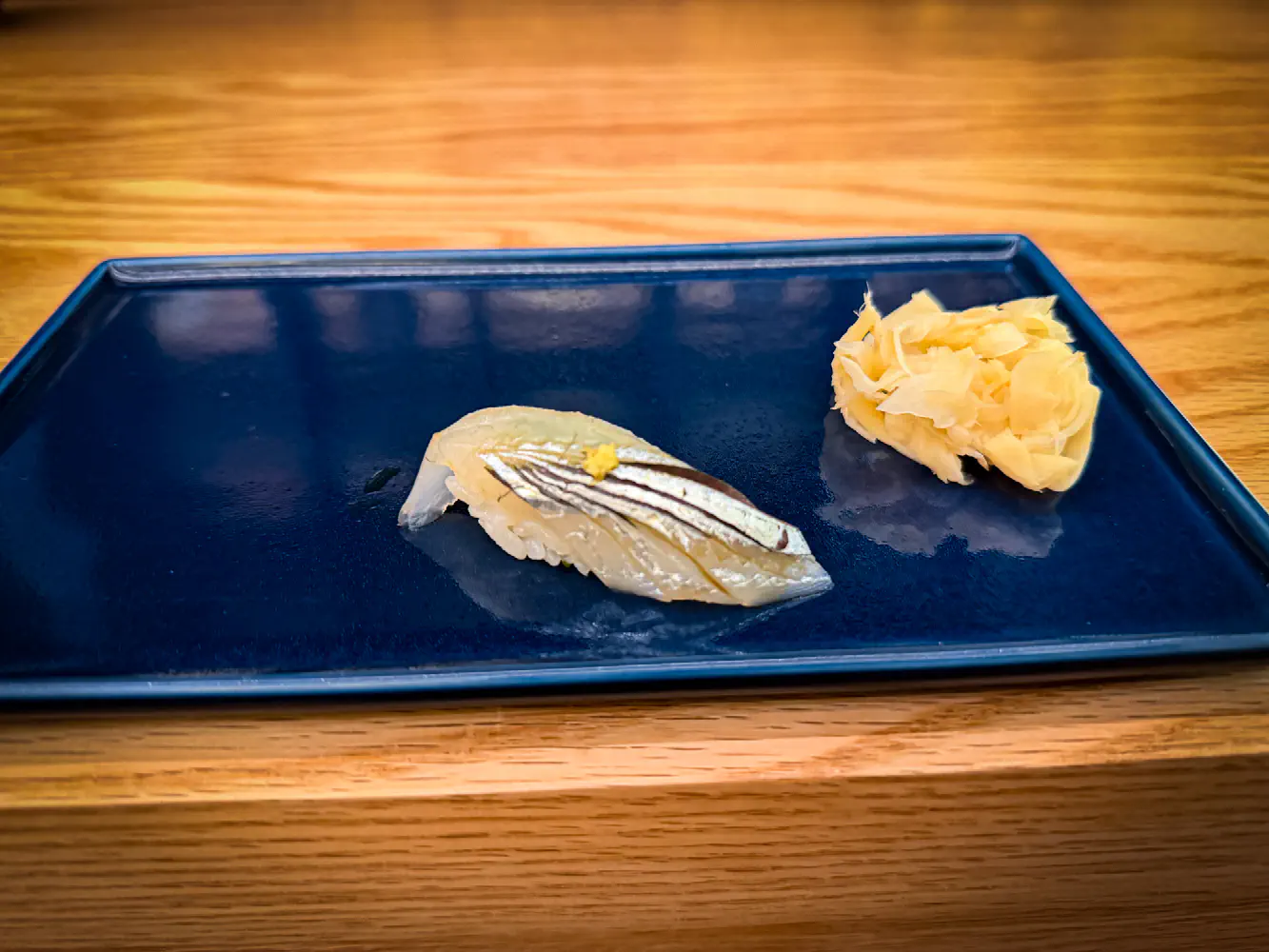
The Needlefish (sayori aka Japanese halfbeak) sushi had a nice, clean texture and tasted very mild.
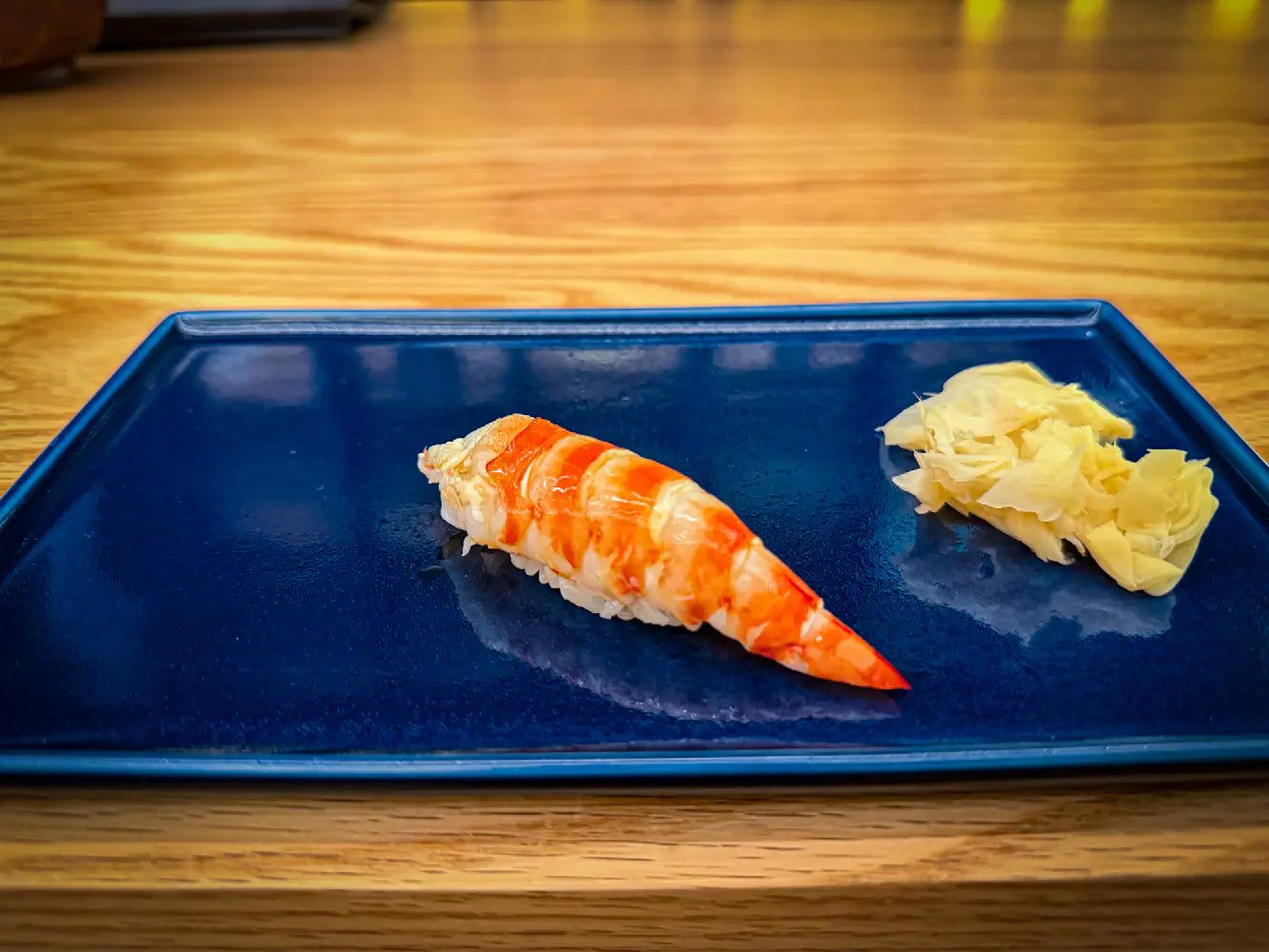
The Ebi was a prawn (definitely not Santa Barbara spot prawn) that the chef skewered and asked the kitchen to quickly flash cook. The ebi meat was naturally sweet and tasty.
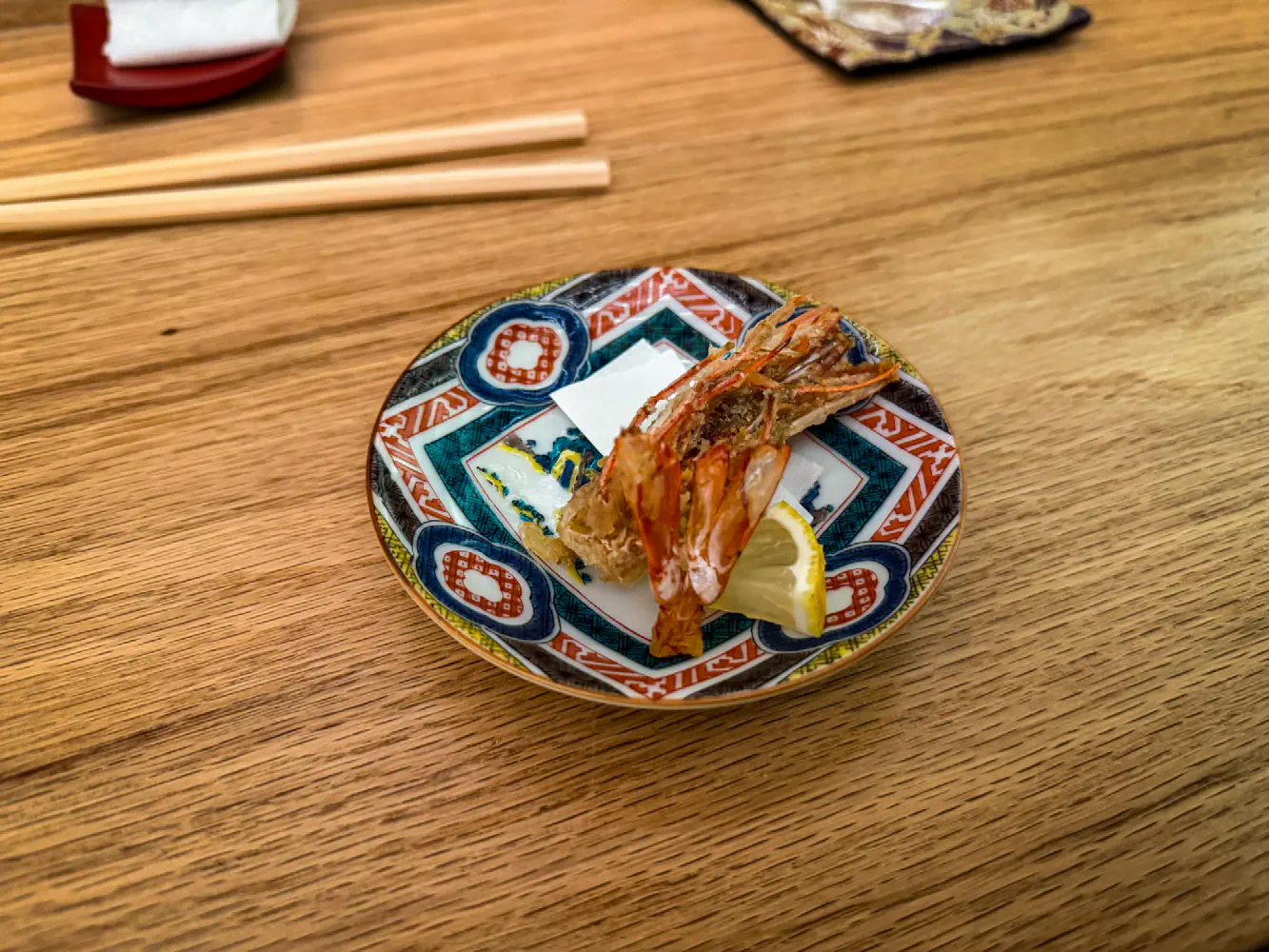
When the chef was gutting the ebi, he set aside the head and tail. Here are the components deep fried and served with a small lemon wedge. Whatever batter they use to fry the foods in was absolutely spectacular.
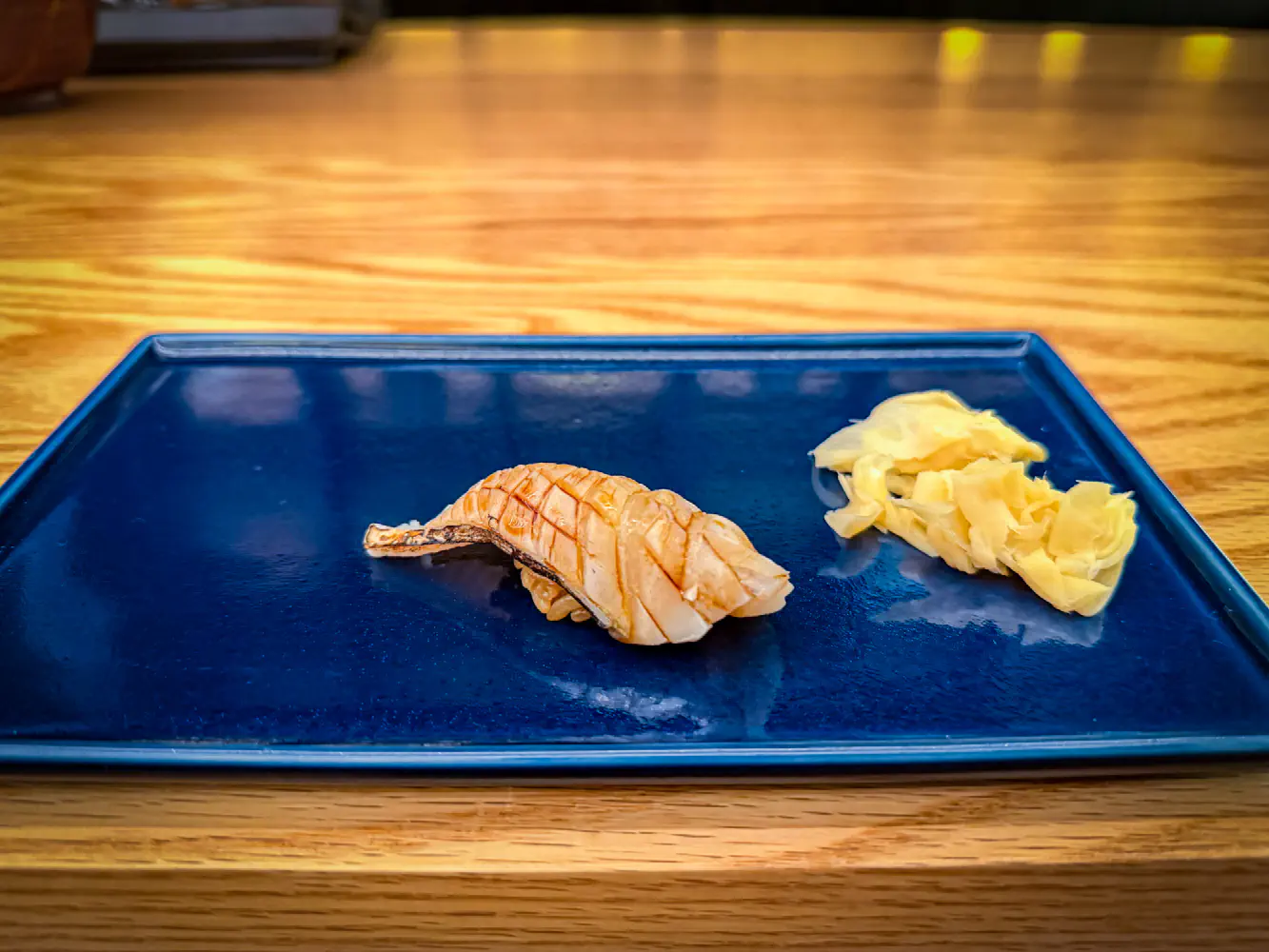
The Spanish Mackerel (sawara) sushi was rich, oily, and slightly sweet in flavor with a tender texture. Typically if served not fresh, it will come off quite fishy, but there was none of that. Surprisingly, my partner really enjoyed this when they typically can detect fishiness very quickly.
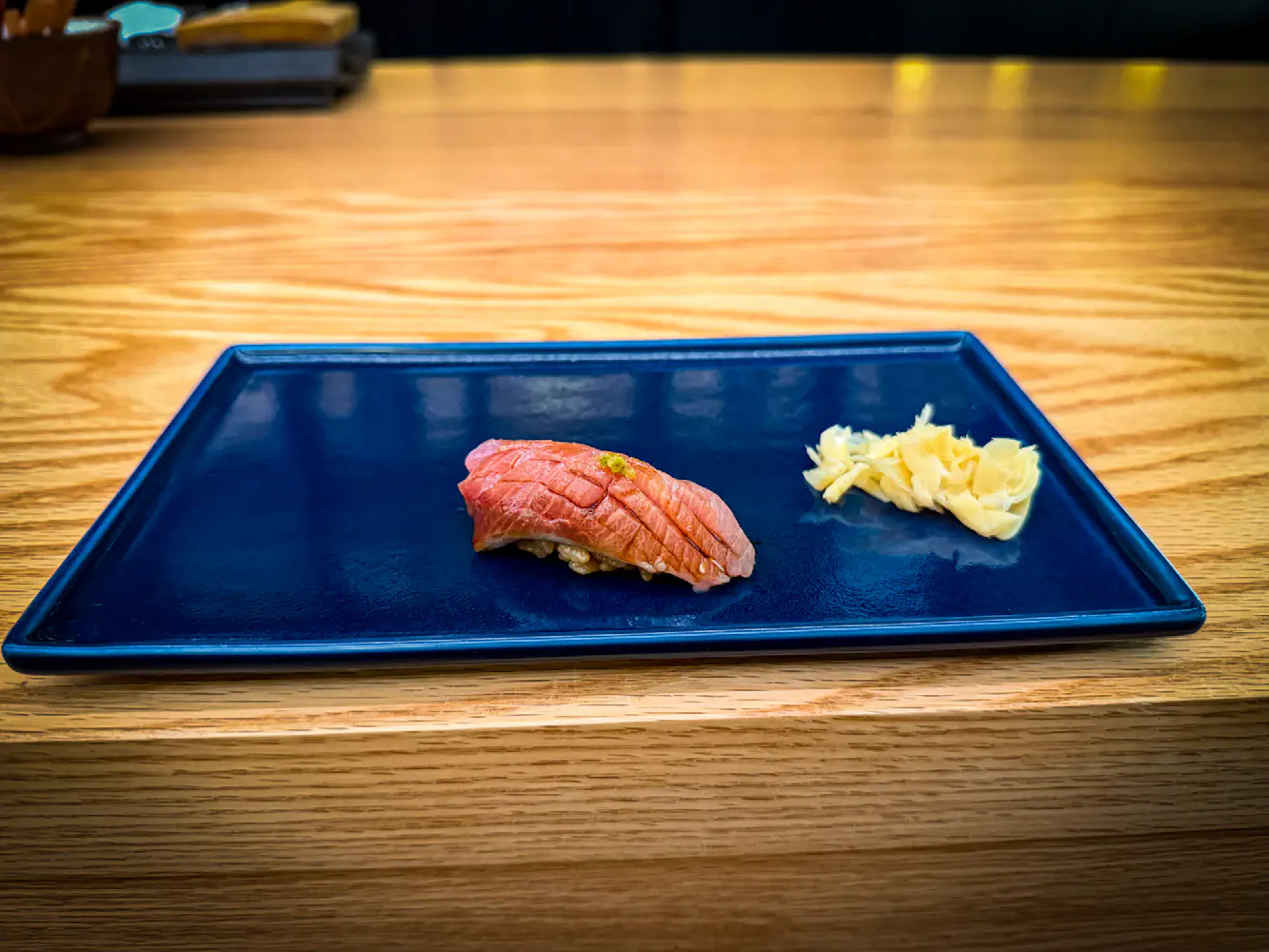
The Japanese Amberjack (buri) sushi is also known as mature, wild-caught yellowtail. Its alternative hamachi is younger and usually farm-raised. This was buttery, rich, subtly sweet, and quite meaty for its taste and texture.
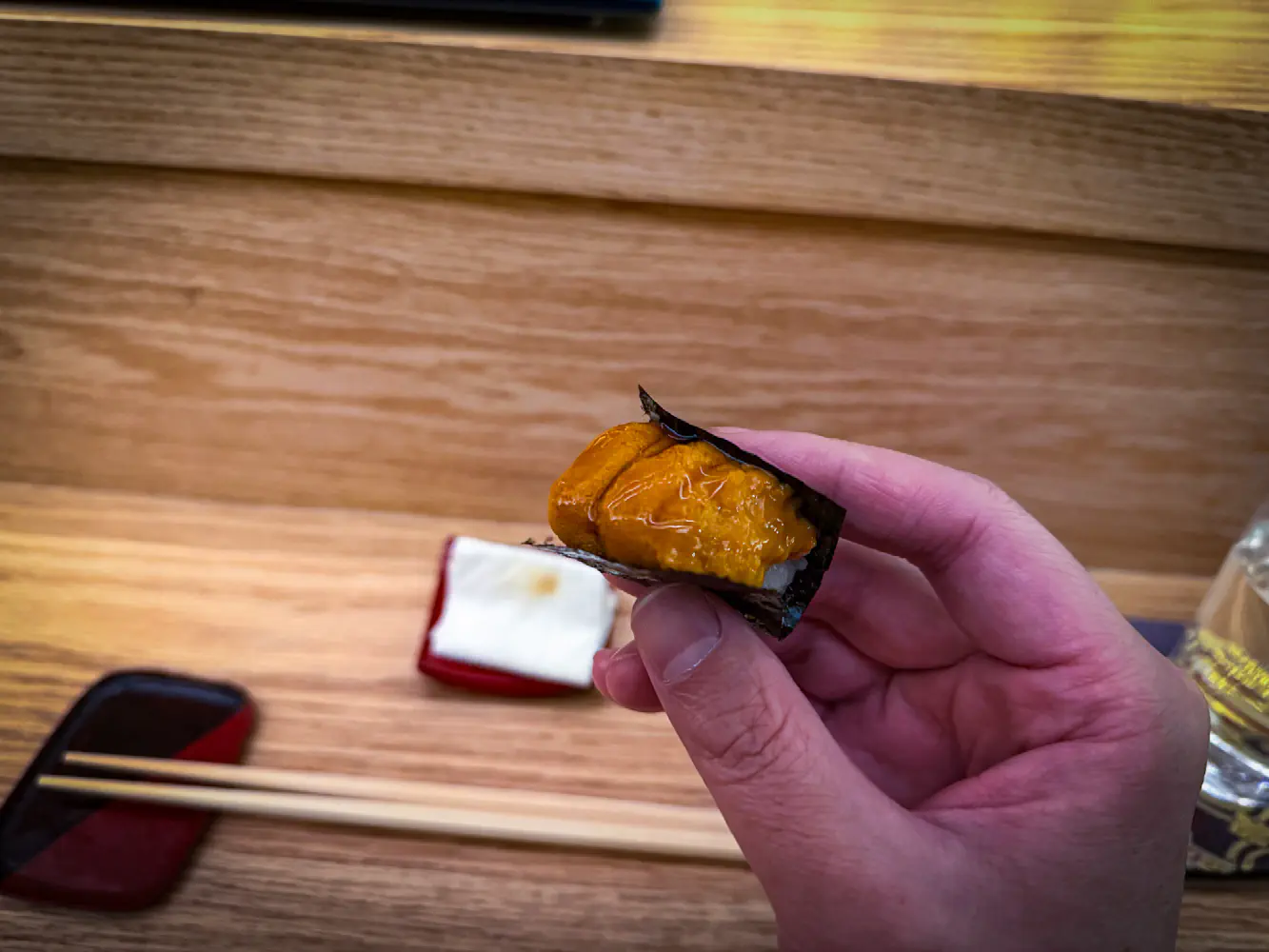
The Hokkaido uni sushi came on this brownish rice. The uni was amazingly divine, and we were sad that it was served so little! The uni was so sweet, creamy, and full of umami. Whatever box they pulled this from must have added an extra 100% to its flavor profile because it’s simply one of the best I’ve had in a very long time.
But the best part is yet to come.
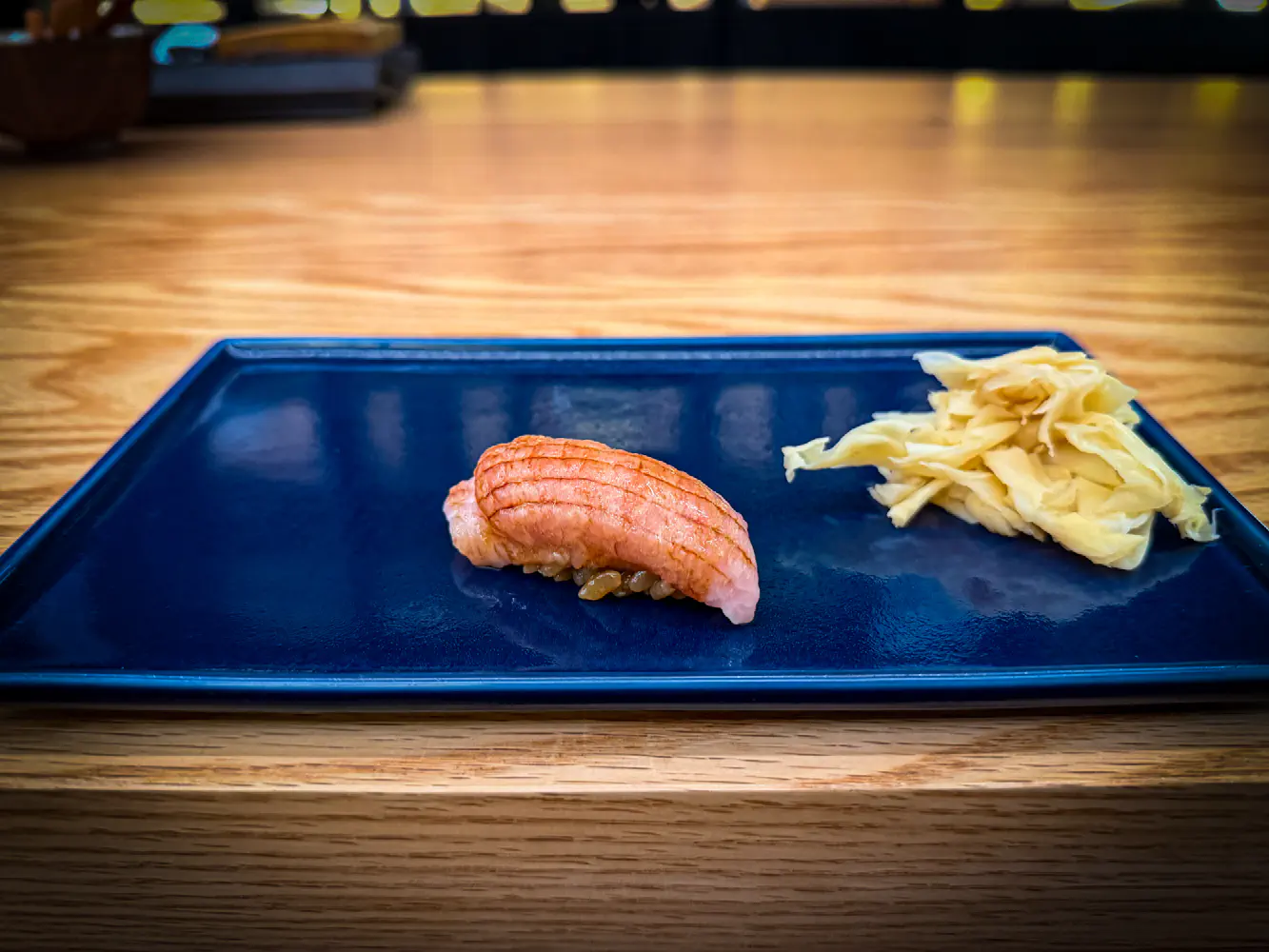
The Sea Bream sushi was mild, notably sweet, and with a tender texture.

The Uni Bowl was filled with concentrated amounts of rice and the uni served previously and topped with salmon ikura caviar. The ikura was so delicious, and it definitely complemented the umami flavors and textures of the uni. I could eat this literally every single day.
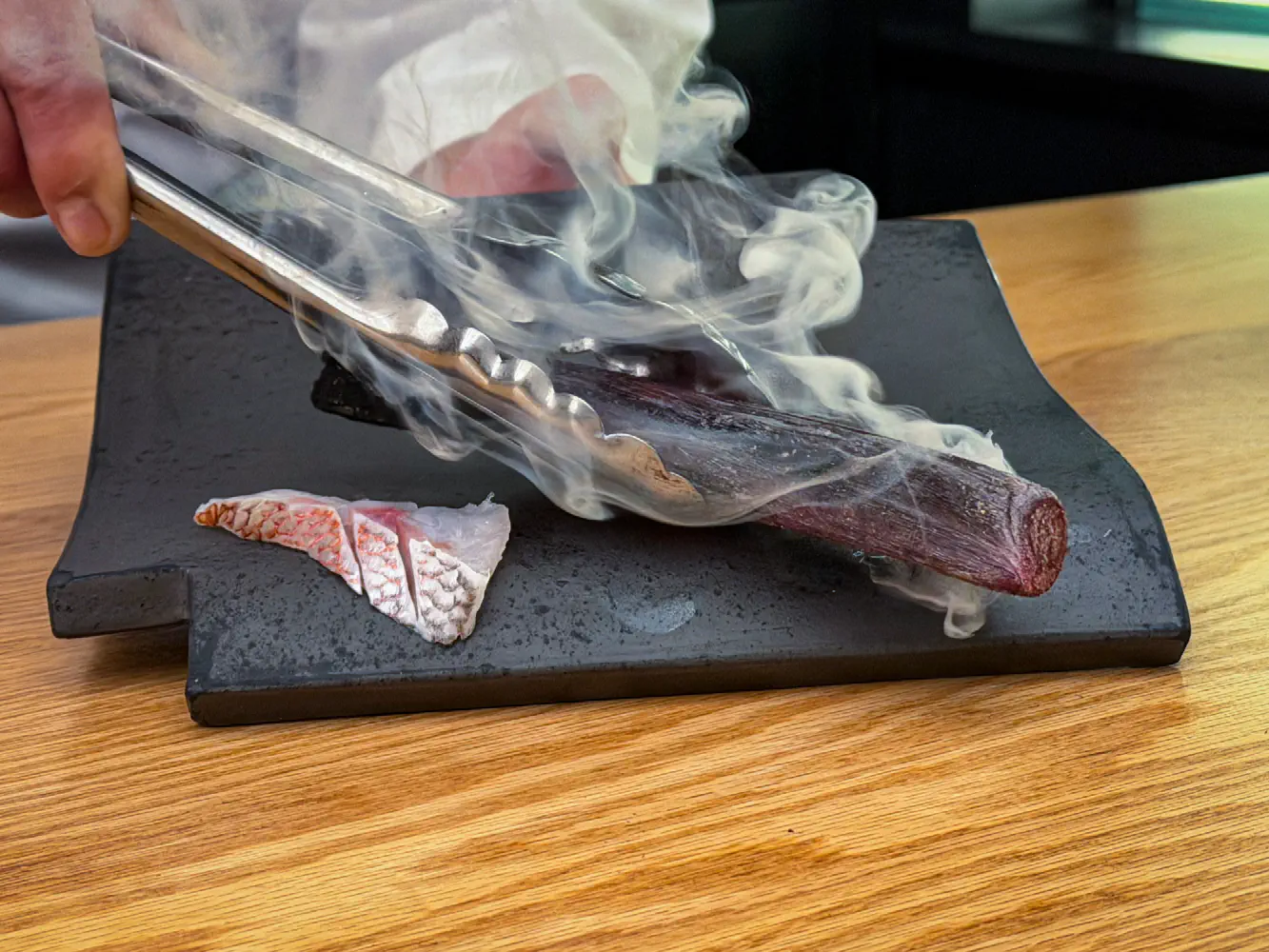
They were preparing coal to char our next sushi. They told us that they prefer more natural means of charring instead of using gas canisters. When they touch the side of the fish with this, it made this nice sizzle, and the flavors of this coal was aromatic in its own way.
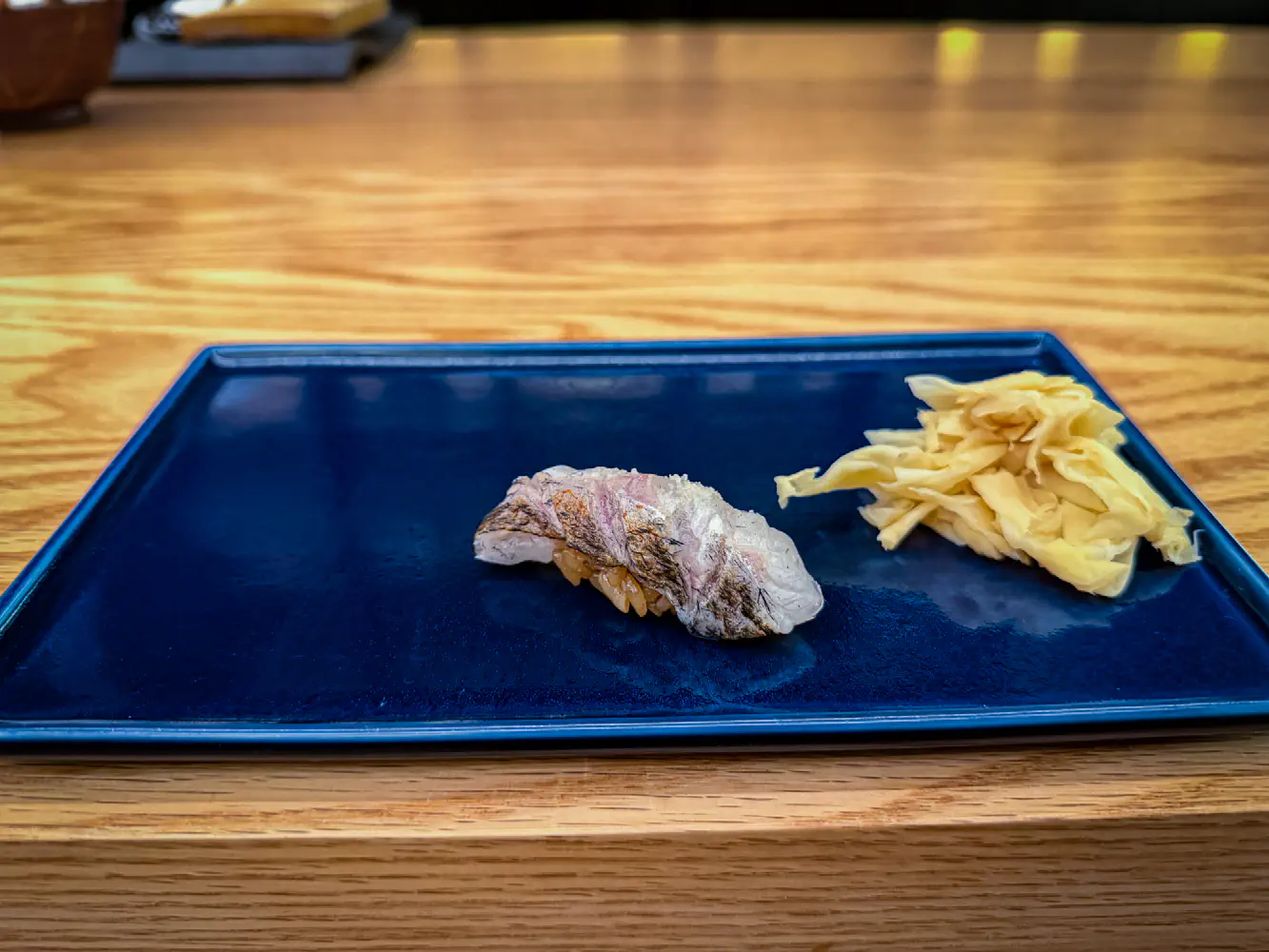
The Black-throat Sea Perch (akamatsu) sushi was a very rare and difficult to catch fish. It’s a fatty white fish, prizes for its buttery texture and delicate sweet flavors that melts in your mouth. What makes this fish difficult to catch is that it lives in the deep sea and they are only 2 pounds in weight. This means that this would be considered a premium seafood and sushi ingredient because of how little meat each fish would have to offer. I can definitely confirm this was very amazing and delicate. Unlike the other white fishes, this was even more tender and rich.
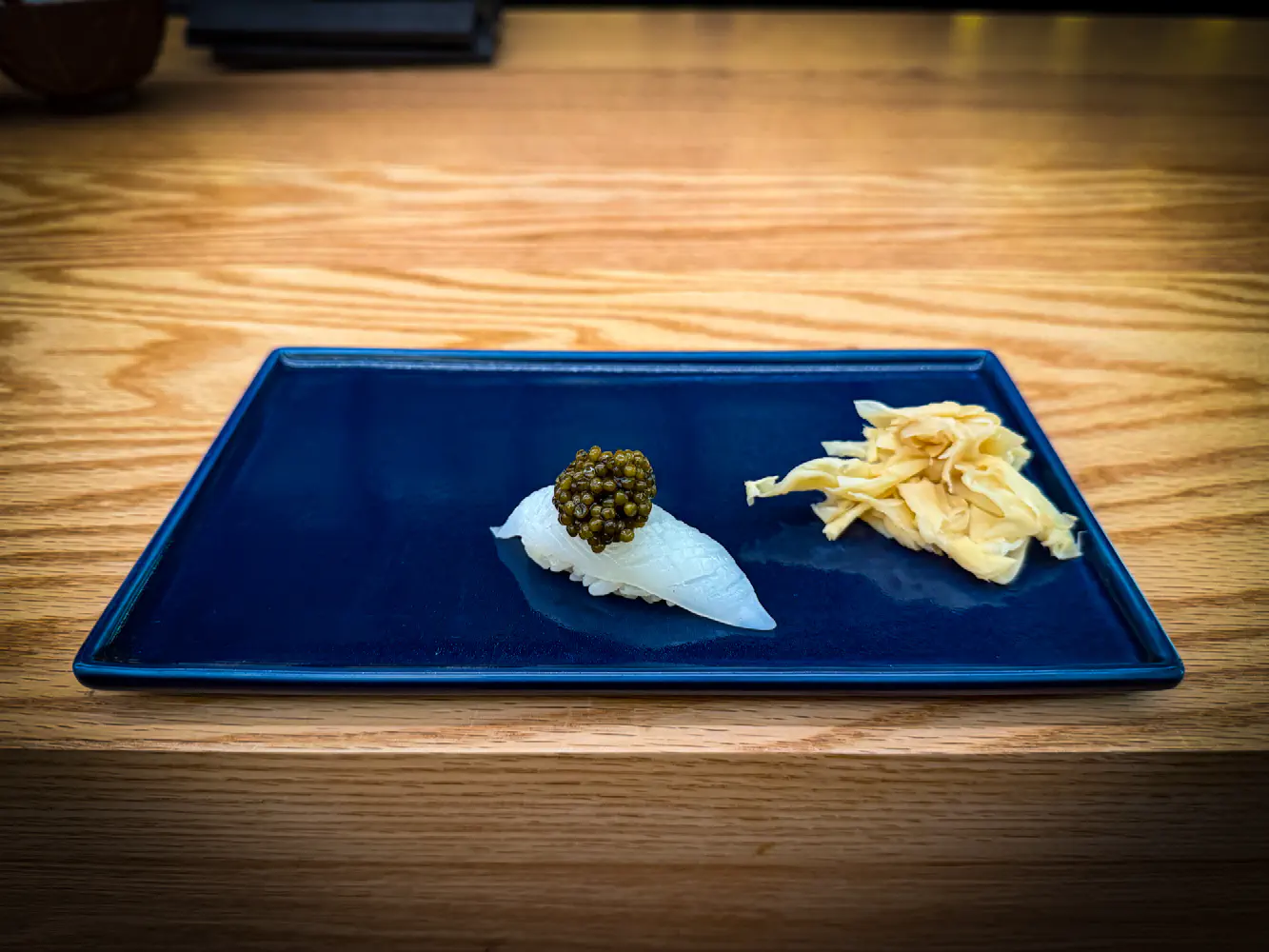
The Cuttlefish sushi was similar to other cuttlefishes out there. It had a crispy texture similar to squid. The difference with this one was they put a huge dollop of caviar on top. Caviar on top of a very mild flavor white meat can only add more umami to this.
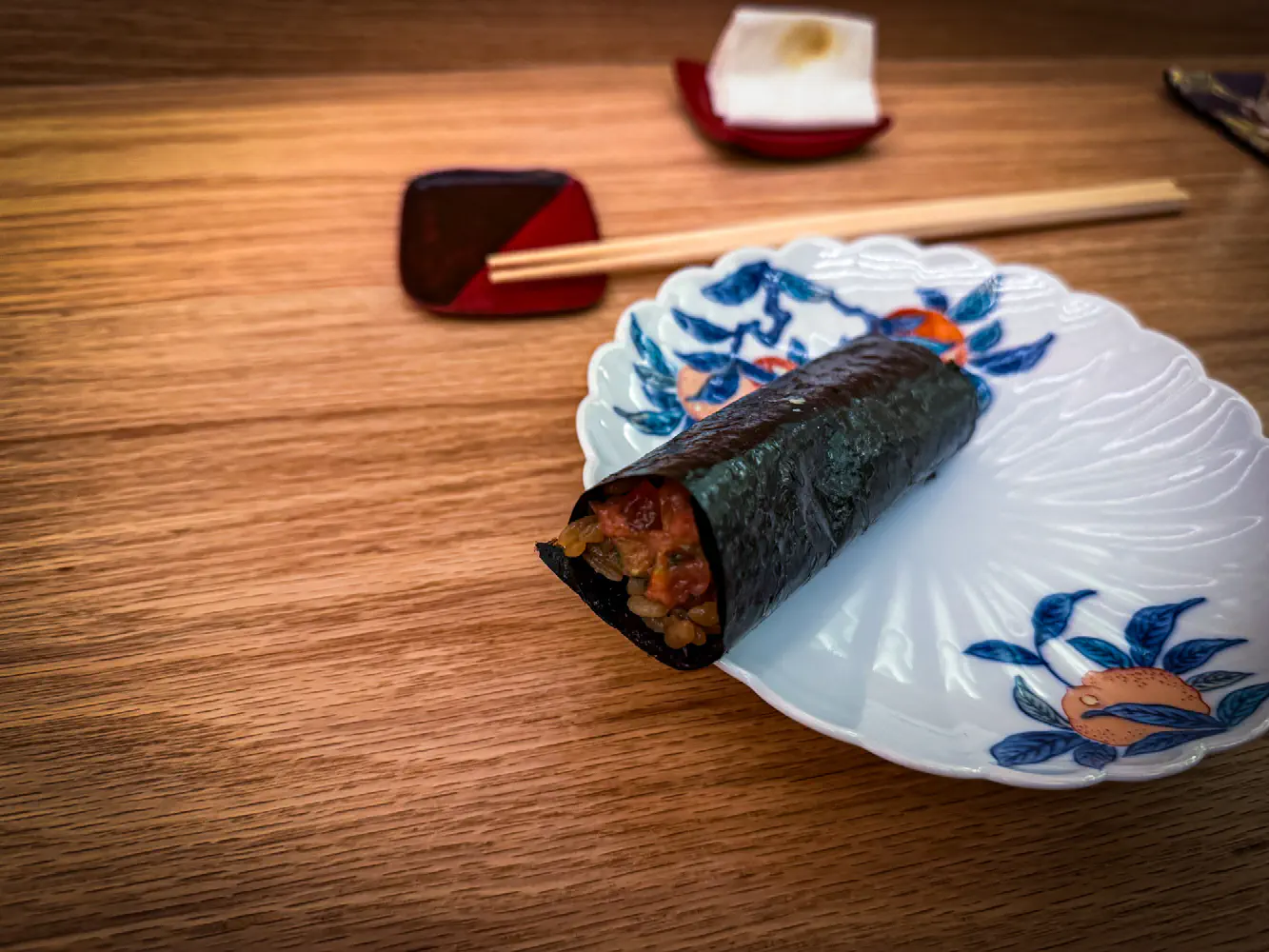
The Special Hand Roll came with unique seaweed, salmon caviar, scallion, uni, mixed with rice and seasoning. The seaweed was specially provisioned by the chef’s friend from Japan where they only sell it to very few restaurants in the world. The seaweed was specially contained in a box and warmed to a certain temperature to keep the seaweed crispy and fresh. When they chef wraps the ingredients in, they of course ask you to eat it immediately because the seaweed will lose its texture and flavor quickly. The ingredients were nothing short of a flavor explosion of all the good things combined.
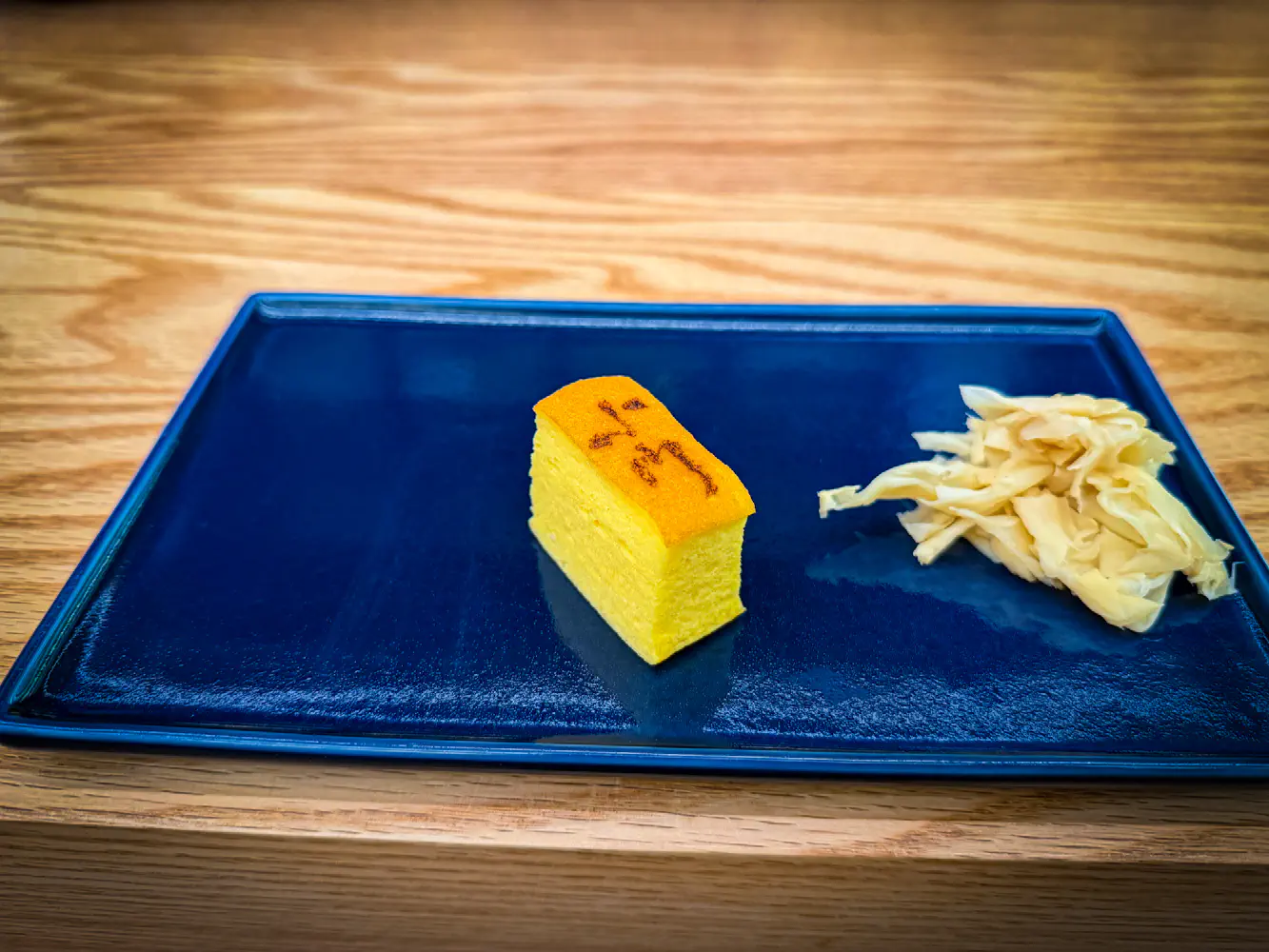
The Tamago was basically a sweet egg omelette. What was interesting in this one was the texture was incredibly soft with very distinct layered textures going on. It had a consistency of those sweet roll cakes you might find in Asian bakeries, but instead you knew that this was made from egg.
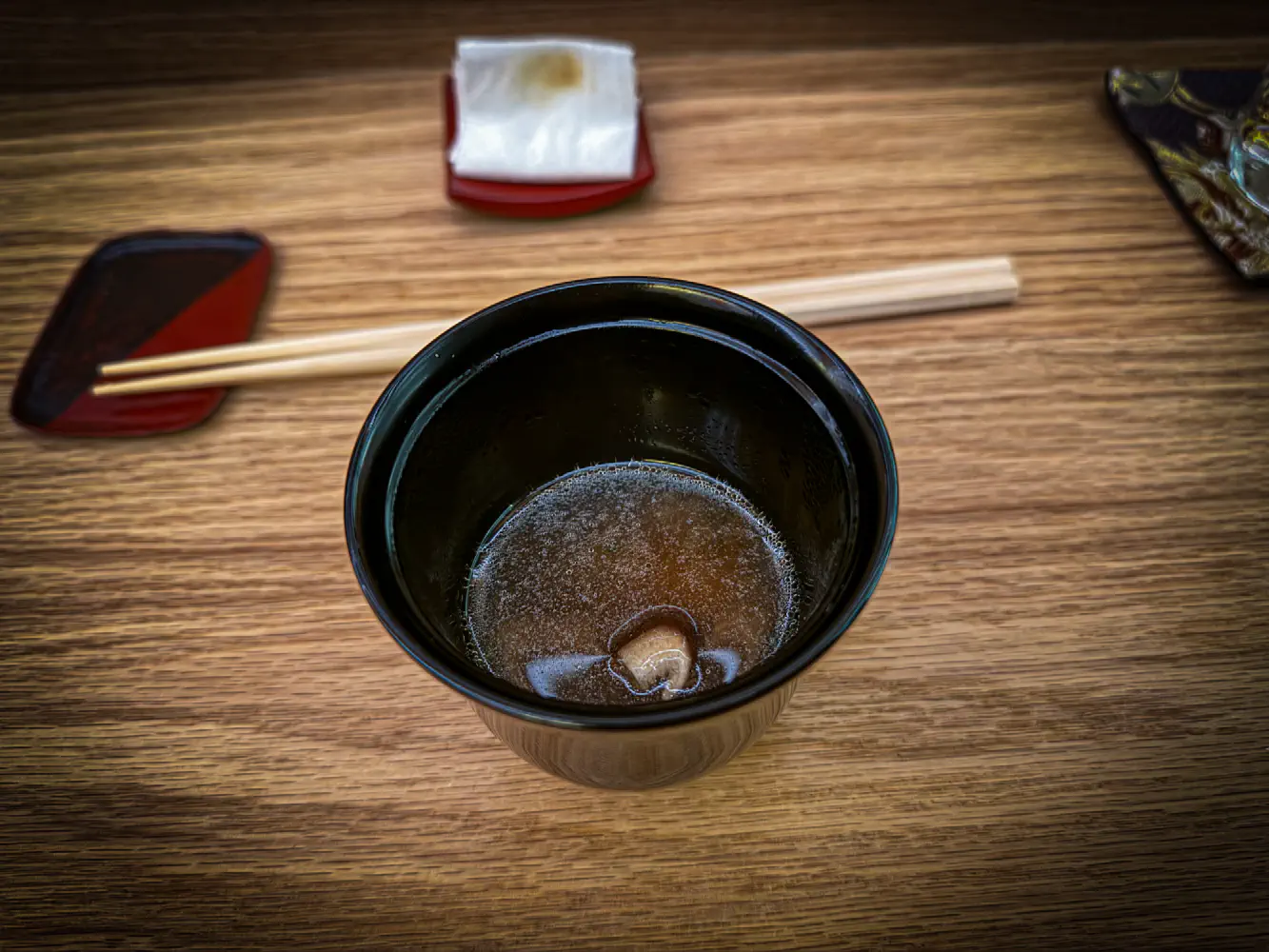
They also gave us more Miso Soup layered with some ingredients. This was a bit more salty than the early course, but it definitely cleansed the palette a bit with saltiness.
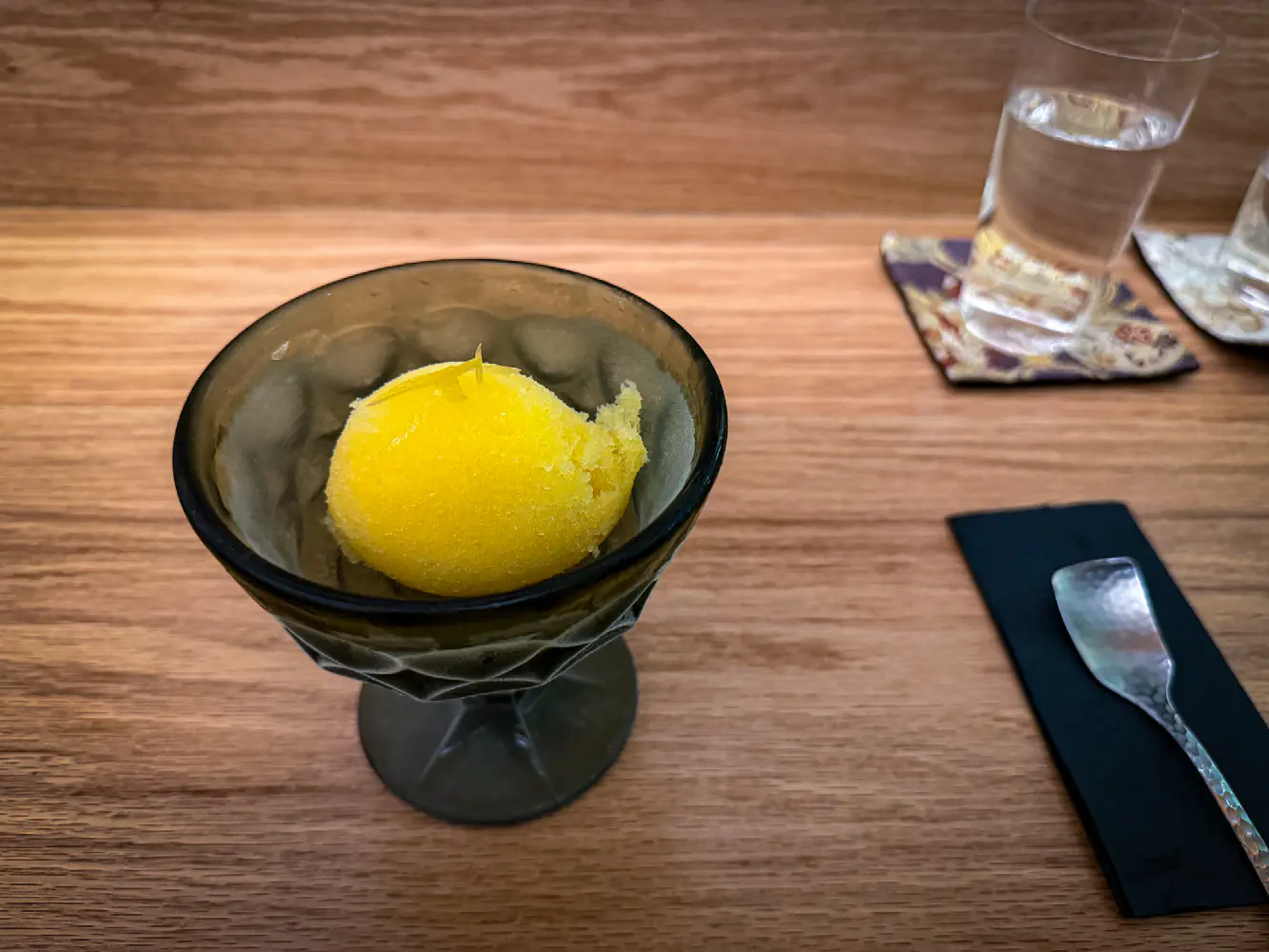
The Dessert was an orange and ginger sorbet, topped with candied ginger. This was definitely the final course of the night, which offered a very nice ending to our omakase.
Overall Impression
Ogawa surprised us a lot in terms of flavor and quality. The first thought that came to mind was how much better it tasted compared to our experience recently at Odo in NYC. Odo, with 2 Michelin Stars, offered a very bland and boring set course. There was nothing memorable about it in terms of flavors. Ogawa, on the other hand, was really punchy and more exploratory. For example, the pufferfish was surprisingly very flavorful and sweet, whereas I was expecting a bland white fish. The way the chefs use the high quality ingredients left a very good lasting impression, such that we’d recommend anyone who is into omakases to experience this. I wouldn’t be surprised if Michelin revisited this restaurant again to take another look.
Yelp & Google Jabs
Super expensive and overpriced. Food was good - not Michelin-not worth it, service good, ambiance good. Scary neighborhood.
It really depends what this Yelper was looking for. I imagine their palette may not have been sufficiently mature nor robust enough to understand what they were eating. I remember when I started doing fine-dining, I could not understand what I was eating.
We watched as others sitting by us were given different food than we were and were told because they have been there 20 times before, they were entitled to something different!! Have you ever heard of such a thing?
Normally if you are an (excessive) repeat customer, many high-end restaurants will express gratitude by giving you something more or different. It’s quite common, so it’s not really worth coming here comparing your meal against others. Just try to enjoy your meal for what it is.
Revisions
- Dec 20, 2025 - Initial revision.