Yingtao
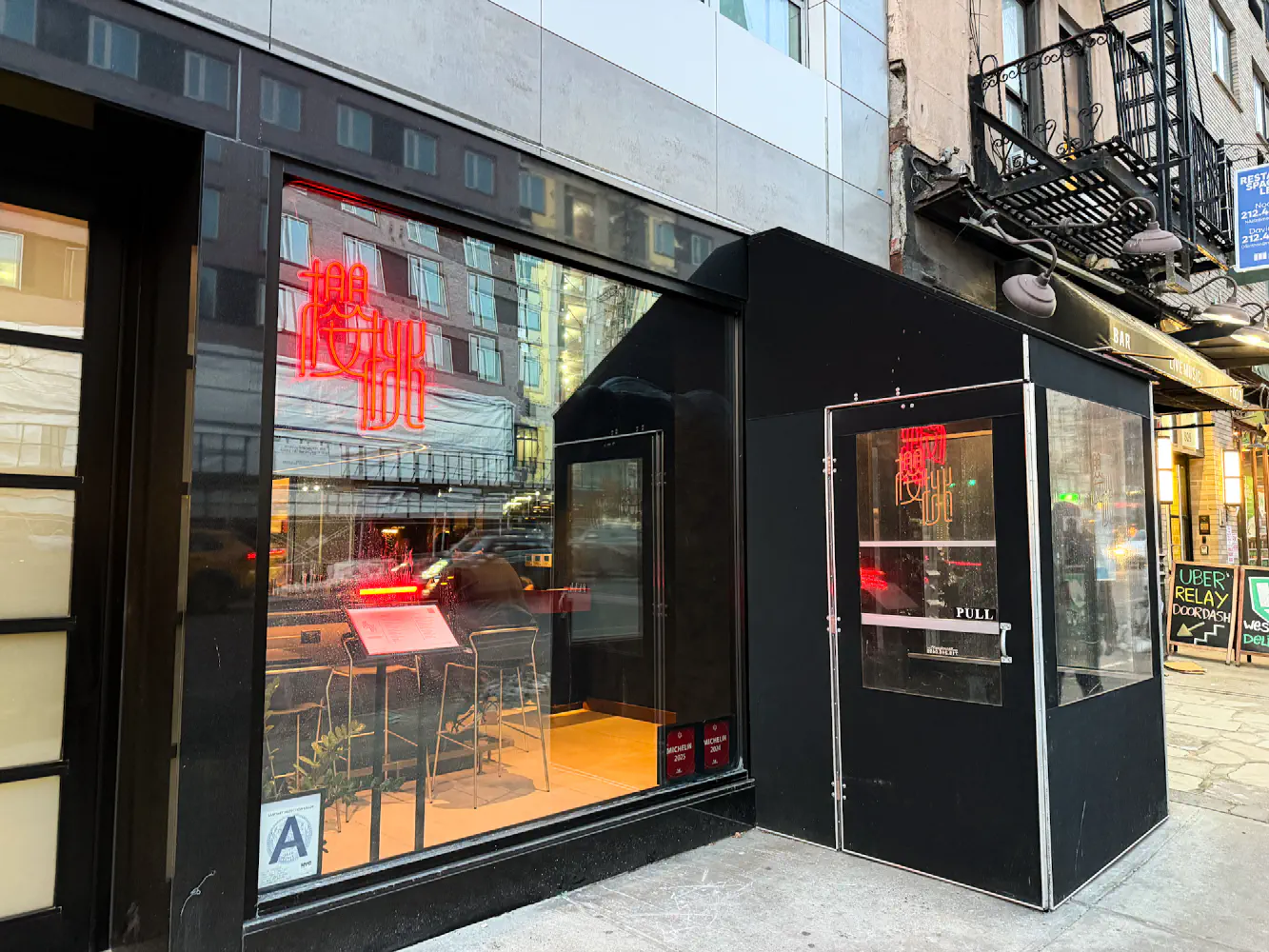
For a pre-Valentine’s day dinner, this was one of the few restaurants where it was incredibly easy to make a reservation just a few days in advance. Ying Tao was on my list for a while, and the menu always looked mildly interesting to me. I remember when it first opened, it was one of the few individual Chinese “tasting” in Manhattan that was prepared in a gourmand style way. I was easily able to make a reservation for 2 for 5:30 PM on the Friday before Valentine’s.
Executive Chef, Emily Yuen, recently joined the restaurant recently bringing her experiences from several other NYC restaurants. She was named a 2025 James Beard Foundation Best Chef as a New York State semifinalist. At the time of this writing, she will be appearing in an invite top chef competition called “America’s Culinary Cup” hosted by Padma Lakshmi. This is premiering in early March 2026.
Ambiance & Service
The ambiance in general is very dark, akin to a dark lounge clubby atmosphere. In the front is a bar where you can order any of the menu items a’la carte, and the dining room is the back where it’s primarily tasting only. The restaurant is more long than wide. In the dining room area, each table is lit by these portable LED lit lamps that are very bright and convey an intimate night out. The music is loud, playing hip hop type of music both in Chinese and English.
The service was pretty good, though sometimes it was difficult to hear the wait staff. Overall from beginning to end, it took about 2 hours, and we were not rushing at all.
Food
The tasting for 7 courses was $150, with an optional wine pairing for $100. I did not get the wine pairing today and opted for individual glasses of a white and red.
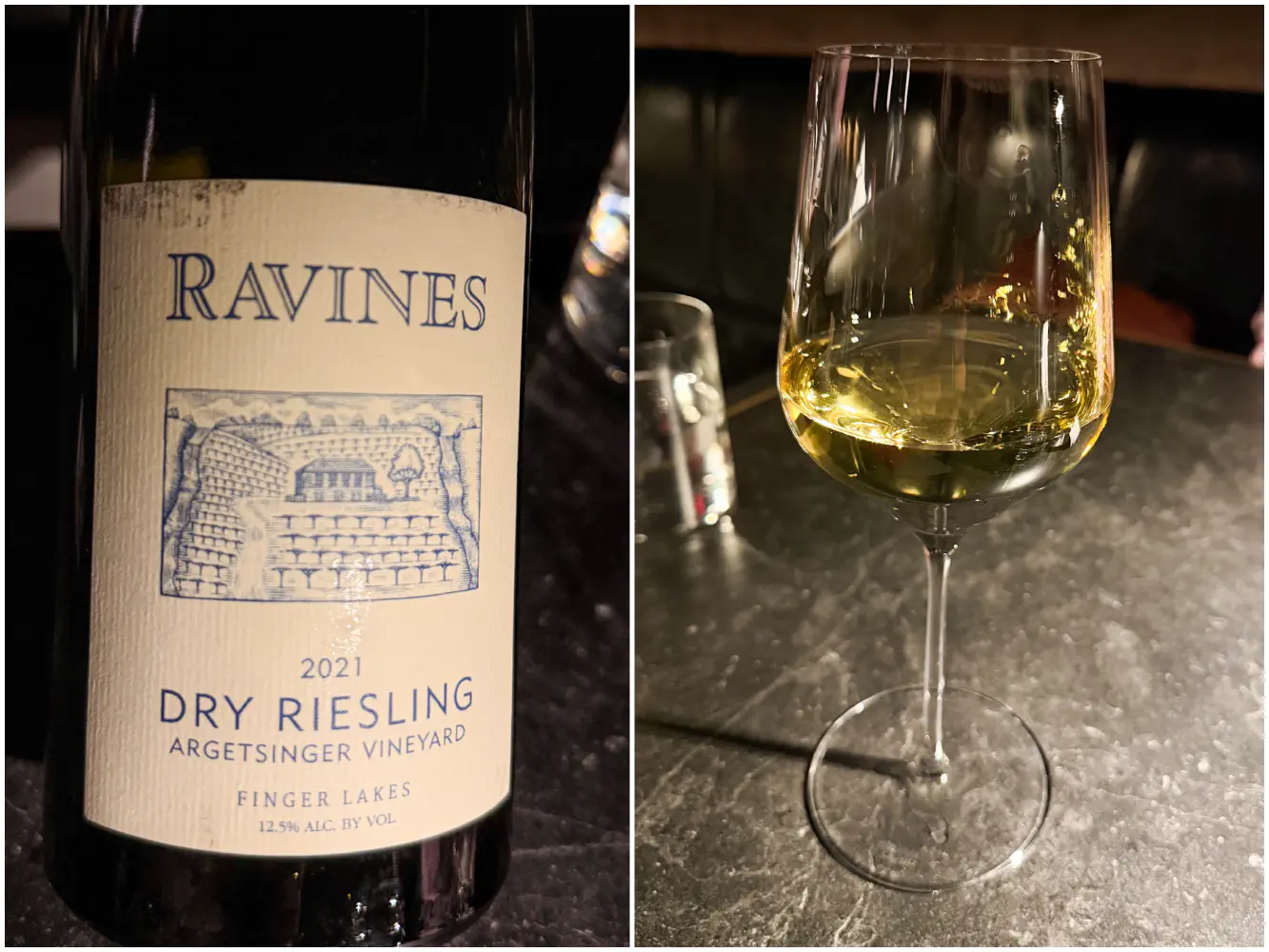
The glass of Dry Riesling ($22) came from Ravines, Argetsinger Vineyard, Finger Lakes, NY 2021. The Finger Lakes area in New York state is known for having interesting modern rieslings. This one is mineral forward, bright with citrus, floral, and flinty flavors. It smells like the limestone soil, and the flavors were quite decadent for me. It paired the best with the wonton course below.
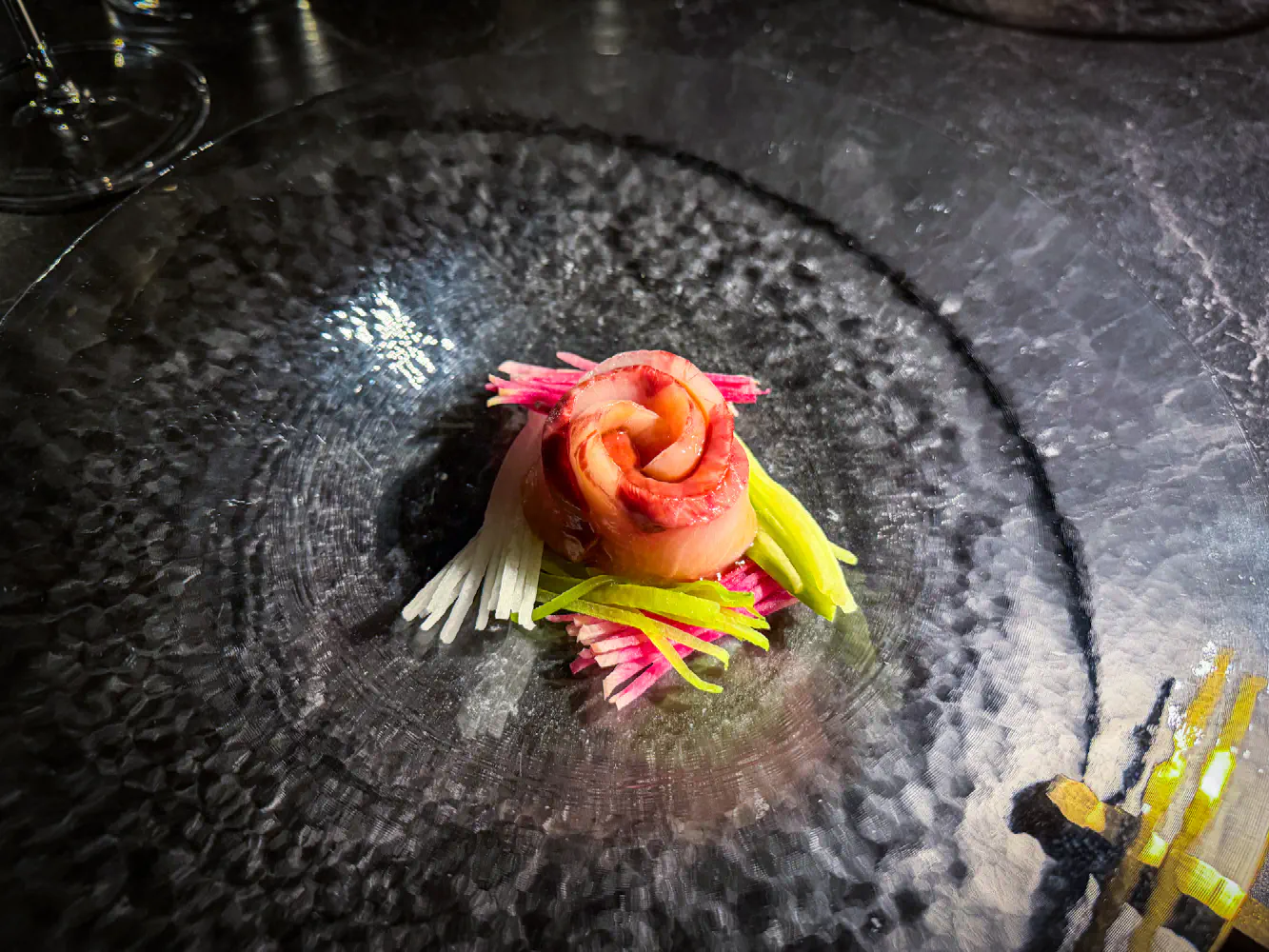
The Hamachi came with watermelon radish, celtuce, and Asian pear. The underlying sauce was similar to a watery hoisin flavored liquid. It worked surprisingly well with the yellowtail raw slices and the little medley of julienned garnish.
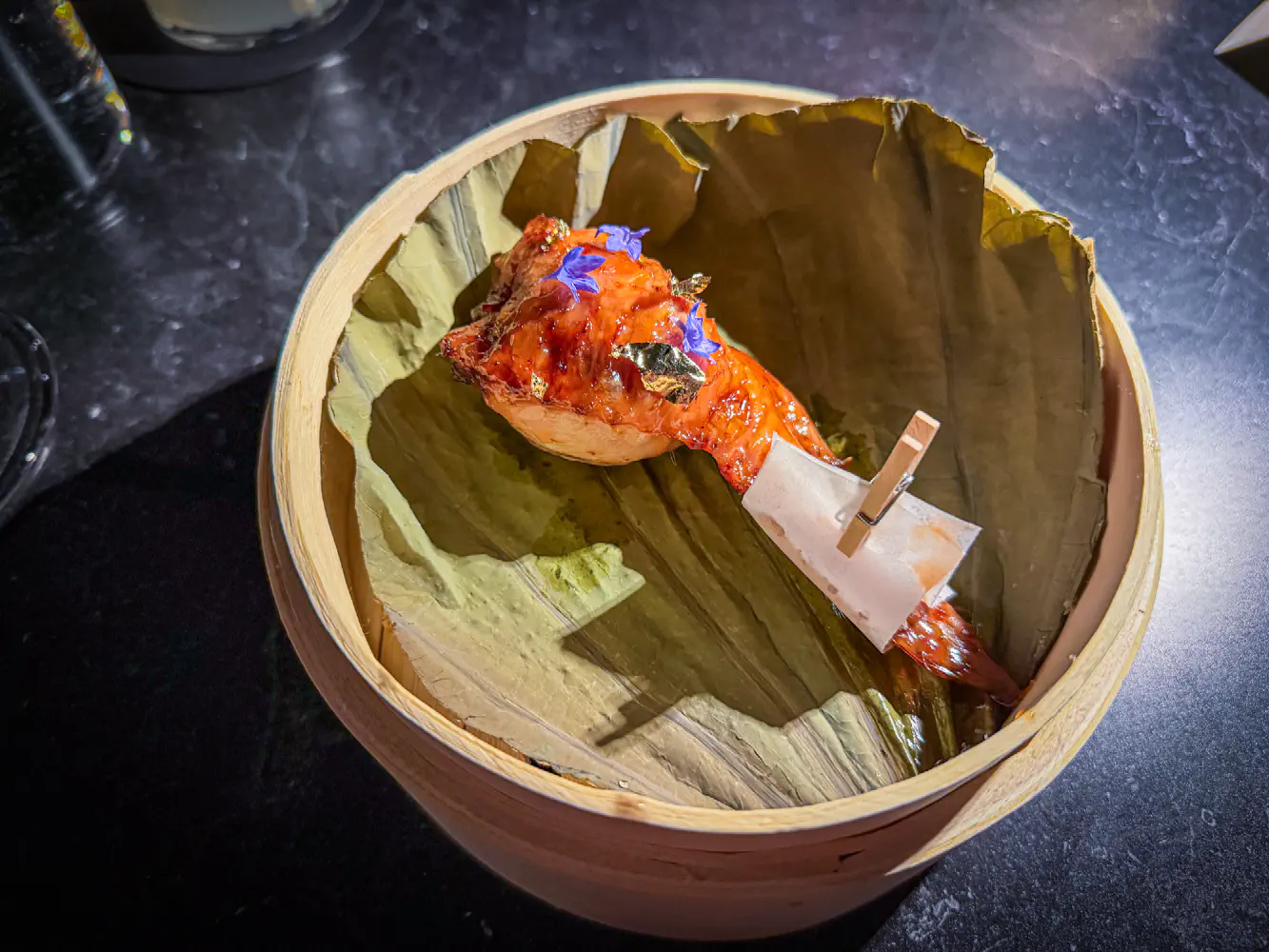
The Lo Mai Gai came with sticky rice, lap cheong, and salted duck yolk. The outside is brushed with a honey soy glaze, and some parts of it have been deboned. The wing edge has not been deboned at all. This was quite delectable. I would describe this basically as a chicken meatball stuffed with rice with some glaze on it. The other wing parts were just the normal chicken wing edges.
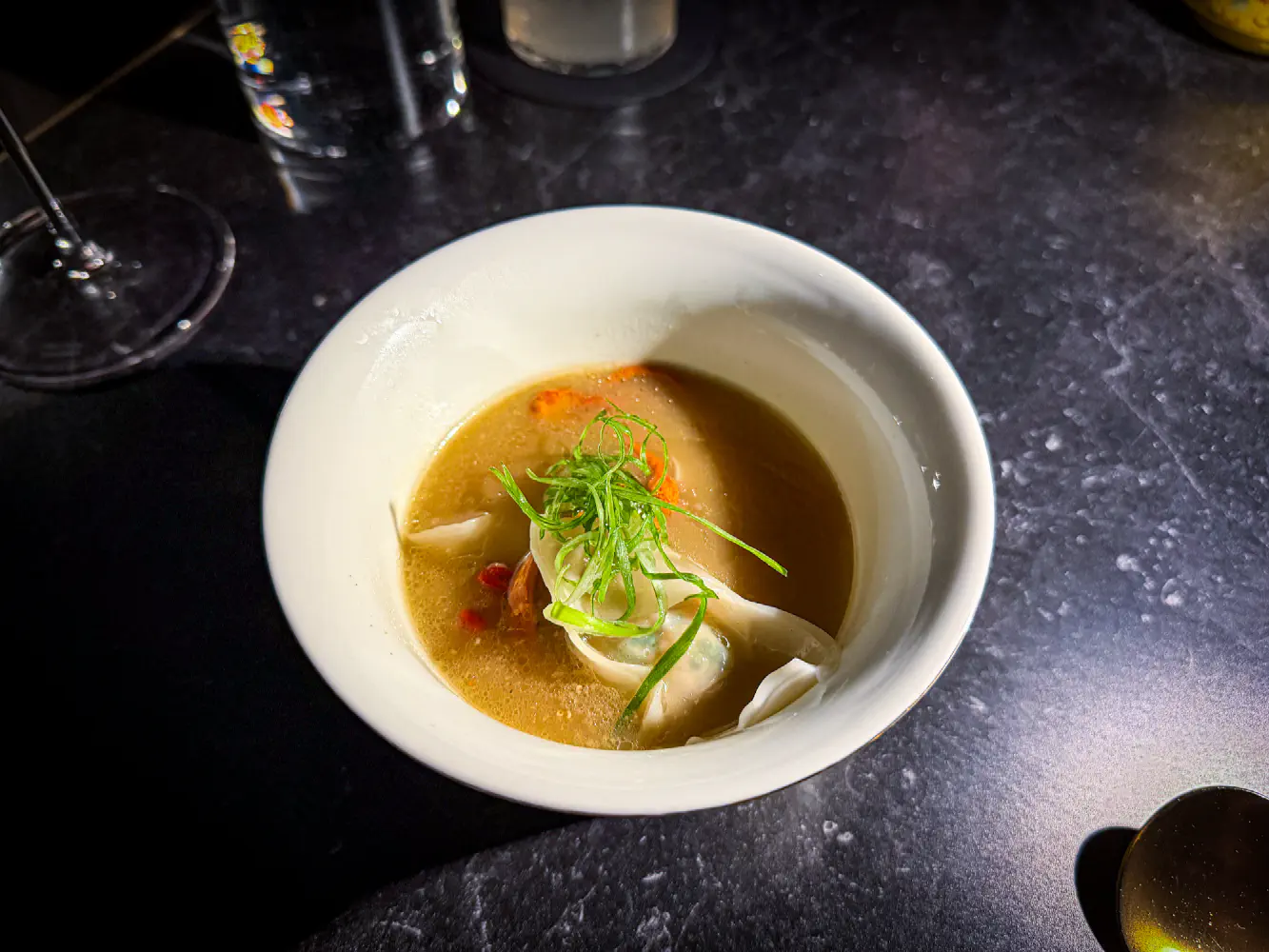
The Wonton came with berkshire pork, tiger prawn, goji berries, and superior stock. There were 3 glorious wonton pieces in the broth. The stock is made of chicken, fish, and scallop. The broth was very balanced with even salt and spicy flavors. The wontons were very lovely, as they were densely packed with a very bouncy texture. The meat itself was very flavorful and delicious. This rustic dish may appear very basic, but the flavors are quite delicious.
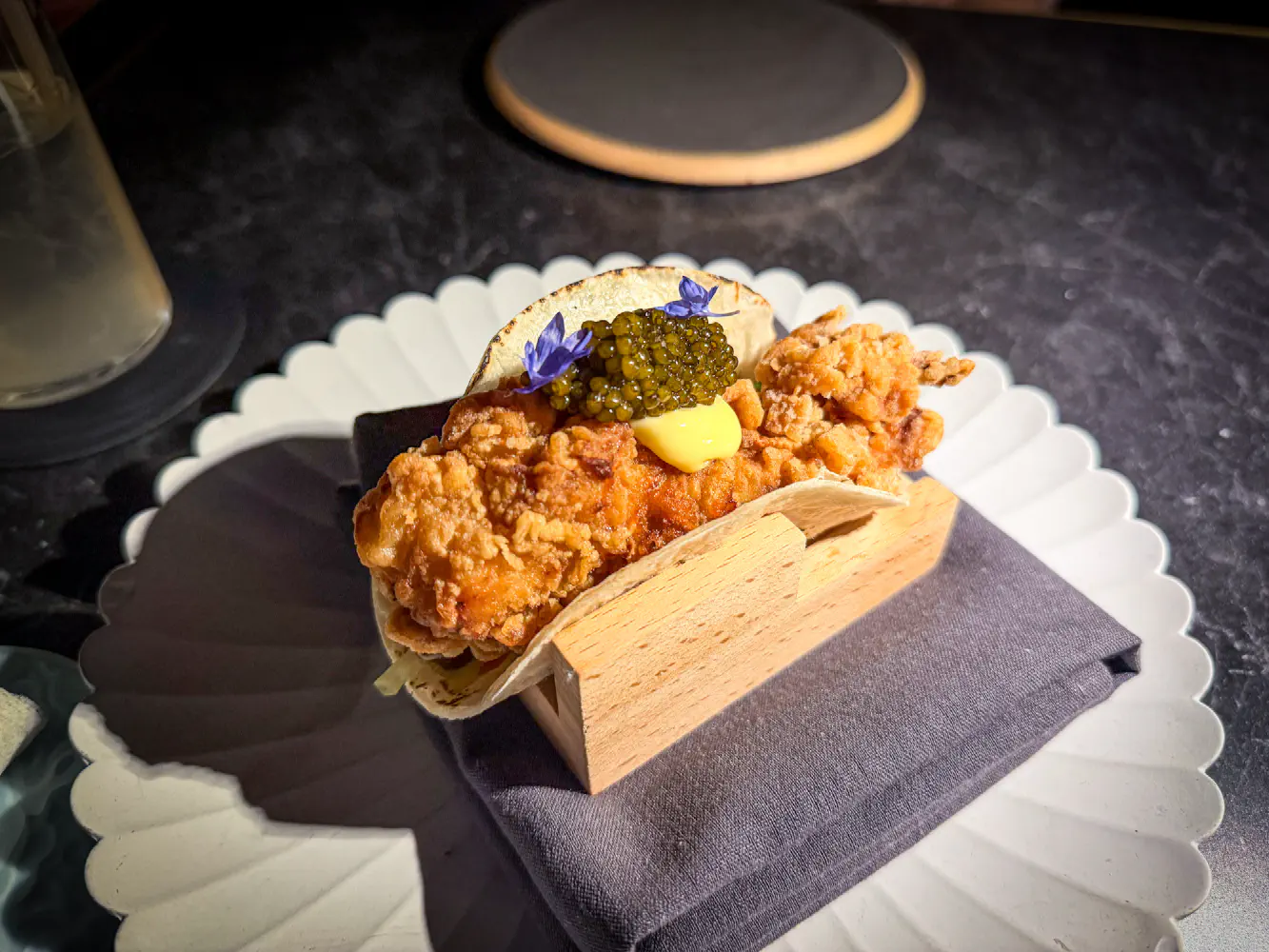
We ordered the optional KFC ($32) for the two of us. This had caviar, double fried chicken, house-made tortilla, pickled radish, and hoisin aioli. Although this was a fun play on fried chicken, I think this can be skipped. The problem with this optional course is that the chicken tasted very close to just a normal chicken tender. And the other flavors of the seasoning and garnish will overpower any remaining flavor or texture of the caviar. So in essence, you’re paying $32 for a fried chicken tortilla wrapped in a tortilla filled with pickled radish and hoisin flavors. If these flavors are unfamiliar, definitely give it a try. Otherwise, you can safely pass on this.
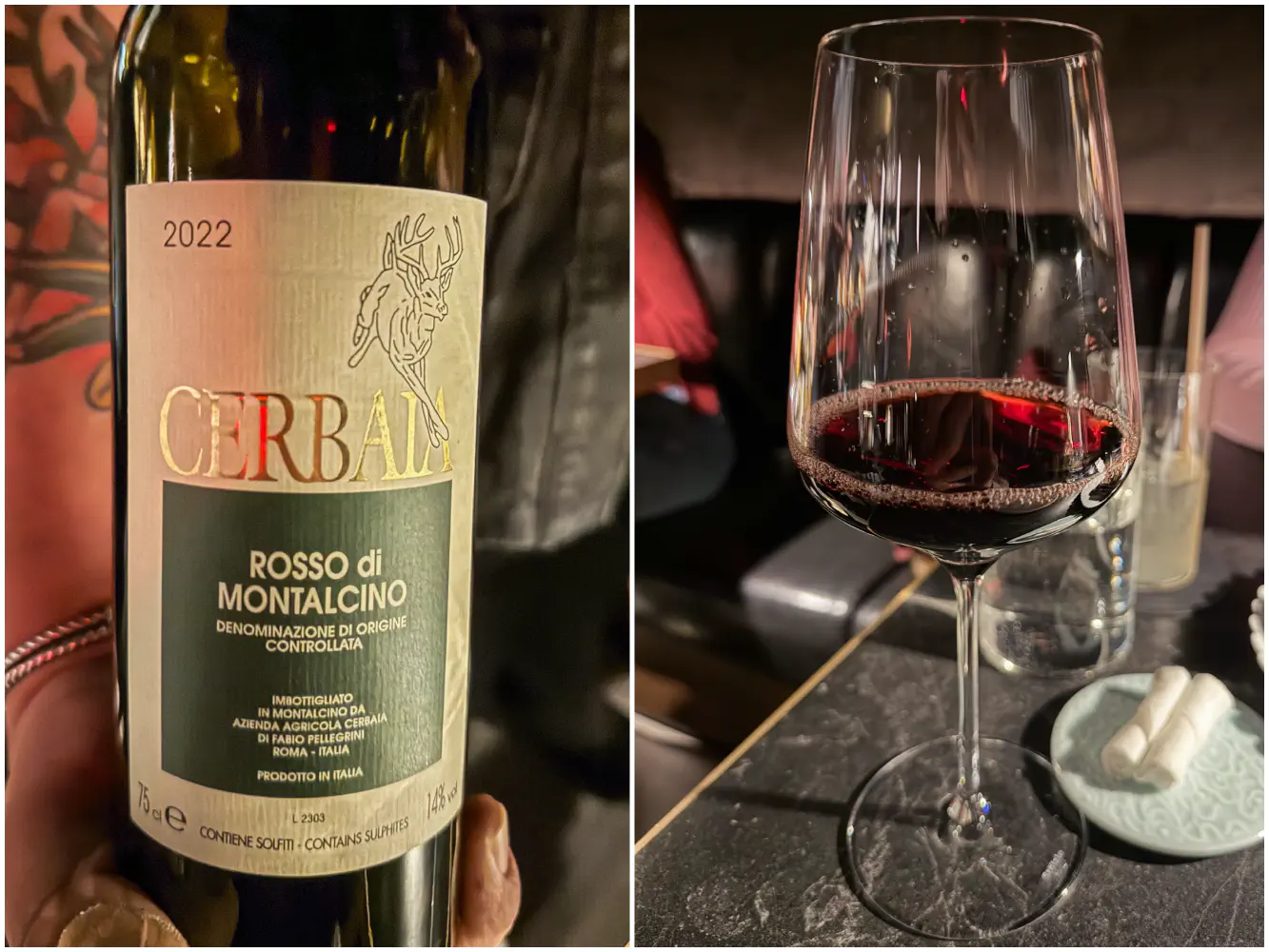
The glass of Sangiovese ($24) came from Cerbaia, Rossi di Montalcino, Tuscany, IT 2022. This is a younger, classical sangiovese that has a bright red juicy fruit forward flavor with high acidity and earthy flavors. This one was decent paired with the duck.
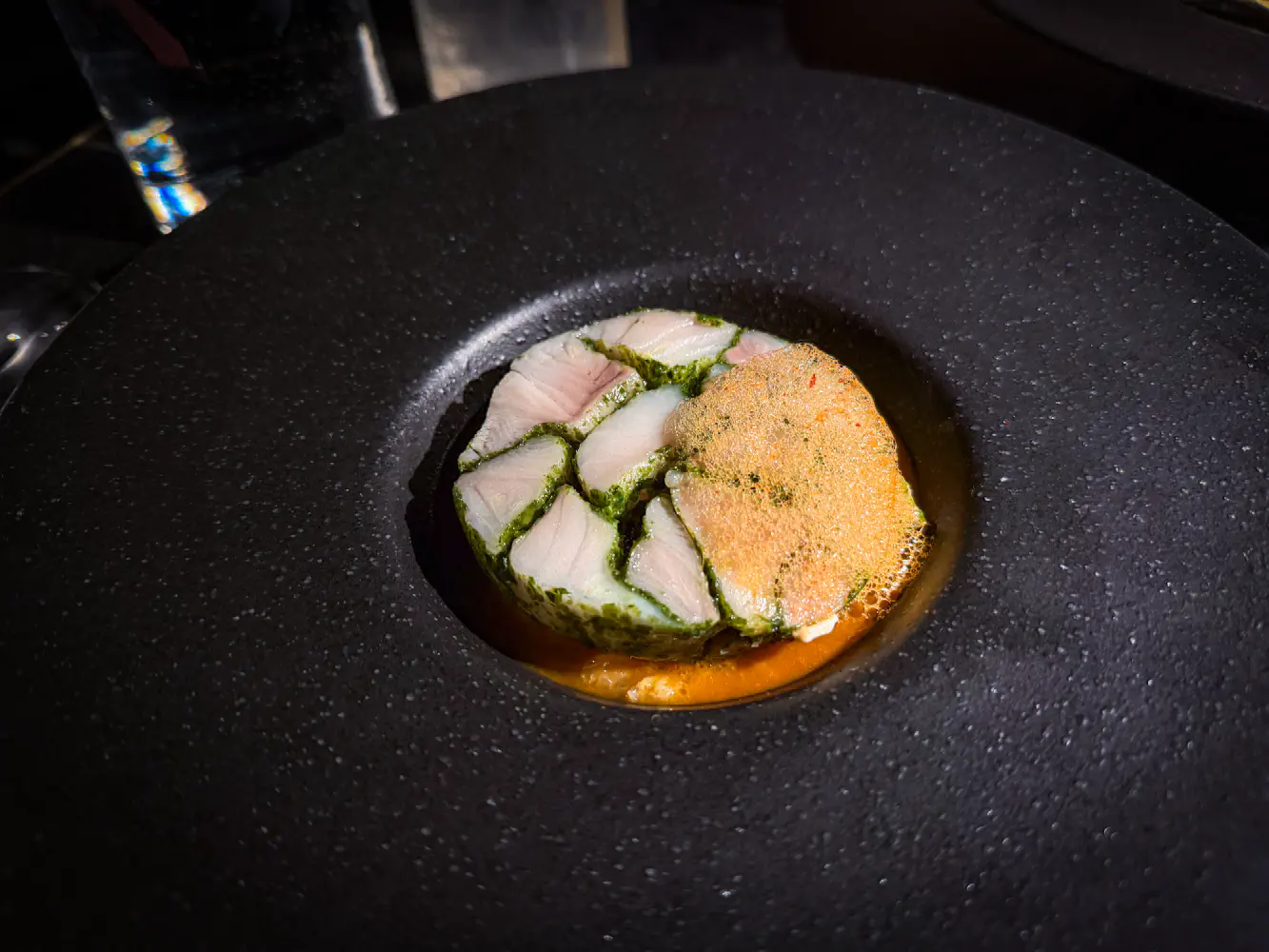
The Black Cod came with silken tofu, doubanjiang (spicy fermented chili bean paste), and suan cai (sour vegetable). The foam on top is made with mala, which is a spicy, numbing seasoning. The black cod was very delicious. The soft tofu sits in a peppery, flavorful sauce. The overall flavors of everything reminded me of mapo tofu, which is a popular dish in Chinese cuisine.
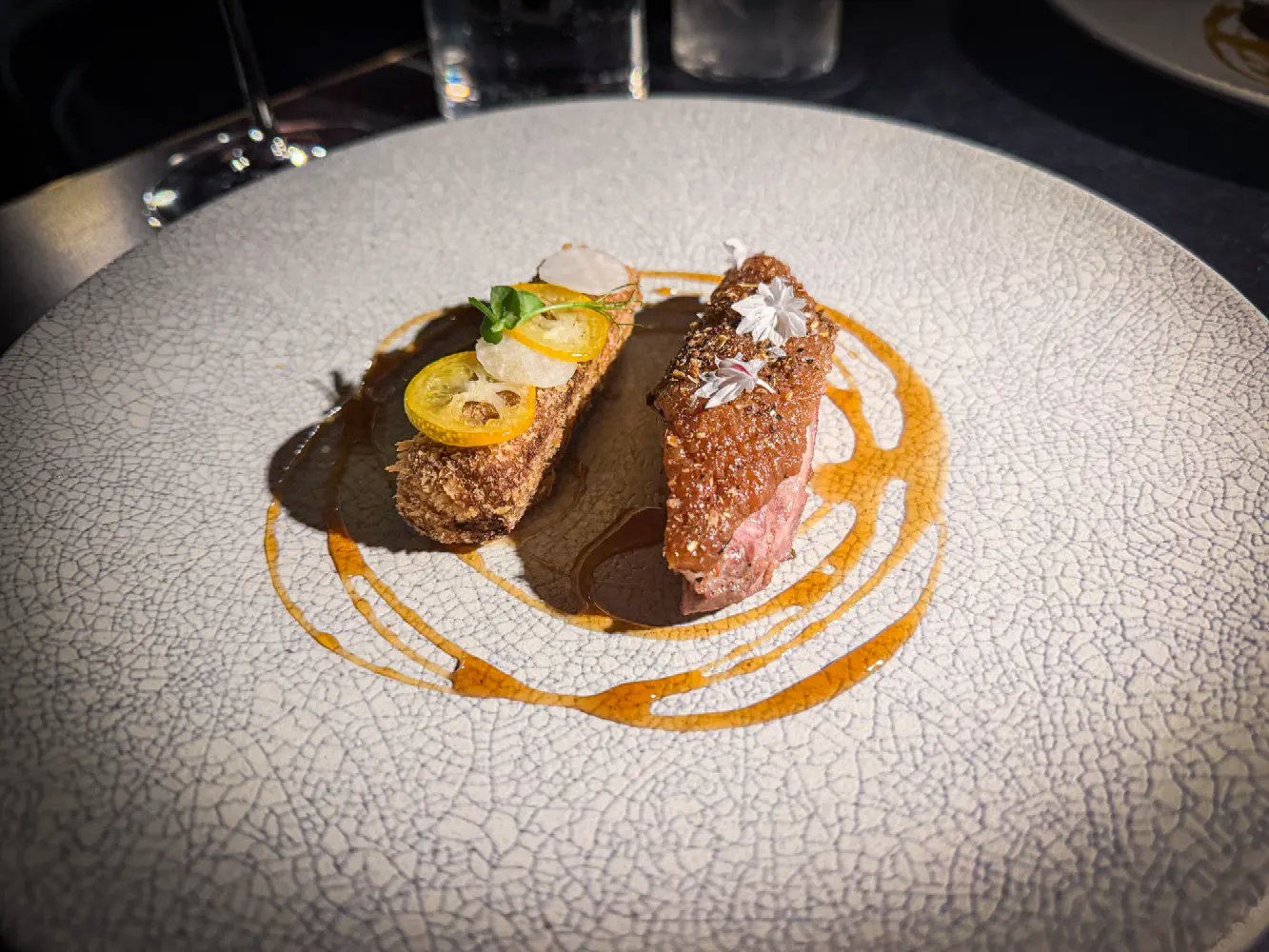
The Plum Duck came with kumquat, honey, and jujube. The duck was prepared 2 ways, one as a croquette of the braised duck leg and the other as a traditional duck breast. The dish was surrounded with different pickles of kumquat and daikon and drizzles of yuzu honey. The crispy croquette was densely packed with a lot of meat, and it had a very duck forward flavor. The duck breast skin was dry aged and had a nice crispy texture to it. It was seasoned slightly on the saltier side, but the ratio of fat to meat was very delicious. Overall, this dish was very good despite it appearing like a small dish.
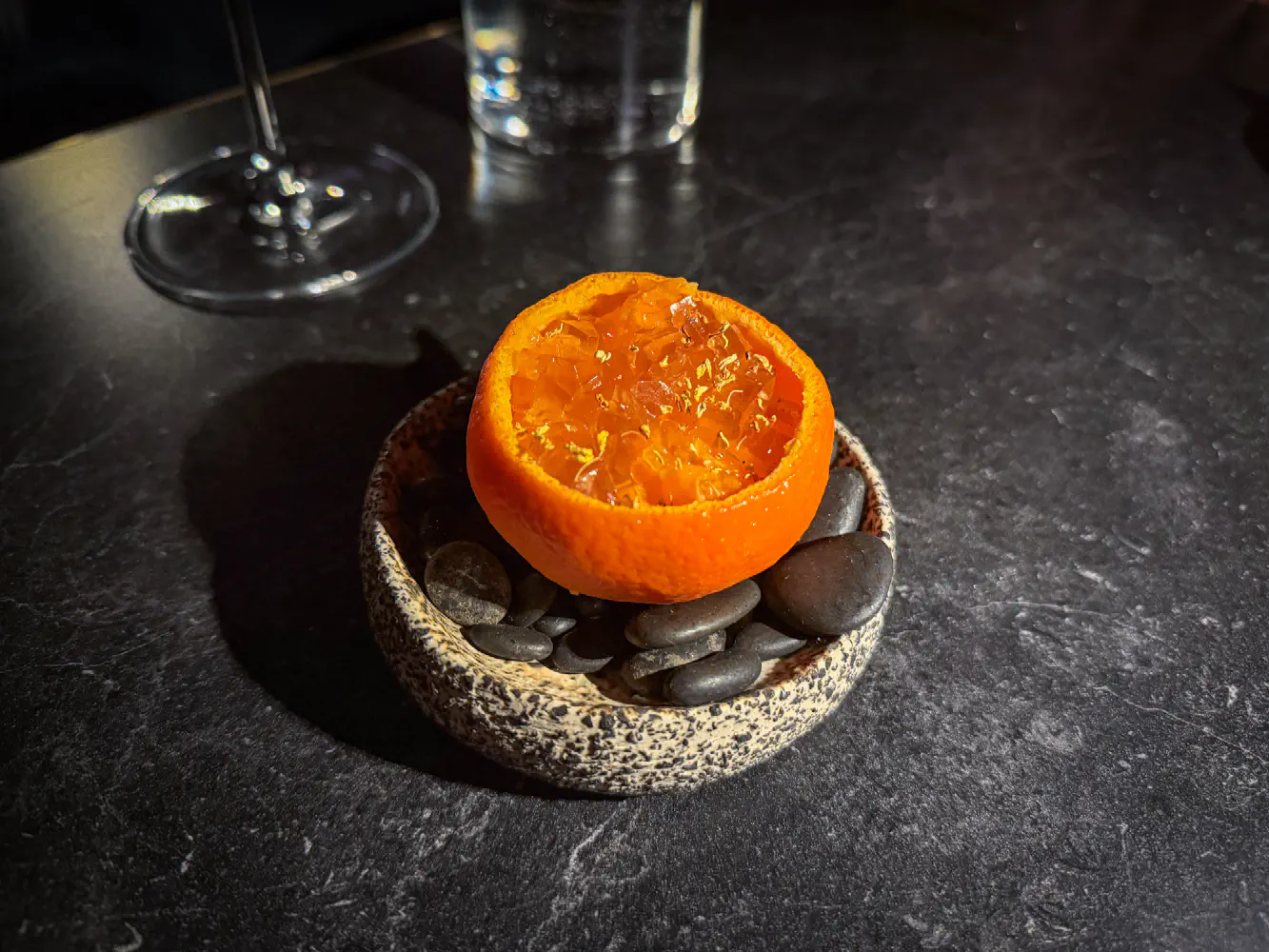
The Mandarin was intended as a palette cleanser and came with jelly, puerh tea (fermented aged Chinese tea from Yunnan), and osmanthus. The flavors of this palette cleanser were very memorable because it had very nice mandarin orange flavors in both the mandarin sorbet inside of the orange as well as the jelly and tea. It was more sweet than sour and balanced perfectly.
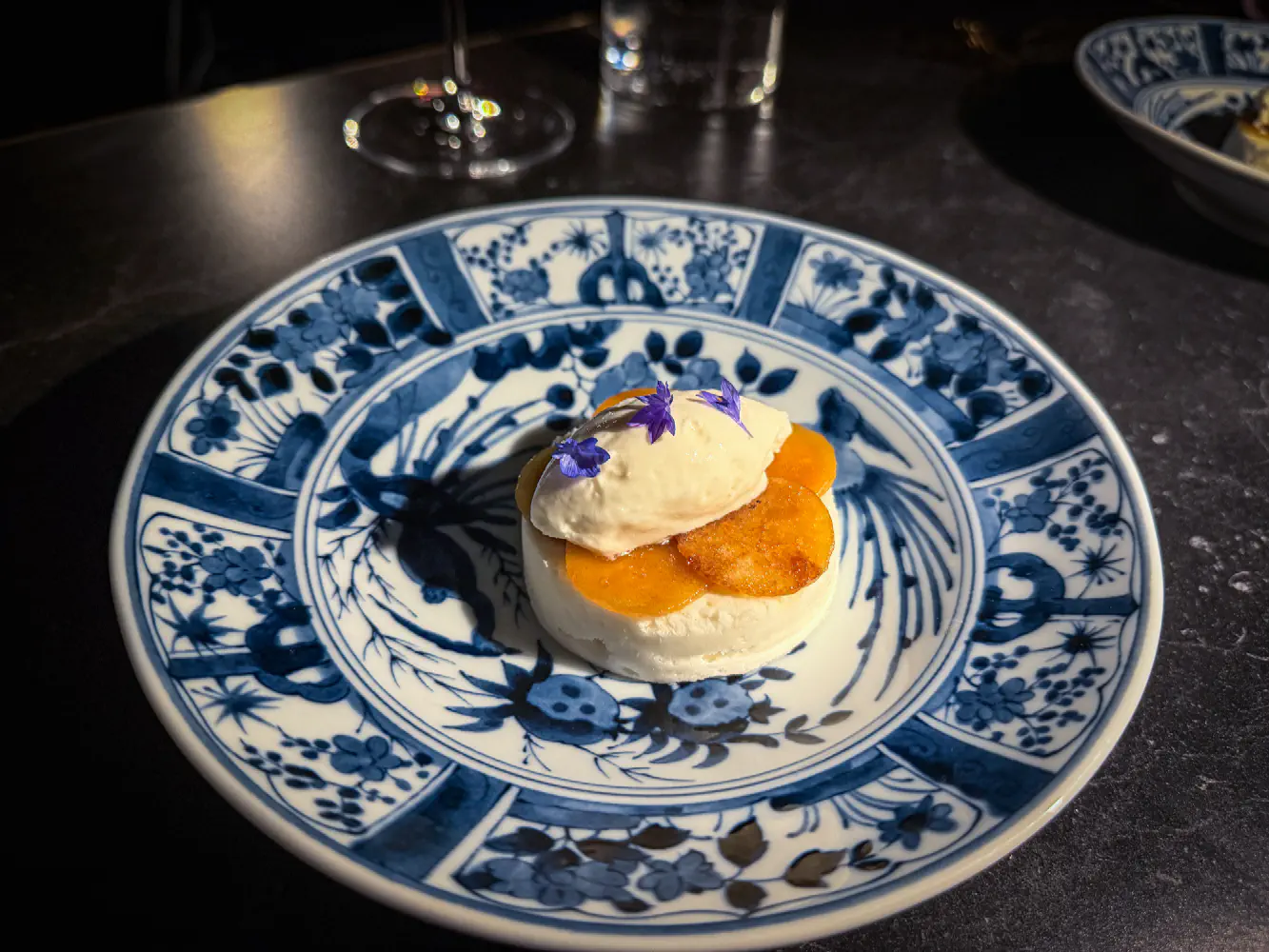
The Nian Gao came with walnut, coconut, and lime. This dessert reminded me a bit of panna cotta for some reason. The texture of the pudding was similar, and the flavors of this were perfectly balanced. Nian Gao in typical Chinese cuisine is a chewy, sticky rice cake, central to Chinese New Year. When I bit into this, it didn’t quite gave me that feeling, though it reminded me a bit of hardened, sweetened mochi textures.
Overall Impression
Ying Tao was a surprisingly good, run-of-the-mill Michelin Star Chinese restaurant in Manhattan. Even though it may not have intense flavors compared to other restaurants for Asian palettes, the meal was overall really good. There were no dramatic mistakes in the cooking, and the flavors were presented well. One common misconception is people might be expecting saucy Chinese type of dishes. If anything, I think this is a bit of a Chinese-inspired New American-like restaurant aimed for individualized portions. The portion sizes overall will not leave you full nor hungry. For the ones with huge appetites, they may feel more hungry though.
If you’re in the Theater District area and want something nice to go to without competing for reservations, this restaurant is worth checking out.
Yelp & Google Jabs
Not worth for the price point ($165/pp). Im not sure how they got their Michelin star. Most of the dishes were very one note and the non alcoholic pairing felt more like random non-alcoholic drinks than ones chosen specifically for the dish. If not for being on inkind I would not come back.
It feels like the beverage pairing program has changed with chef Emily Yuen at the helm. I would recommend folks to give this a try again considering they no longer have the non-alcoholic pairing.
Although the restaurant describes itself as “Chinese-inspired,” none of the dishes actually reflected authentic Chinese flavors. Most tasted more like Western fine dining with only superficial Chinese elements. For example, one dish used Youtiao (fried dough), but instead of being light, crisp, and airy as it should be, it was cold, doughy, and heavy.
I imagine this could be one of the reasons they switched executive chefs. I think the flavors that chef Emily Yuen brings to the table are more familiar to Chinese cuisine, whereas the previous chef might have leaned too heavily into being inspired.
Revisions
- Feb 13, 2026 - Initial revision.